















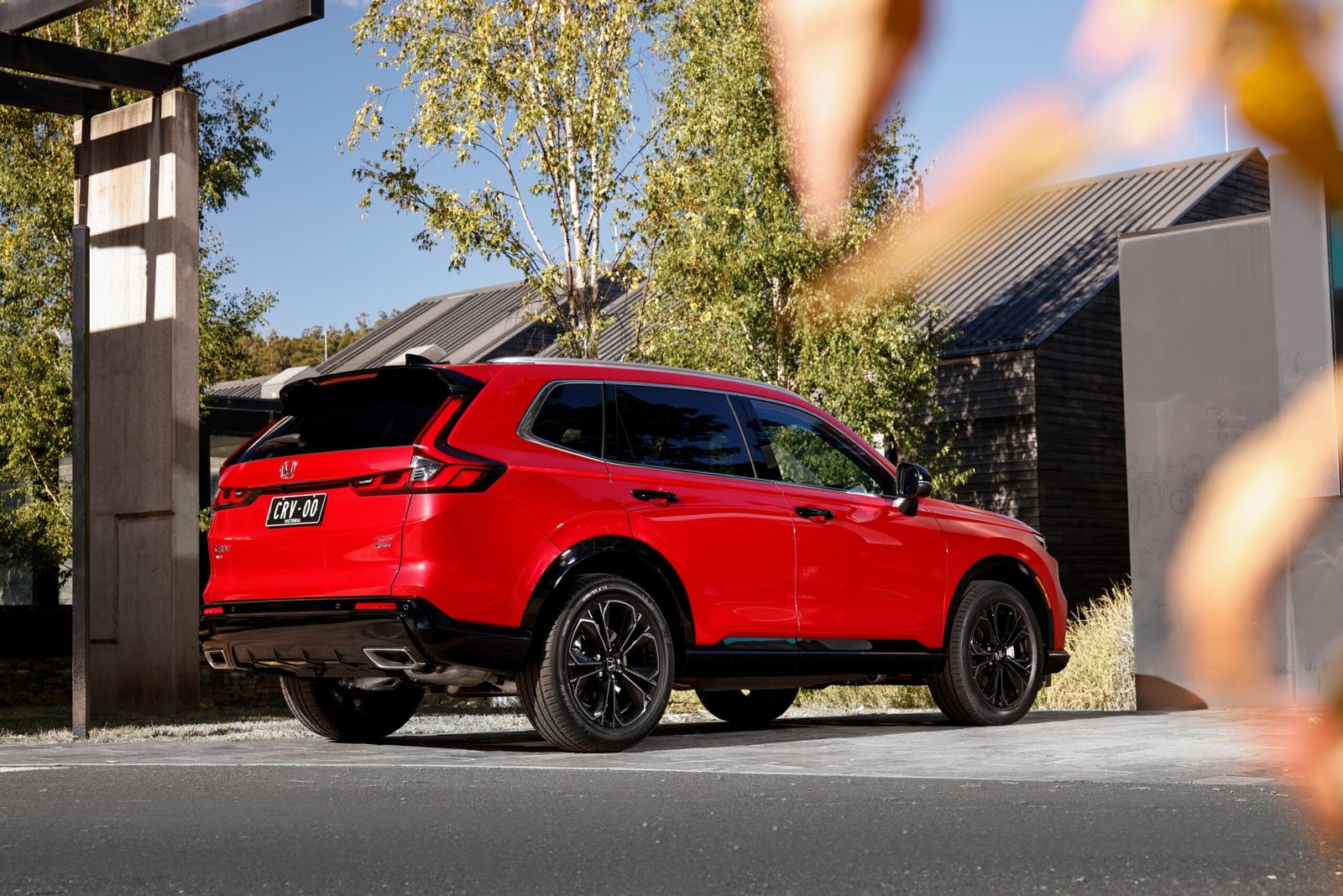
One of the best-selling SUVs in the world, let alone Australia, has been treated to a timely facelift for 2026.
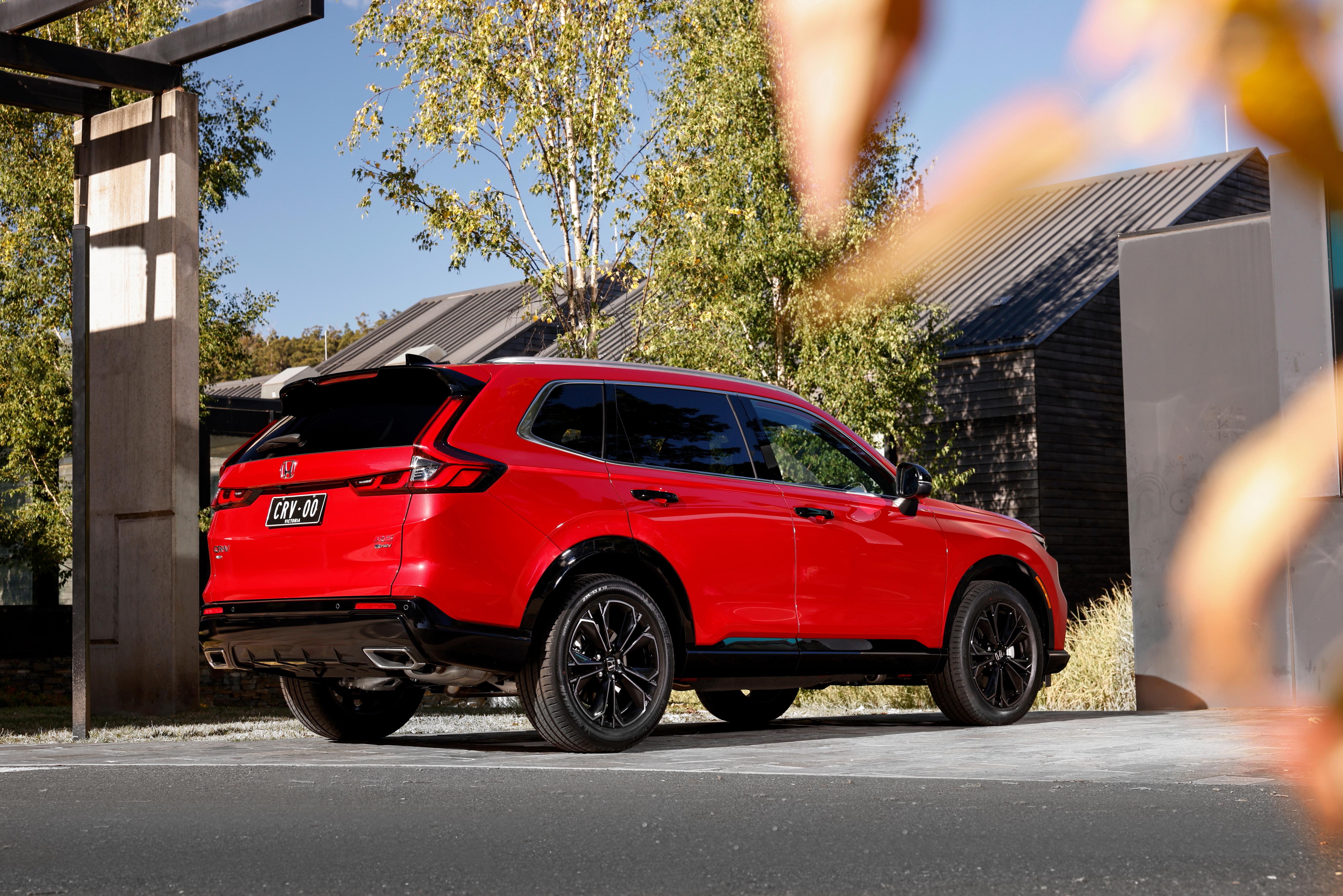
More than 13 million examples of the CR-V have found a home since the mid-size SUV came into existence 31 years ago, and Honda will be hoping that many more fly out the door following this latest batch of running updates.
Perhaps the biggest change is a strong shift towards hybrid power – the number of hybrid CR-V variants offered in Australia has leapt from one to four, at the expense of traditional petrol-powered versions.
You still can’t get a petrol-electric CR-V with seven seats, though.
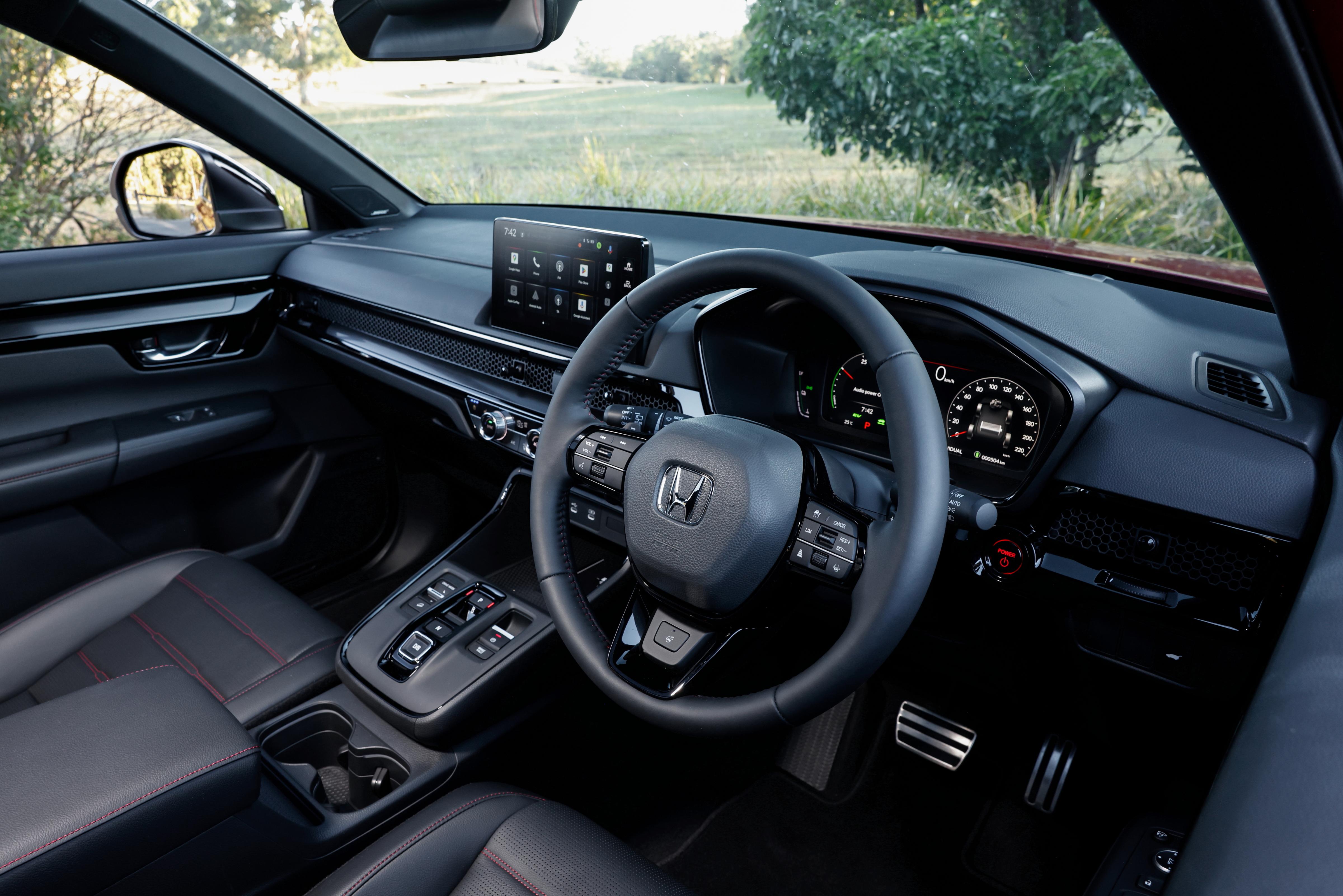
Inside, a 9.0-inch touchscreen infotainment system remains standard across the range, but it now features Google Built-in with embedded Google apps such as Google Maps and Google Assistant. A 10.2-inch digital instrument cluster is also more widely available.
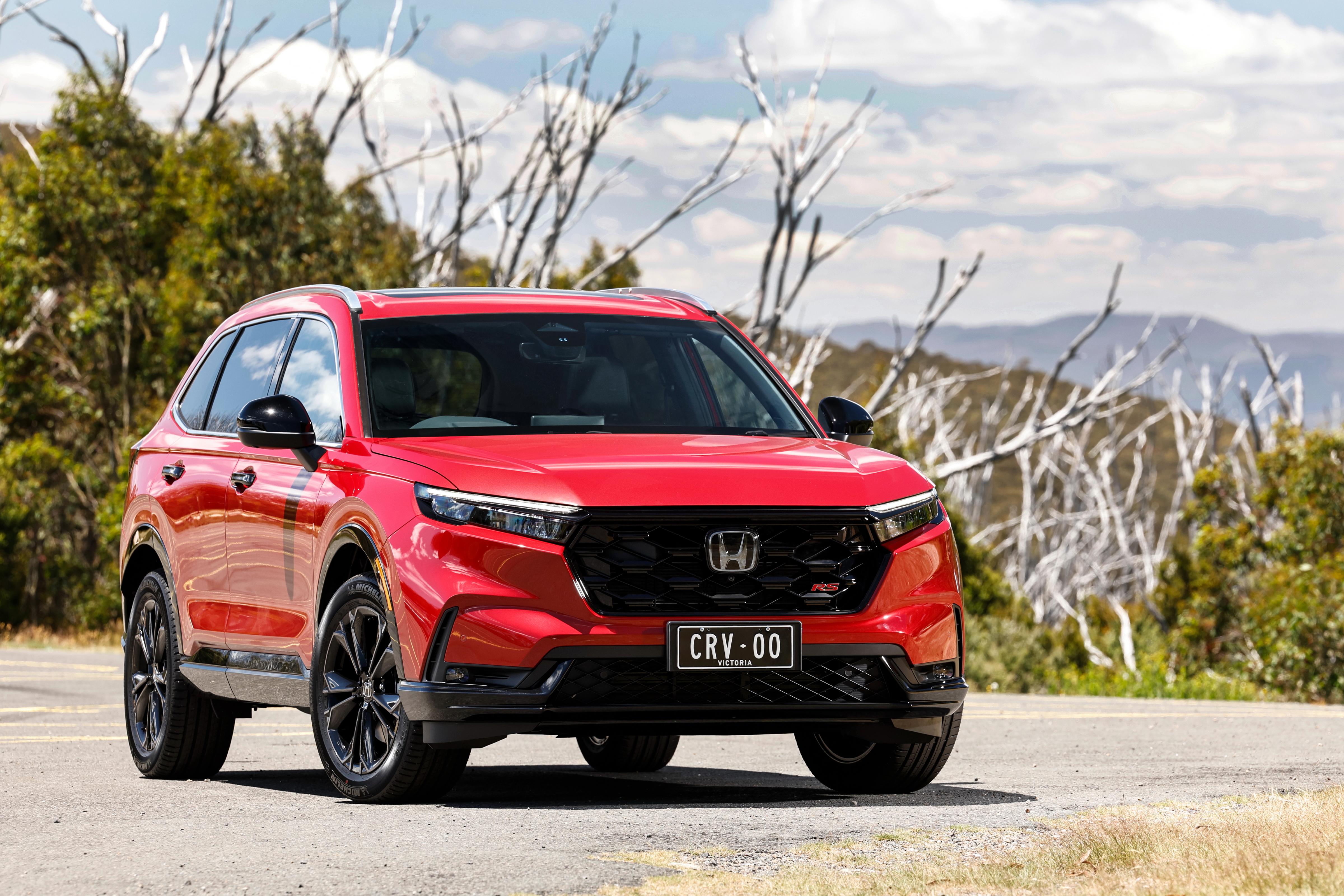
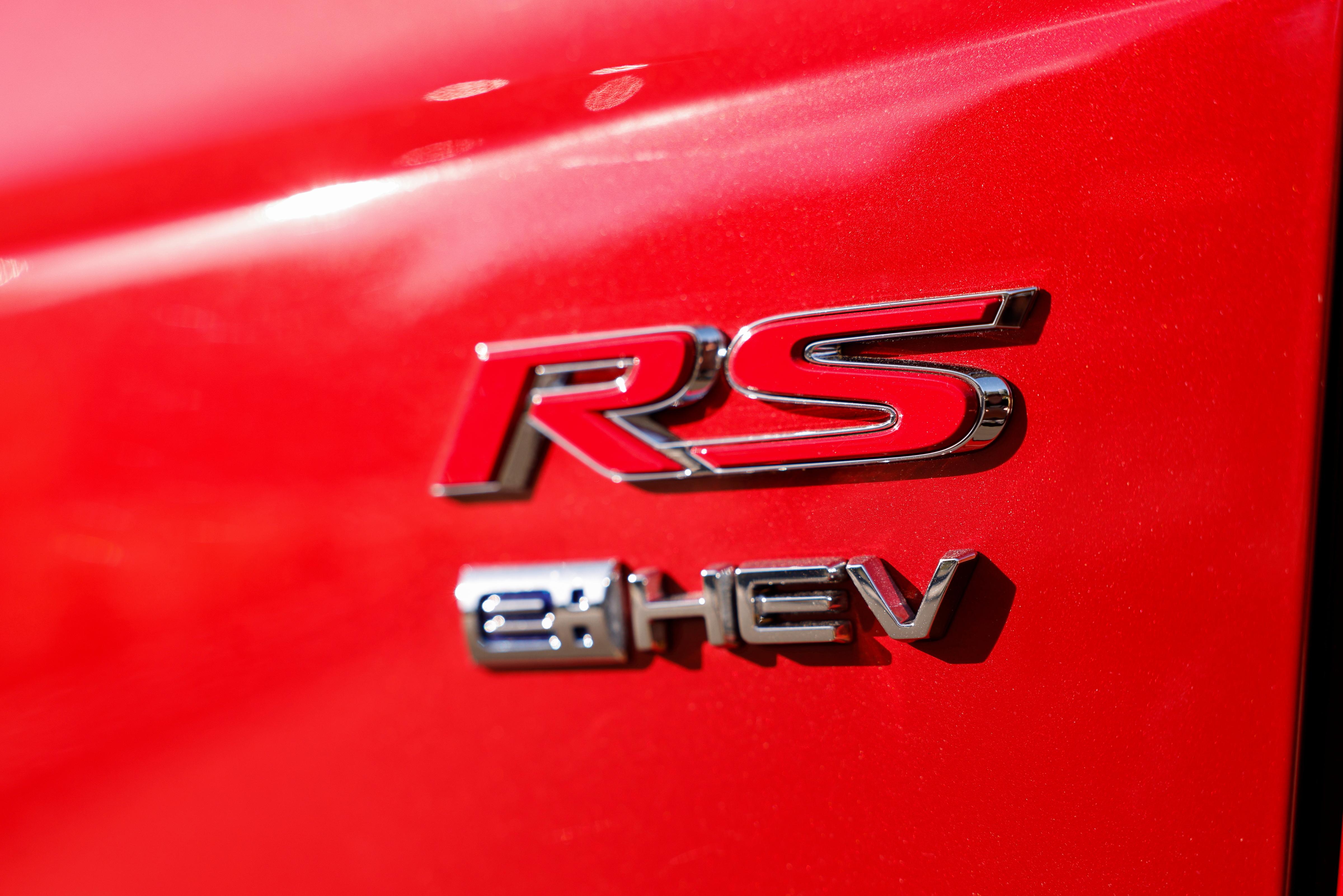
And at the top of the range, the e:HEV RS has gained all-wheel drive, several interior luxuries, and gloss-black exterior accents.
Is that enough for the CR-V to remain a top pick for families far and wide? Read on to find out.
How much does the Honda CR-V cost?
The CR-V lineup has been reshuffled for 2026, with more hybrids added and some turbo-petrol variants canned.
| Model | Drive-away pricing |
|---|---|
| 2026 Honda CR-V VTi X | $44,900 |
| 2026 Honda CR-V e:HEV X | $49,900 |
| 2026 Honda CR-V e:HEV L | $53,900 |
| 2026 Honda CR-V VTi L7 | $54,900 |
| 2026 Honda CR-V e:HEV LX AWD | $58,900 |
| 2026 Honda CR-V e:HEV RS AWD | $64,400 |
As a result, the base price of the CR-V is up by $3000, although the hybrid lineup now opens at $49,900 drive-away for the e:HEV X – $5000 more than the entry-level petrol-powered VTi X, but $7000 less than the cheapest hybrid option in 2025.
While there are more hybrid options than before, there’s now only one seven-seat option following the axing of the VTi X7. That leaves just the VTi L7 at $54,900 drive-away, $1500 more than its price tag last year.
We spent time in both the e:HEV X and e:HEV RS AWD during the local launch in Victoria, with the latter pictured throughout this review.
To see how the Honda CR-V lines up against the competition, check out our comparison tool
What is the Honda CR-V like on the inside?
From front to back, the CR-V prioritises function (and quality) over form.
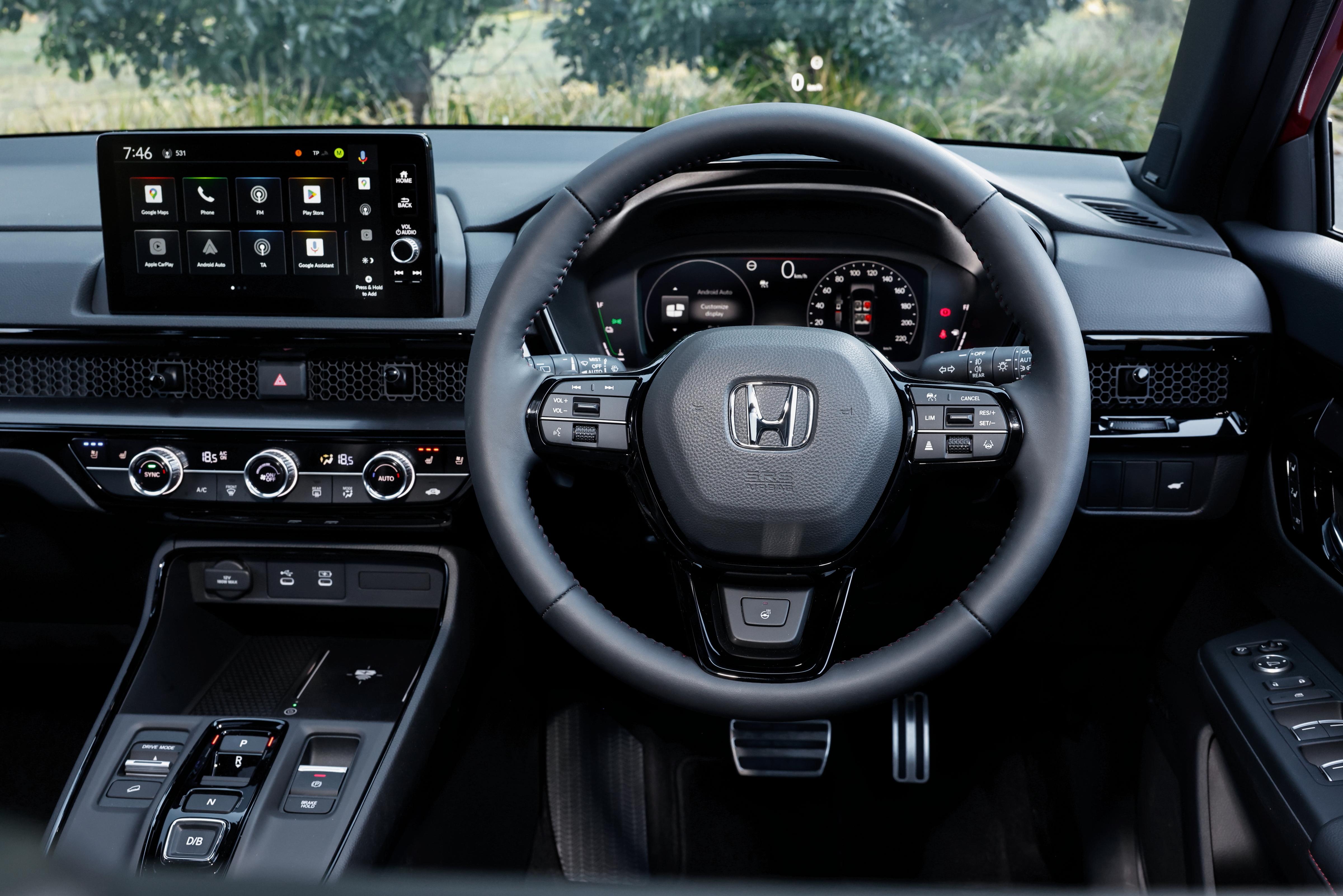
The cabin isn’t what you’d call visually exciting. Aside from honeycomb-patterned air vent covers and some red stitching in the flagship RS, there’s not much design flair going on here. Rather, straight lines and monochrome materials dominate – boring!
However, there is joy to be found inside the CR-V. It comes in the form of tactile, high-quality physical controls – a mixture of buttons, switches, dials and rollers can be found throughout the cabin, all of which offer positive feedback and easy access to key vehicle functions, elevating the user experience considerably compared to screen-centric rivals. This is true of all CR-Vs, not just the fanciest version.
Interior materials, however, do differ in quality across the model range. The base X trim grade features fabric upholstery and a plastic steering wheel, while the e:HEV RS flagship tested here gets the leather treatment, as was the case pre-update.
The cowhide in question feels premium to the touch, as do the softer plastics that wrap around the upper door cards and dash. Best of all, smudge- and scratch-prone gloss-black plastic is in short supply, at least when it comes to high-traffic areas.
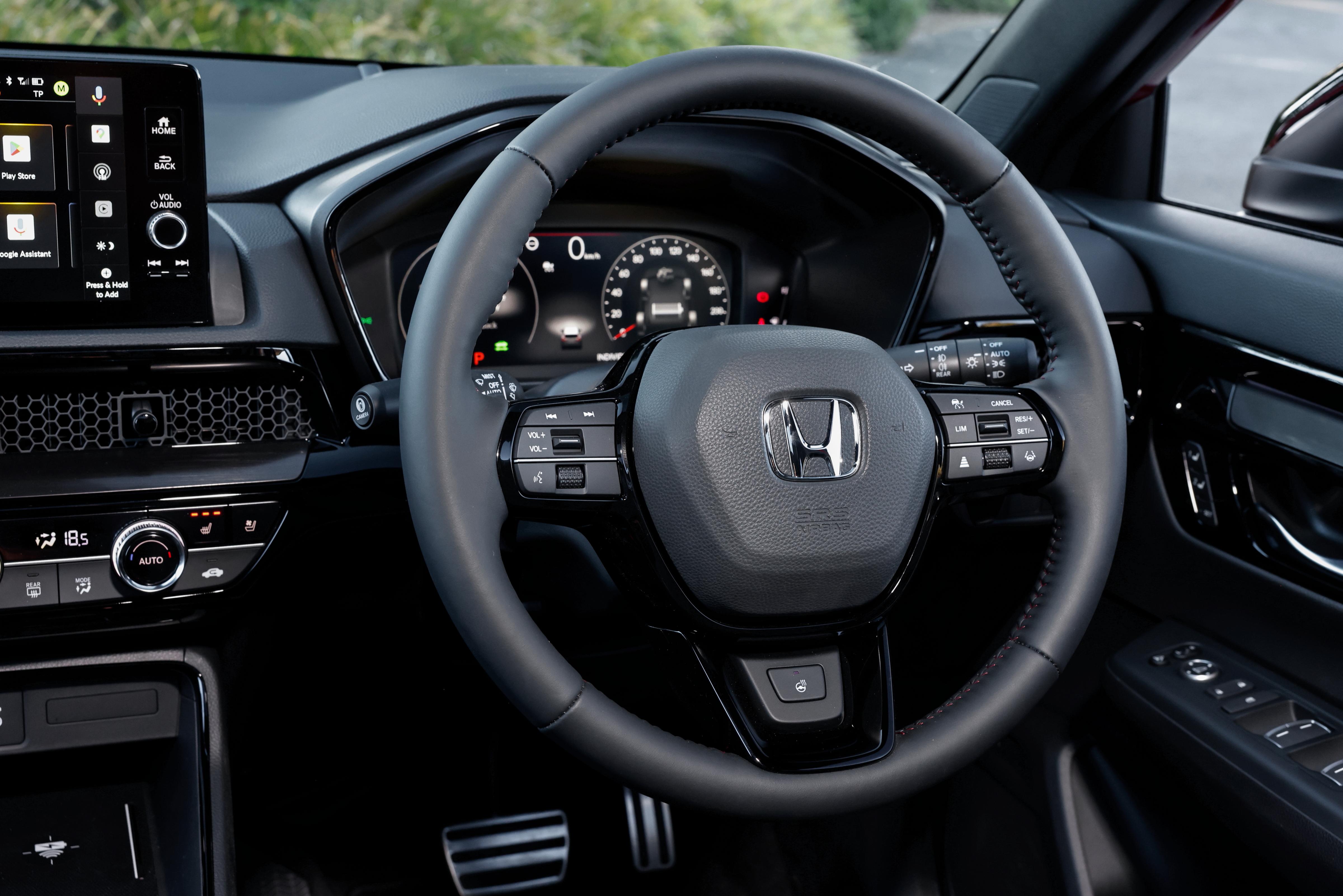
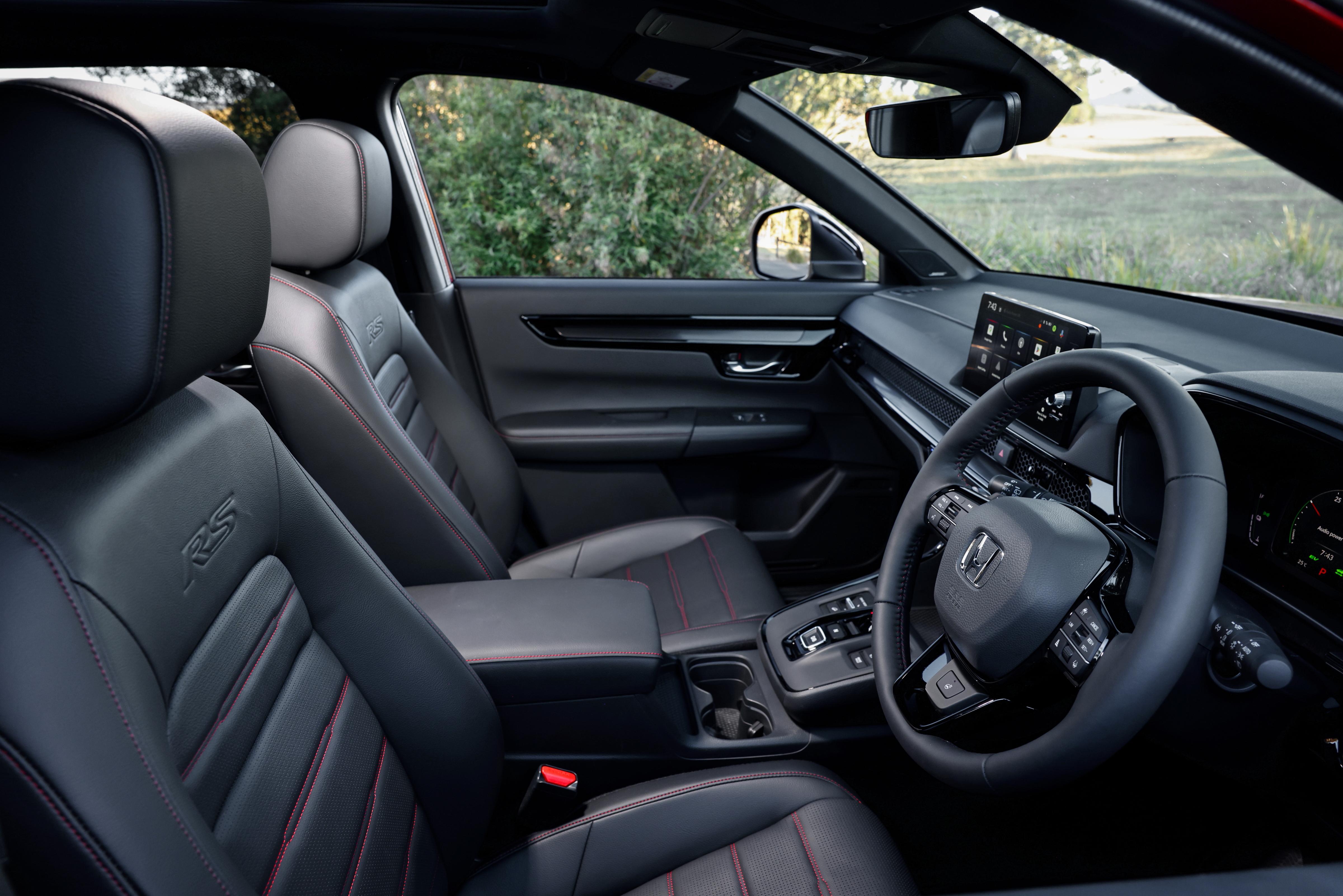
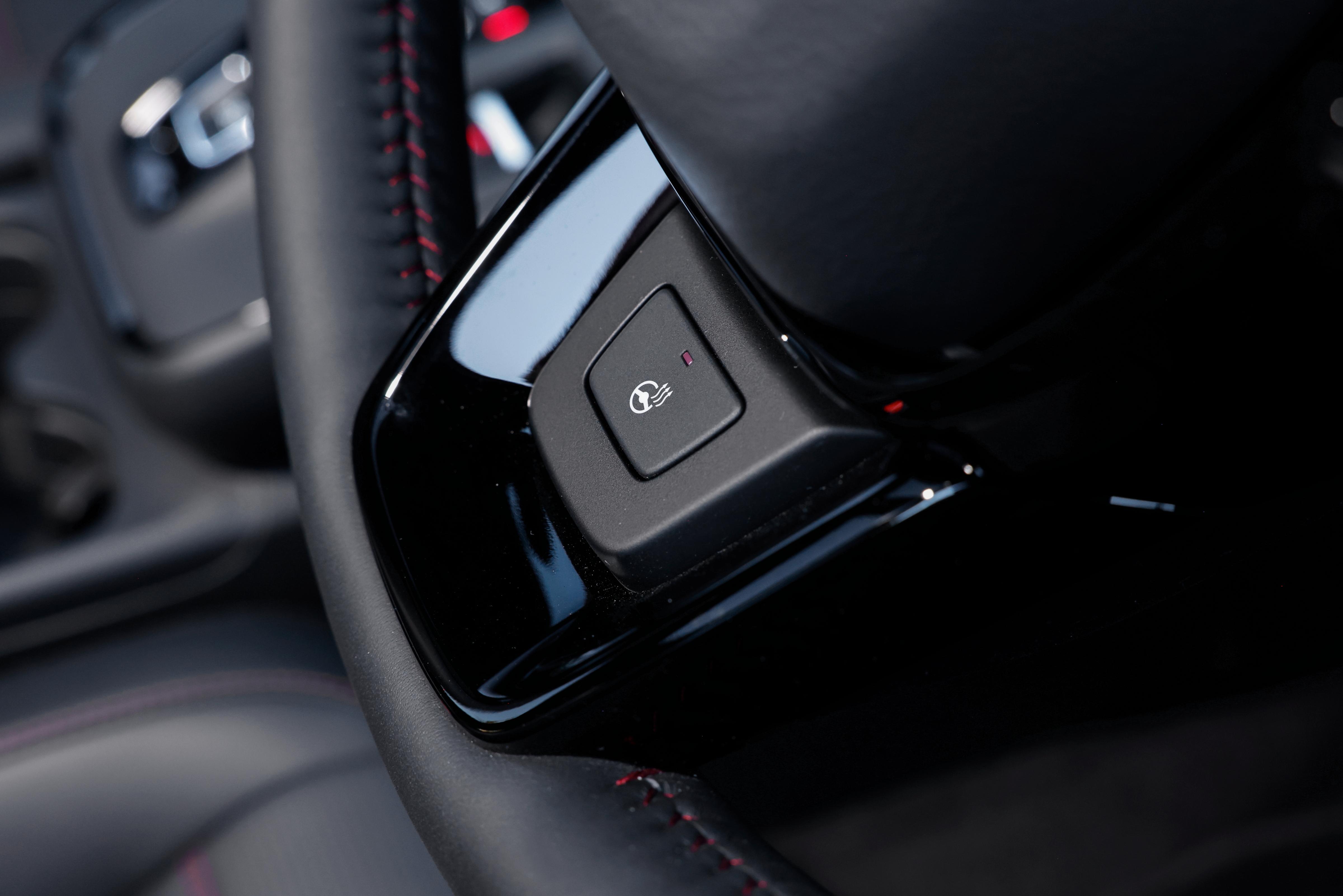
None of this is new, but the e:HEV RS AWD has picked up some valuable luxuries for 2026. The front seats now come with ventilation as well as heating, while the steering wheel is likewise heated. Such upgrades help the $65k flagship to compete with feature-laden alternatives from China, even if they come at a cost.
And the CR-V separates itself from the wave of new arrivals by providing seats that actually support your thighs and torso, although they’re narrower than most. At 90kg, I was just able to get comfortable, but broader drivers may find them too tight.
Honda has also made sure to add extra padding where your elbows are likely to rest, but sadly not where your left knee contacts the transmission tunnel.
That said, few drivers will complain about the driving position. There’s plenty of adjustability in both the chair – base cushion included – and steering wheel, plus electric lumbar support.
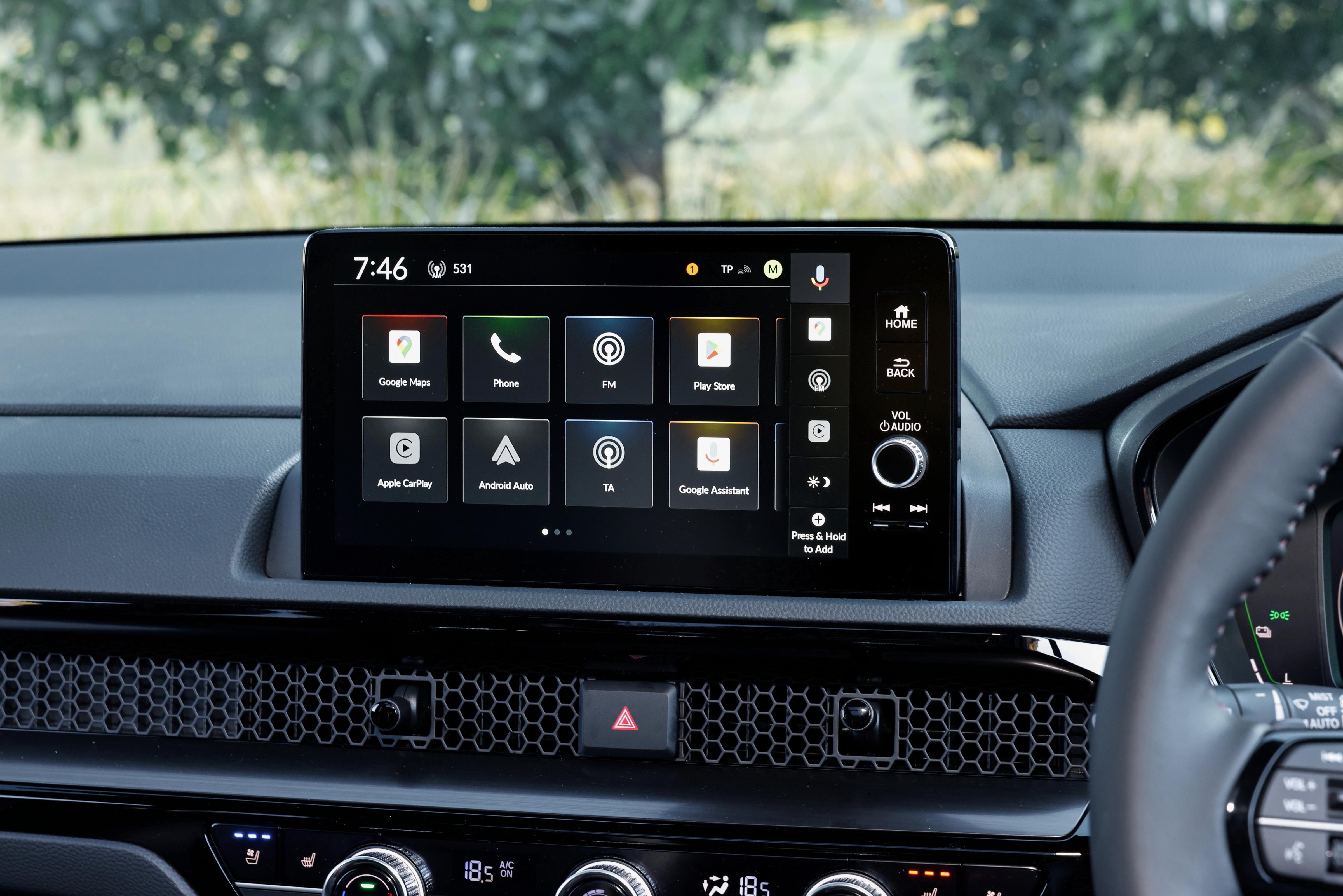
In addition to comfort upgrades for the e:HEV RS AWD, the 2026 CR-V brings a more modern infotainment system with Google Built-in. This allows you to enlist the help of Google’s AI Assistant while driving, and replaces the native navigation system with Google Maps – an interface that many will be familiar with.
There’s still the option to mirror your smartphone, of course, and cables aren’t required. They’re not strictly required for charging purposes either, given the standard fitment of a wireless phone charger right across the CR-V range. Two USB-C outlets and a 12V socket can also be found up front if passengers want to plug in.
Google integration helps liven up the 9.0-inch central screen a little, but it’s still dainty and visually uninspiring, especially considering some rivals offer substantially larger, fully connected systems. Honda’s tech is, however, easy to navigate, benefiting from physical shortcut buttons and a simple grid layout. Oh, and the absence of gimmicky features that you’ll probably never use.
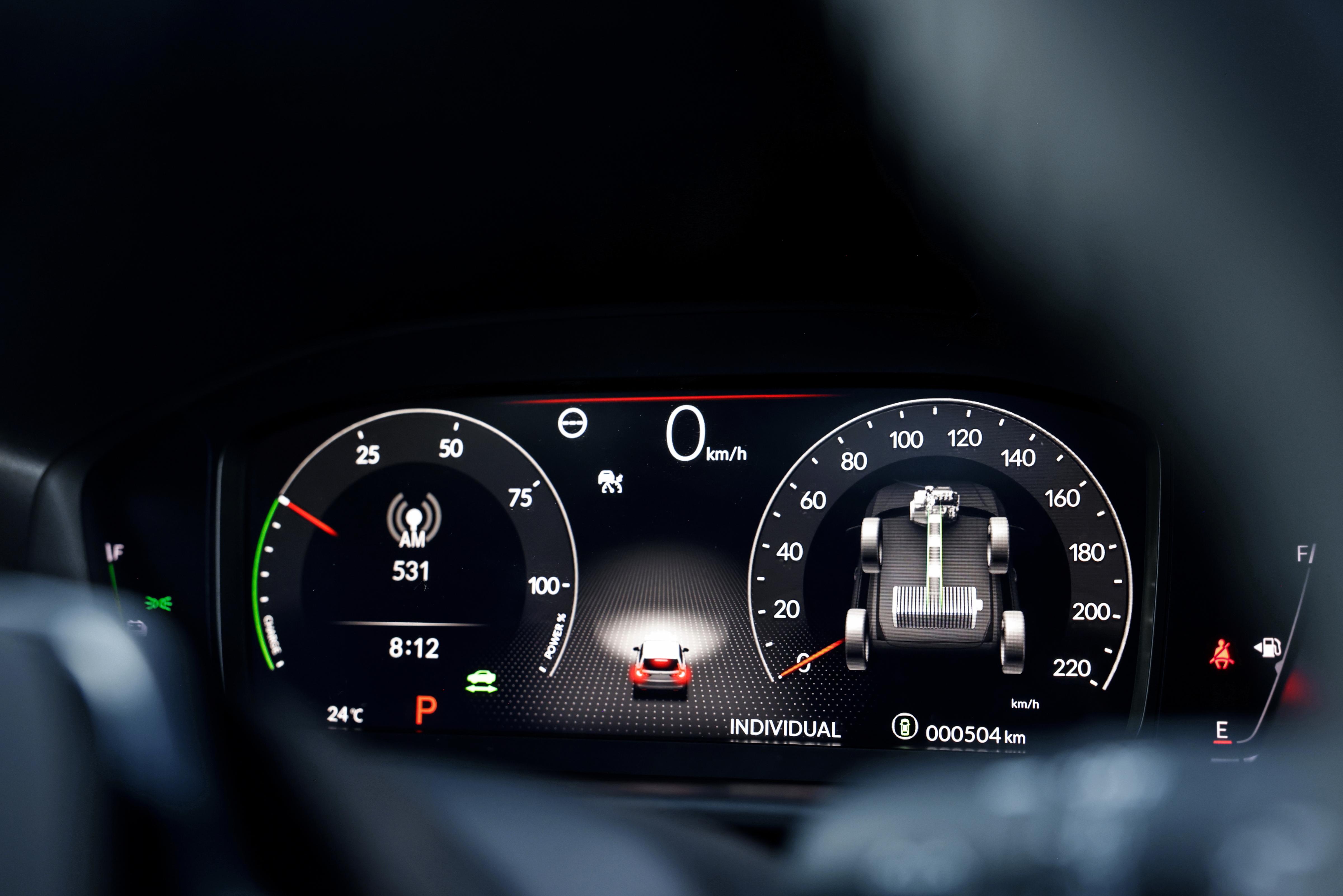
Further, the 10.2-inch digital instrument cluster in all variants bar the base X is perfectly current. It’s large, looks good, and can be configured to display just about anything, including navigation directions and, importantly for geeks, the flow of energy through the hybrid system. This RS also gets a basic head-up display, which is clear and projects your speed and cruise control settings onto the windscreen.
All things considered, the technology in this year’s CR-V is representative of the car as a whole – it’s reliable and fit for purpose, just not jaw-dropping.
In a similar vein, you won’t be blown away by the cabin storage on offer, nor will you be disappointed – the glovebox, door bins and cupholders are all fairly standard for this class of car. I will at least shout out the centre console compartment, which is surprisingly deep and houses a removable tray fit for coins and keys.
Moving back, the rear doors open to near-90 degrees, making the second row ultra-accessible.
However, once inside it quickly becomes apparent the CR-V isn’t a class leader for back-seat space. At six-one, I was left with just a couple inches of kneeroom when sat behind the driver’s seat set to my preferred position. Headroom is even more limited, with those topping six-three likely to brush the headlining.
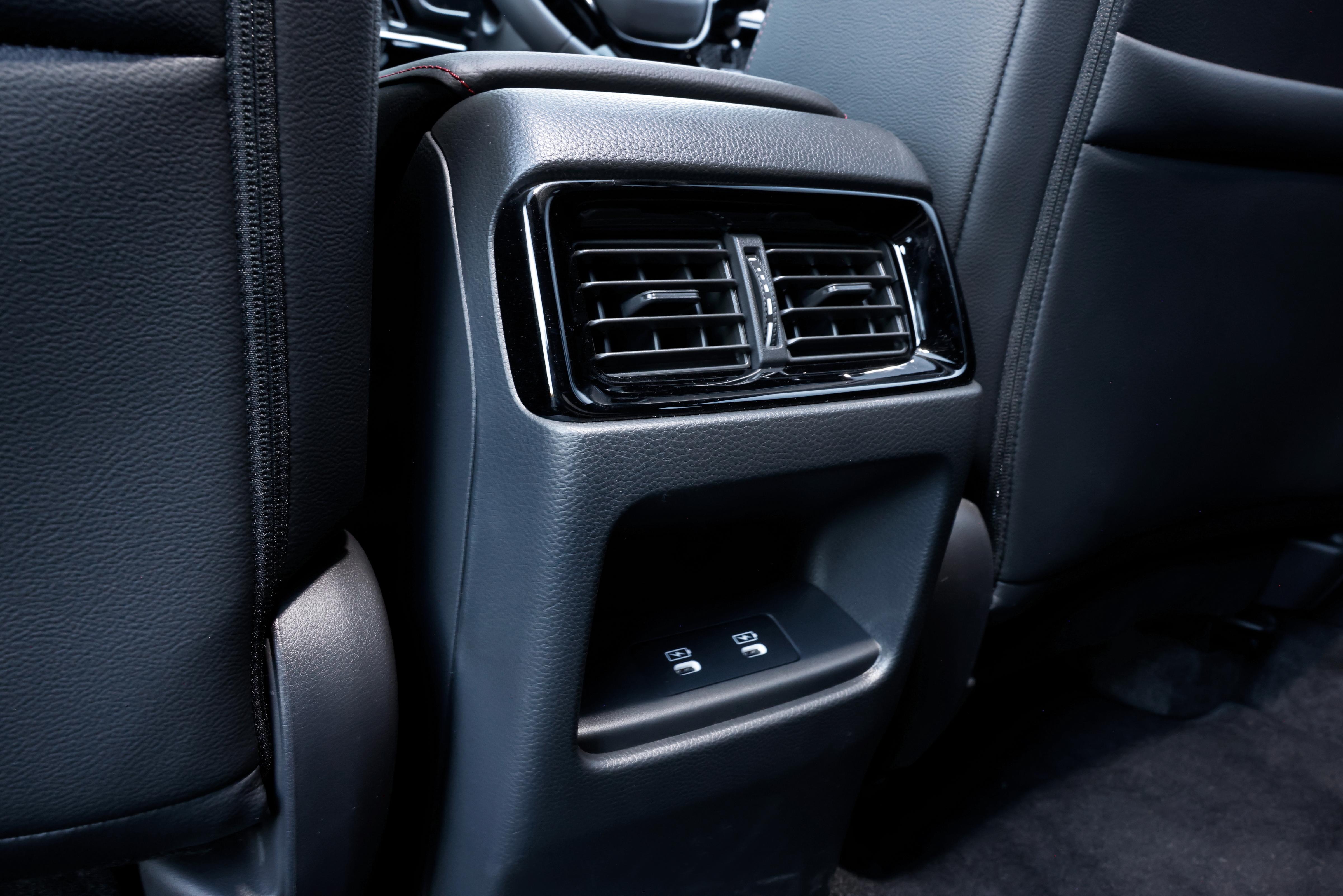
Still, it’s not all doom and gloom. The backs of the front seats are trimmed in soft leather, creating a soft surface against which to rest your knees if required, and more headroom can be accessed by reclining the rear bench. The latter function also comes in handy when passengers want to get some shut-eye on a long road trip.
Better yet, there’s not much of a hump in the floor, so the middle seat is more usable than most. You’ll want an outboard seat when riding in the e:HEV RS AWD on a cold day though, as they’re both heated.
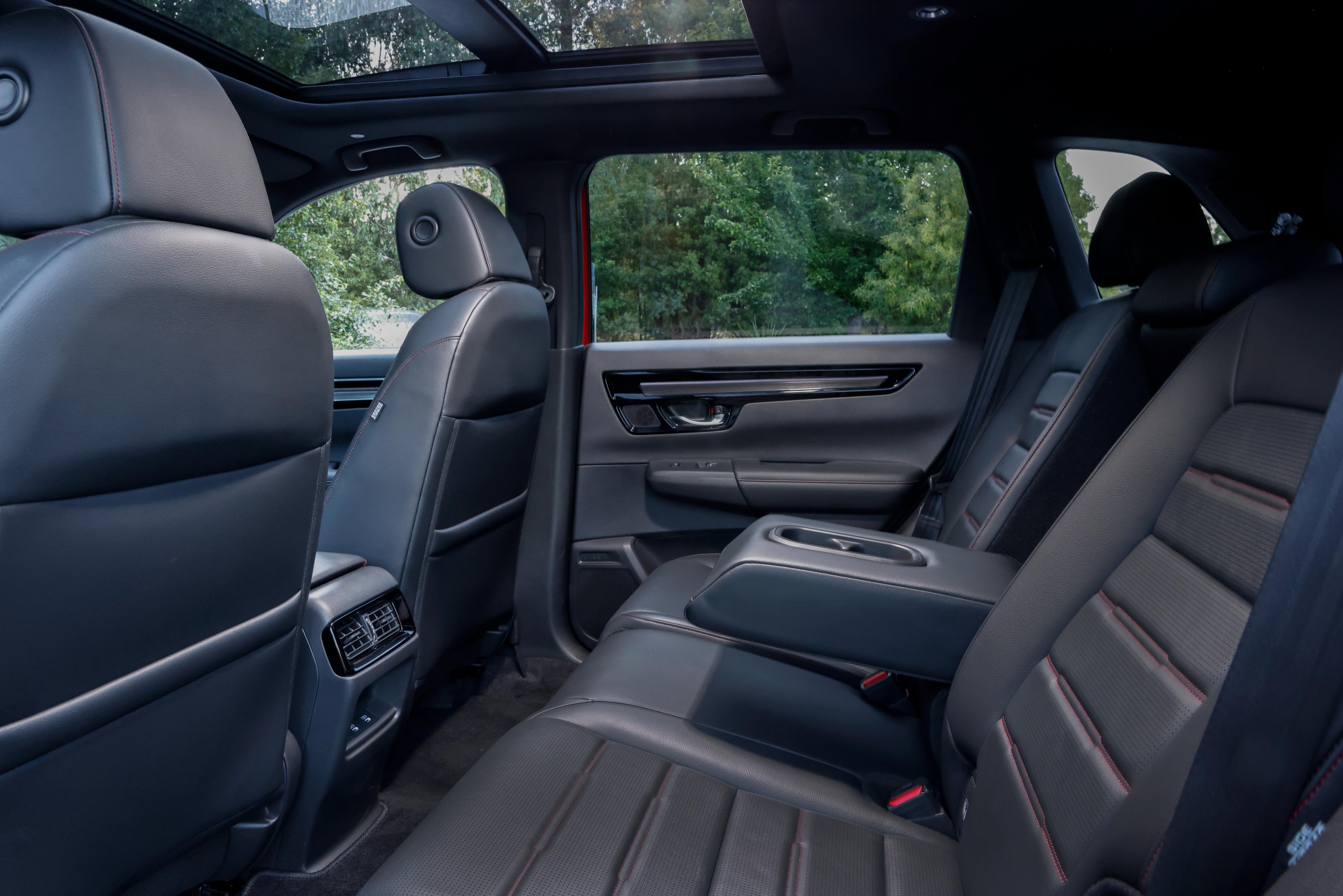
Other rear amenities include a set of USB-C outlets, twin air vents, map pockets, door bins fit for a 600ml drink bottle, and a fold-down armrest with integrated cupholders. The aforementioned armrest has been cleverly designed to allow for arms to… rest either side of stored drinks without any interference.
You can get the CR-V with a third row of seats, but we didn’t have access to the VTi L7 at the launch event.
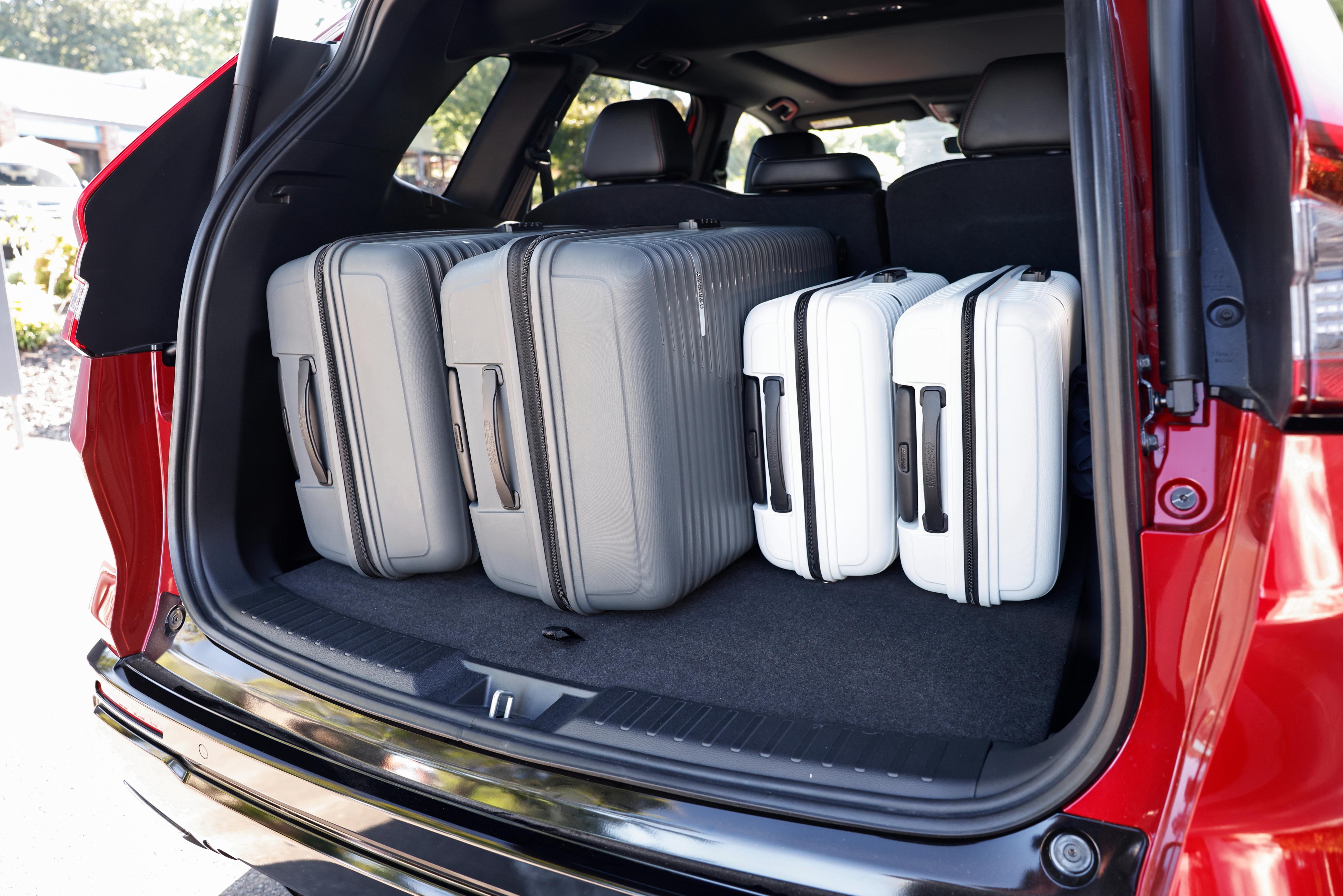
Instead, we spent time with the five-seat hybrid variants, all of which promise decent boot space. And, for the most part, that’s what they deliver.
The power tailgate lifts to reveal a wide, tall, square aperture with a completely flat floor and no load lip, which aids in the loading of bulky items. Smaller items are easily secured courtesy of recesses down each side of the boot floor.
Need more space? In typical Honda fashion, the rear bench folds almost completely flat, as if by magic.
The cargo area also contains a 12V power socket, ample lighting, and a retractable load cover. Hybrids come with a tyre repair kit, while petrol-powered CR-Vs get a space-saver spare.
| Dimensions | Honda CR-V |
|---|---|
| Length | 4704mm |
| Width | 1866mm |
| Height | 1681mm (1691mm with AWD) |
| Wheelbase | 2701mm |
| Ground clearance | 198mm (208mm with AWD) |
| Cargo capacity | 581-589L (second row up) 1636-1671L (second row folded, measured to roof) |
To see how the Honda CR-V lines up against the competition, check out our comparison tool
What’s under the bonnet?
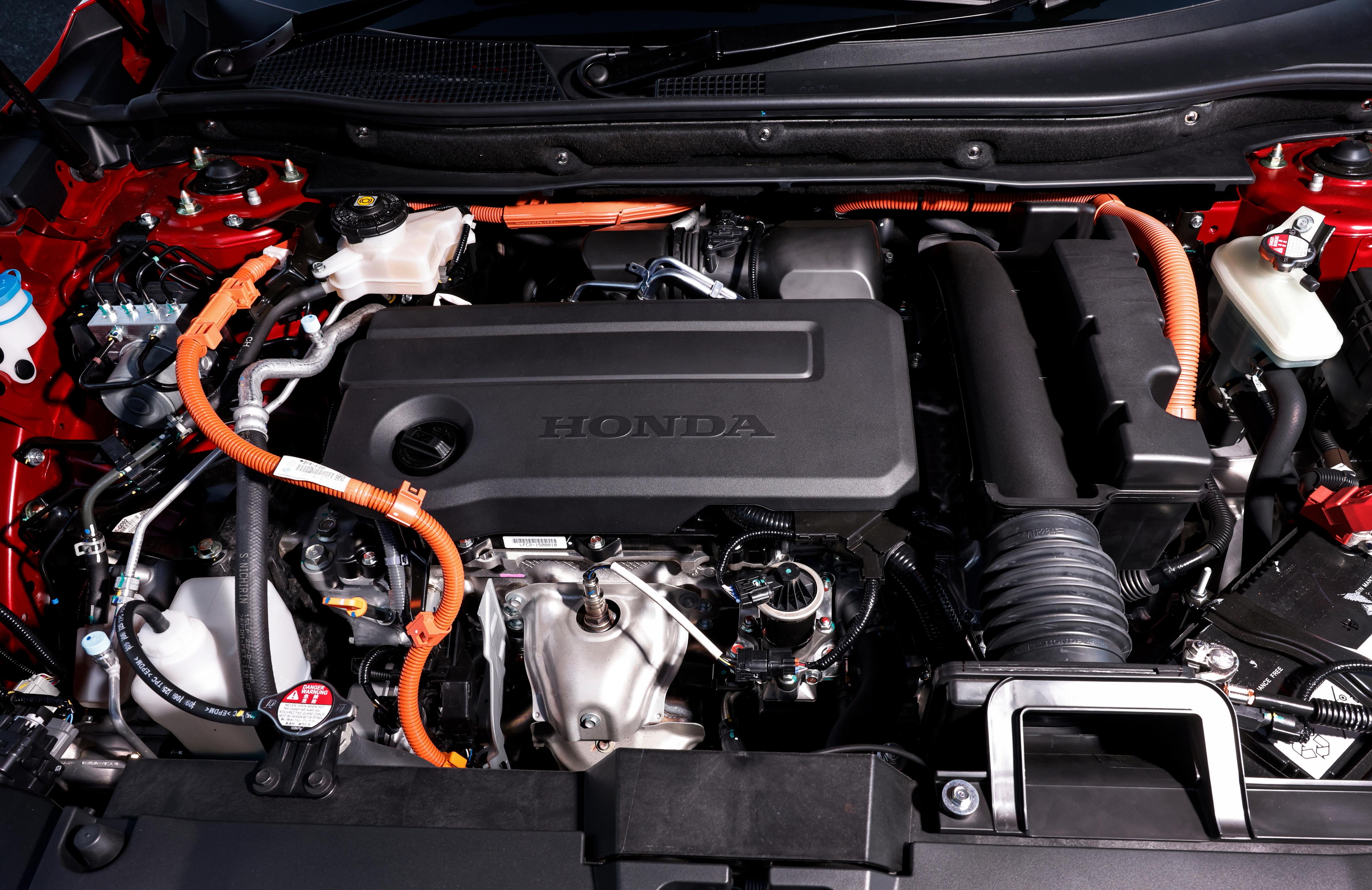
Changes in the powertrain department are limited to the introduction of all-wheel drive hybrid variants, which complement carryover front-wheel drive turbo-petrol and front-wheel drive hybrid offerings.
| Specifications | CR-V | CR-V e:HEV |
|---|---|---|
| Engine | 1.5L 4cyl turbo-petrol | 2.0L 4cyl hybrid |
| Power | 140kW | 135kW |
| Torque | 240Nm | 335Nm |
| Transmission | CVT | e-CVT |
| Drive type | Front-wheel drive | Front- or all-wheel drive |
| Kerb weight | 1613kg – VTi X 1700kg – VTi L7 |
1741kg – e:HEV X 1710kg – e:HEV L 1765kg – e:HEV LX AWD 1828kg – e:HEV RS AWD |
| Fuel economy (claimed) | 7.1L/100km – VTi X 7.3L/100km – VTi L7 |
5.5L/100km – e:HEV X, e:HEV L 5.7L/100km – e:HEV LX AWD, e:HEV RS AWD |
| Fuel economy (as tested) | – | 5.0L/100km |
| Fuel tank capacity | 57L | 57L |
| Fuel requirement | 91-octane regular unleaded | 91-octane regular unleaded |
| CO2 emissions | 162g/km – VTi X 167g/km – VTi L7 |
125g/km – e:HEV X, e:HEV L 131g/km – e:HEV LX AWD, e:HEV RS AWD |
| Emissions standard | Euro 6b | Euro 6b |
| Braked towing capacity | 1500kg – VTi X 1000kg – VTi L7 |
750kg |
To see how the Honda CR-V lines up against the competition, check out our comparison tool
How does the Honda CR-V drive?
To set the scene, the launch drive took us from Honda HQ in Melbourne’s inner-west up to Marysville, with highways and winding country roads dominating the route.
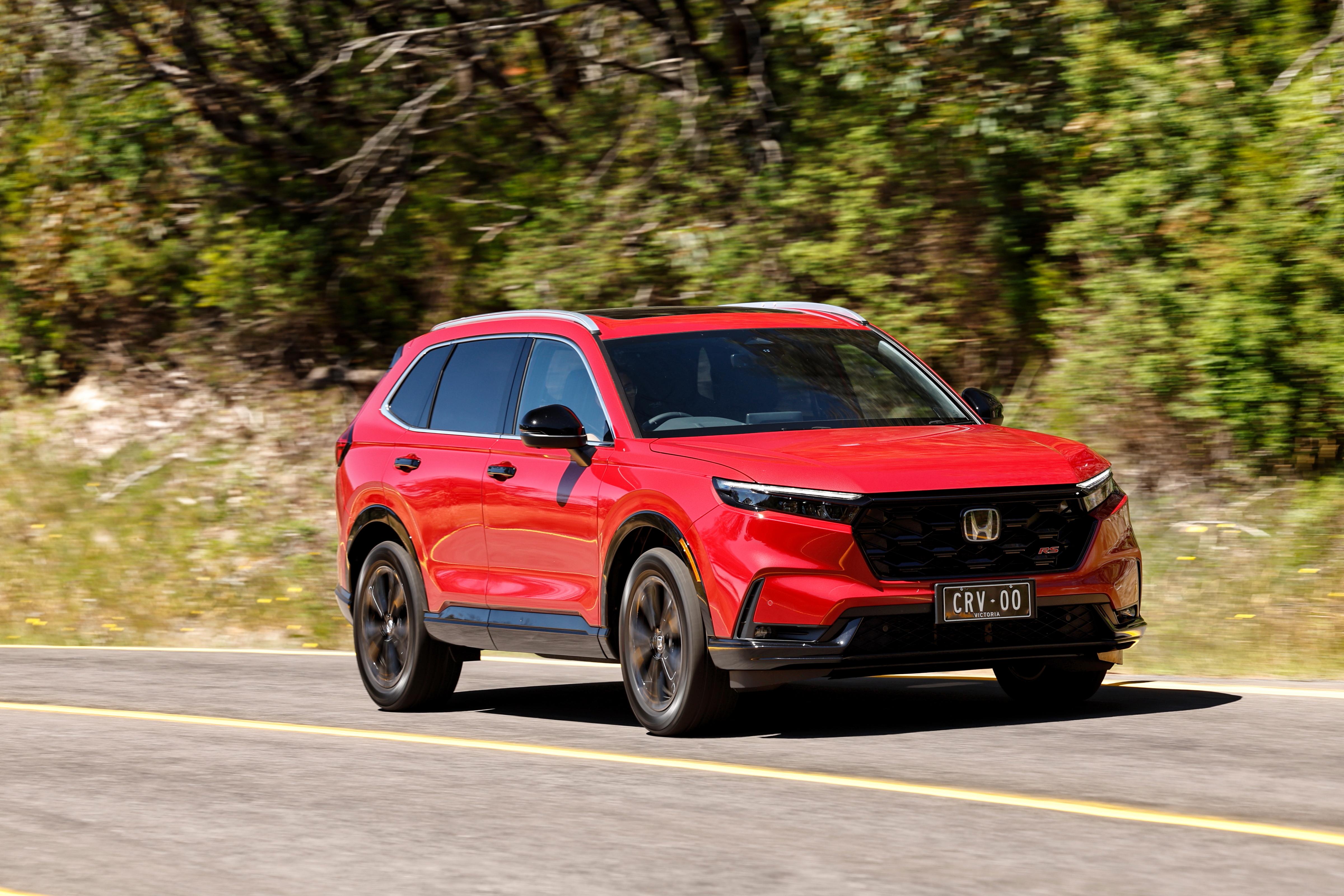
As such, we were able to get a strong sense of the CR-V’s dynamism and high-speed manners, but not necessarily its behaviour in urban settings – a shame given that’s where the vast majority of these are likely to live.
Nevertheless, we know from previous experience the CR-V has one of the best ride and handling packages in the mid-size SUV class, and on open roads it does just about everything well without excelling in any particular area.
It negotiates highway on-ramps with relative ease, drawing on the immediacy of electric torque to leap off the line and build speed steadily – independent testing suggests a 0-100km/h sprint time of around eight seconds.
Unlike many similar SUVs, the CR-V features an e-CVT – an electronic continuously variable automatic transmission – which means there are no pronounced gears. Rather, the powertrain behaves like a rubber band, stretching and contracting in line with the demands of your right foot. While traditional CVTs cop some flak for feeling ‘drony’, this Honda system is smooth and refined – perfect for a family wagon.
Once up to speed, the CR-V e:HEV settles into a comfortable rhythm, coasting on electric power when possible to maximise efficiency. In these moments, you’ll see the letters ‘EV’ light up on the dash.
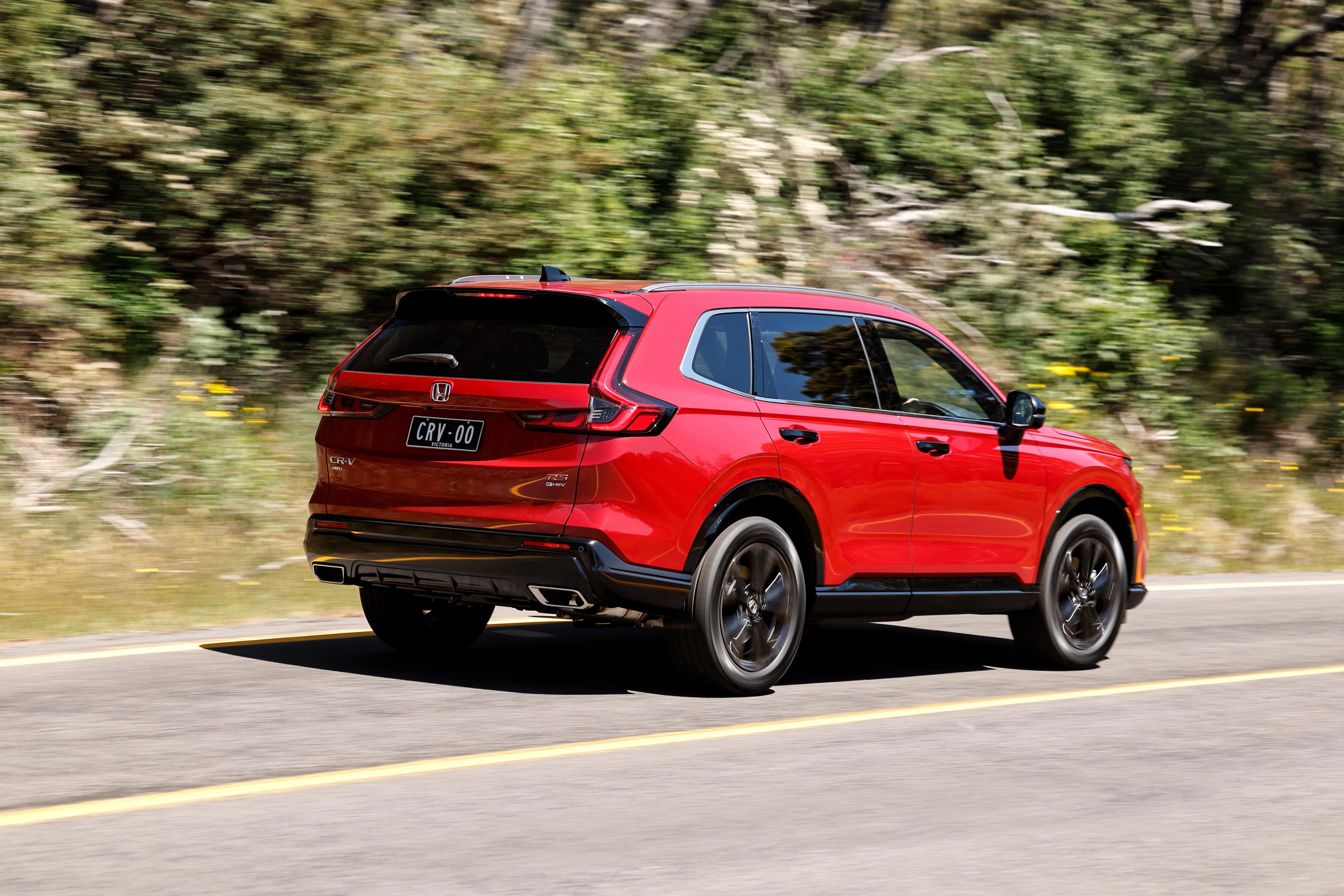
While not quite as frugal as a full EV or plug-in hybrid (PHEV) around town, the CR-V is well suited to cross-country touring. Our test vehicle sipped just 5.0L/100km when cruising at 100km/h and, importantly, it doesn’t require charging.
That’s not to say it’s without peer – the Toyota RAV4 remains the king of hybrid efficiency. Hybrid versions of the Hyundai Tucson and Kia Sportage aren’t far off, either.
Similarly, the CR-V rides well on the highway, but doesn’t necessarily stand out from the pack. It’s a bit softer than some rivals, especially at the rear, so you barely feel road joins and smaller potholes.
You don’t hear much of what’s going on outside either, as the cabin is very well insulated from both traffic and tyre noise.
Another highlight is the driving position. It’s high and commanding – factors that help the driver feel confident and ultimately secure behind the wheel. Front, side and rear visibility are all strong, which reinforces that sense of safety at high speeds.
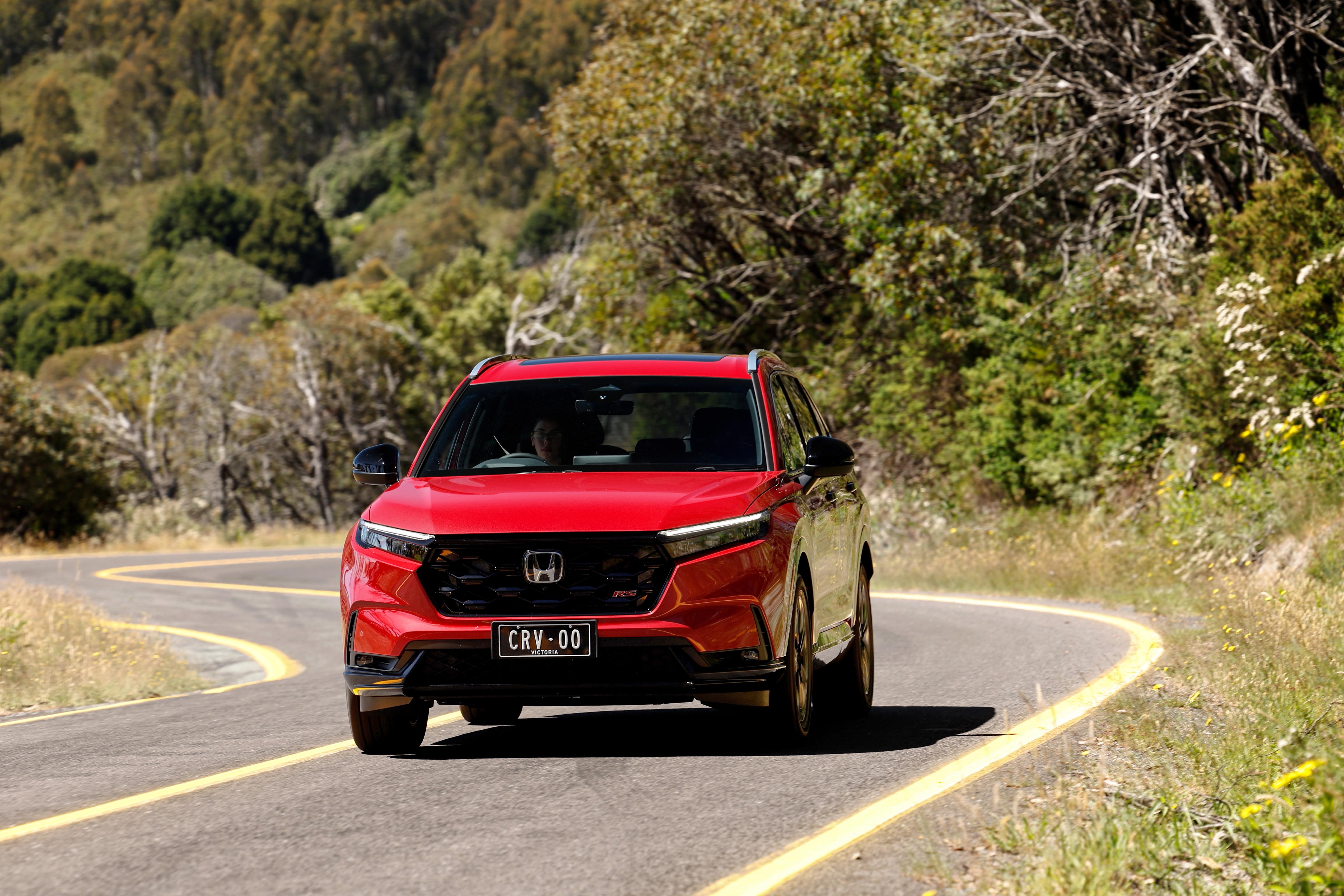
On the subject of safety, the active safety systems in the CR-V help to ease the mental load of long road trips.
Several different cruise control modes can be easily programmed using clearly labelled buttons on the steering wheel – not silly stalks or haptics – and all CR-Vs come with sophisticated semi-autonomous driving technology that incorporates both adaptive cruise control and active lane-centring for a near hands-off highway experience. Don’t actually take your hands off the wheel though, as the car will quickly realise and demand your input.
That said, the driver attention monitor isn’t overbearing, like in many new cars these days. The CR-V won’t have a meltdown if you accidentally exceed the speed limit every now and then, either.
It does, however, get a bit nervous when you’re punting down a country road, as the lane-keep assist system isn’t necessarily attuned to the inconsistency of Australian line markings. And I couldn’t figure out how to switch lane-keeping off – an action that’s straightforward in Hyundai and Kia SUVs.
Indeed, the twisty ribbons of tarmac surrounding Marysville proved a more stern challenge for the CR-V, which had until then negotiated multi-lane motorways with relative ease.
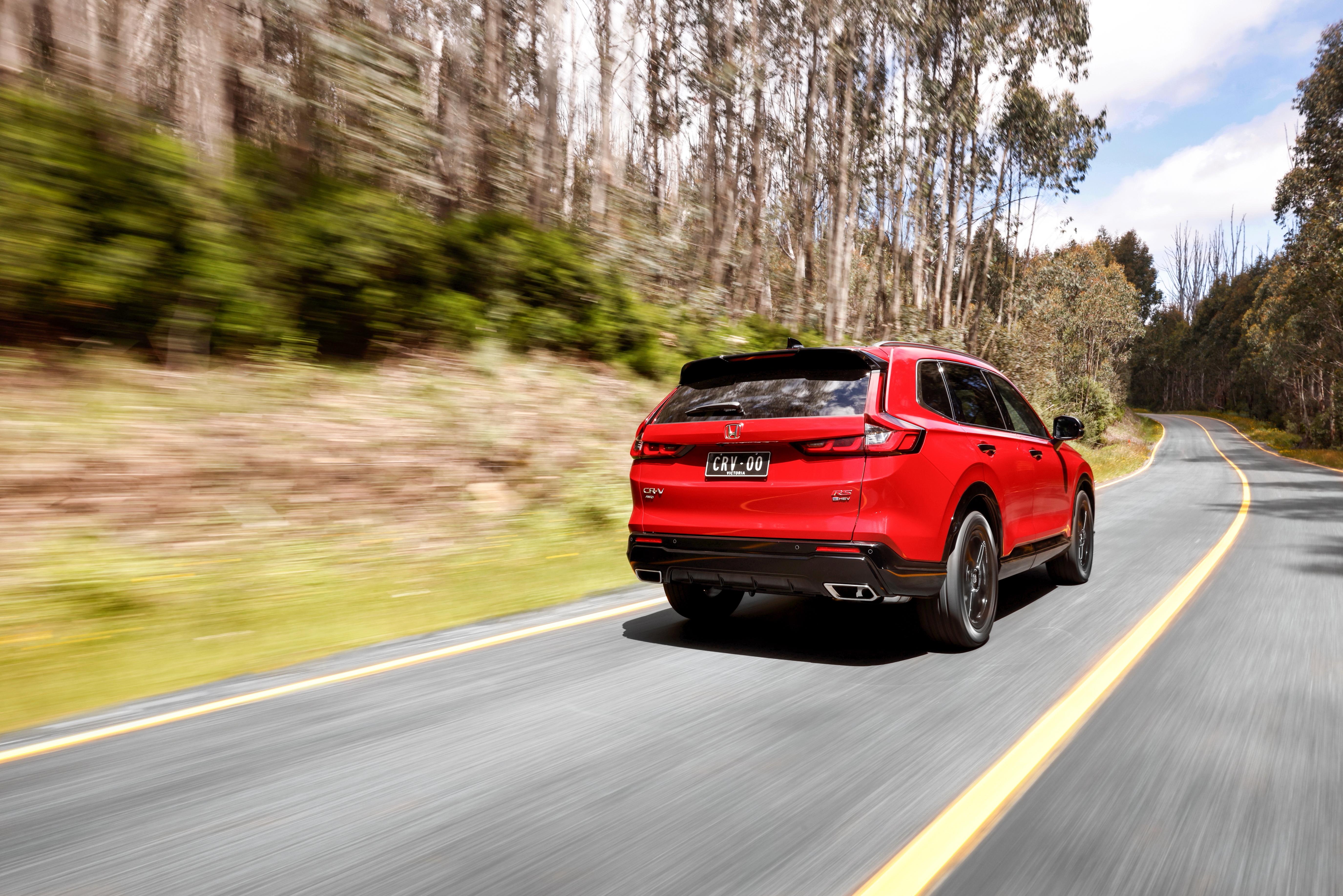
Here, limitations to Honda’s hybrid system begin to surface. For one, the combined 135kW/335Nm outputs of the CR-V saw it struggle up steep inclines, barely able to sustain 100km/h under full load. All the while, the petrol engine screams for mercy in a rather undignified manner. Fuel economy also suffered during my run up Lake Mountain, blowing out to nearly 10L/100km.
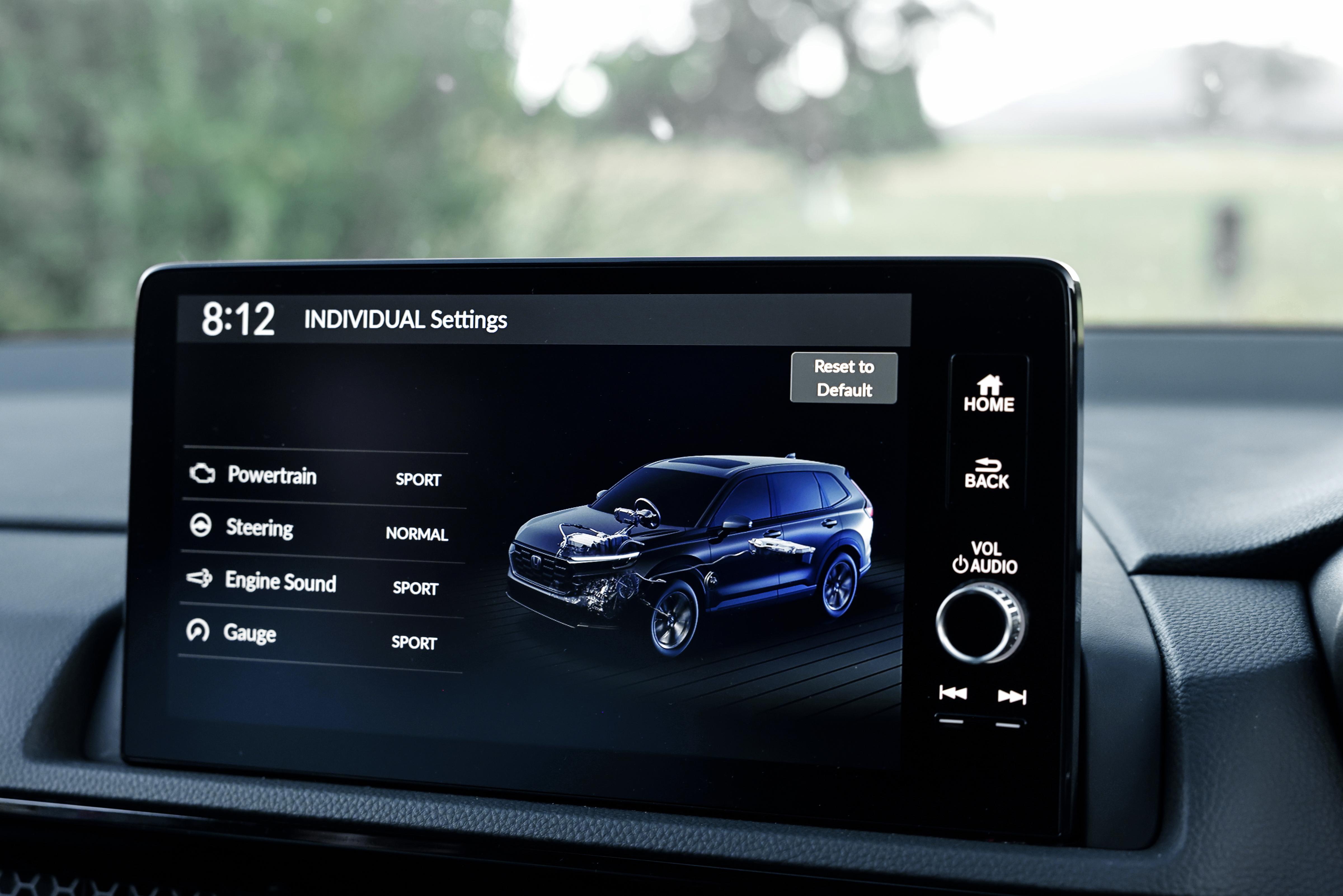
Switching into the ‘Sport’ drive mode improves throttle response, yet there’s not much to be gained from improved response when the right pedal is already flat to the floor. Still, Sport mode is worth a try every now and then for the tasteful Civic Type R-esque engine noise it pipes into the cabin. The RS even throws in an ‘Individual’ mode, which lets you configure the engine response, steering weight, and engine sound for a more personal driving experience.
Being a hybrid, the e:HEV also offers regenerative braking. You can cycle between four levels of regen intensity – none of which are particularly aggressive – using the paddles behind the steering wheel, while the most intense ‘B’ mode is housed in a button on the centre console. Just be careful to not overuse this setting when navigating a prolonged descent, because once the small battery is full the engine will then roar at high revs to bleed off excess energy.
Many owners will instead opt to keep the CR-V in ‘D’ and rely on the brake pedal, which is effective and progressive through its range of travel.
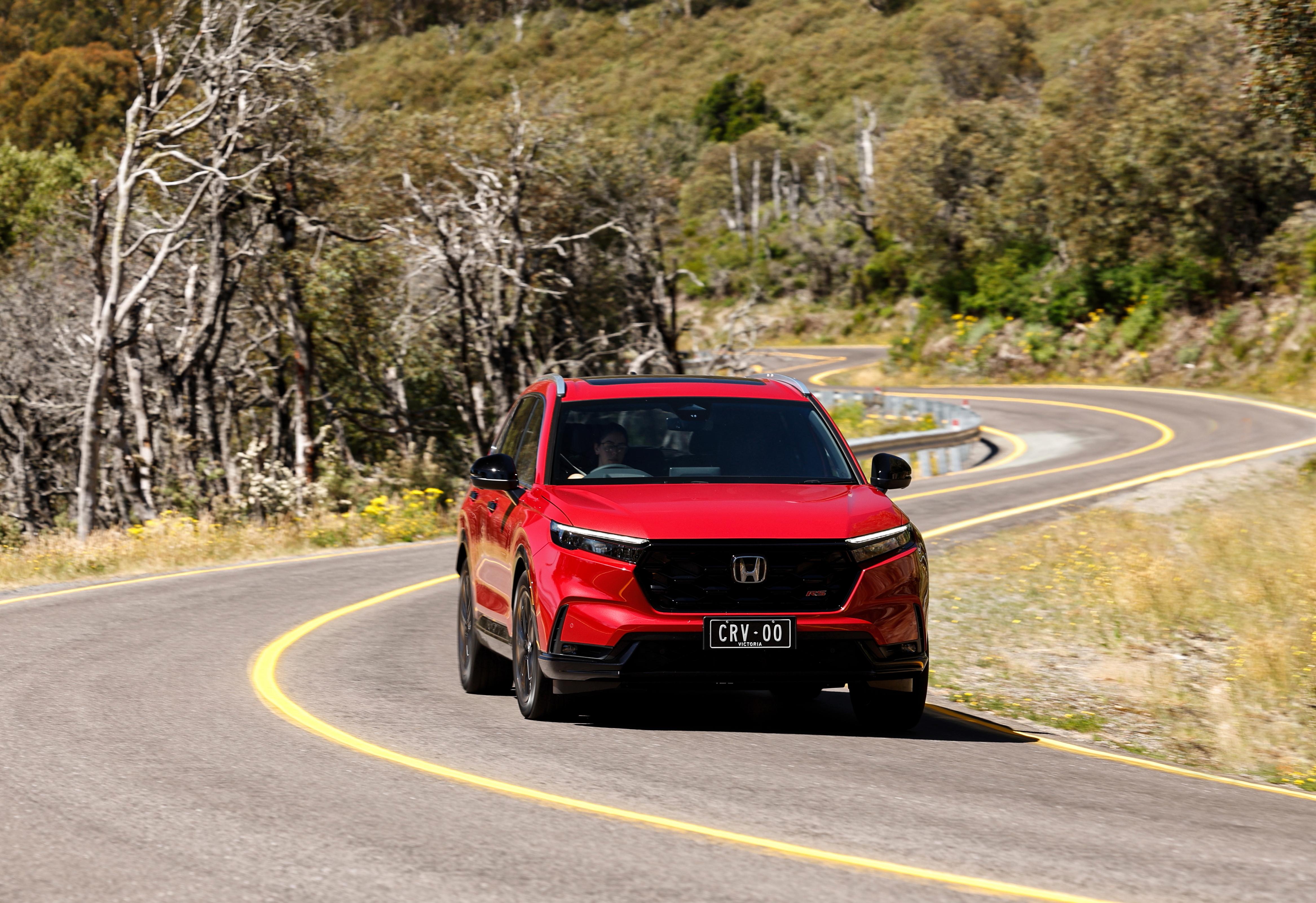
Aside from a lack of ‘go’, the CR-V does a decent job of negotiating technical roads, especially in RS specification. It feels quite compact for a family SUV, while the combination of all-wheel drive and premium Michelin tyres ensures consistent grip during more enthusiastic driving.
This is reassuring, as the chassis pitches and rolls a bit through bends, and while the steering is accurate and direct, it doesn’t offer much insight into what the front wheels are doing. Still, it takes substantial effort to find the limit of what the CR-V can handle.
It also takes a lot to disrupt comfort inside the cabin. The primary ride of the CR-V is definitely soft, so uneven tarmac often induces moderate bouncing from the rear suspension, though it’s not excessive and the CR-V settles quickly. And the benefit of such a forgiving setup is that the car is able to absorb the harshness of sharp edges in the road, preventing any wince-worthy moments.
To see how the Honda CR-V lines up against the competition, check out our comparison tool
What do you get?
All CR-Vs gain additional features for 2026, with Google Built-in topping the list of upgrades.
2026 Honda CR-V VTi X and e:HEV X equipment highlights:
- 17-inch alloy wheels (VTi X) or 18-inch gloss-black alloy wheels (e:HEV X)
- Full-size alloy spare (VTi X) or tyre repair kit (e:HEV X)
- Automatic LED headlights
- Manual height adjustment
- Automatic high-beam
- LED front fog lights
- Hands-free power tailgate
- Electronic parking brake with auto hold
- Proximity entry with push-button start
- 7.0-inch instrument cluster screen
- 9.0-inch touchscreen infotainment system
- Google Built-in (NEW)
- Wireless Apple CarPlay
- Wired Android Auto
- Wireless phone charger
- 8-speaker sound system
- 4 x USB-C outlets
- 8-way power driver’s seat with 4-way power lumbar
- Black fabric upholstery
- Dual-zone climate control with second-row air vents
- Tilt and telescopic steering column adjustment
- Beige headliner
- Honda Connect 3-year complimentary subscription
- Remote control of locks, climate control, lights, horn, tailgate and immobiliser
- Automatic collision detection
- Speed and geofencing alerts
- Emergency call button
- Location search
The VTi L7 and e:HEV L add:
- 18-inch alloy wheels in silver (VTi L7) or gloss-black (e:HEV L)
- Space-saver spare (VTi L7) or tyre repair kit (e:HEV L)
- Rain-sensing wipers
- Smart KeyCard
- 10.2-inch digital instrument cluster
- Leather-wrapped steering wheel
- Driver’s seat memory
- 4-way power passenger seat
- Heated front seats
- Black leather-appointed upholstery
- Tri-zone climate control with independent rear controls, third-row air vents (VTi L7)
The e:HEV LX AWD adds:
- 19-inch alloy wheels
- Automatic LED headlights with auto height adjustment
- DAB+ digital radio
- 12-speaker Bose sound system
- Piano black interior trim
- Ambient interior lighting
The e:HEV RS AWD adds:
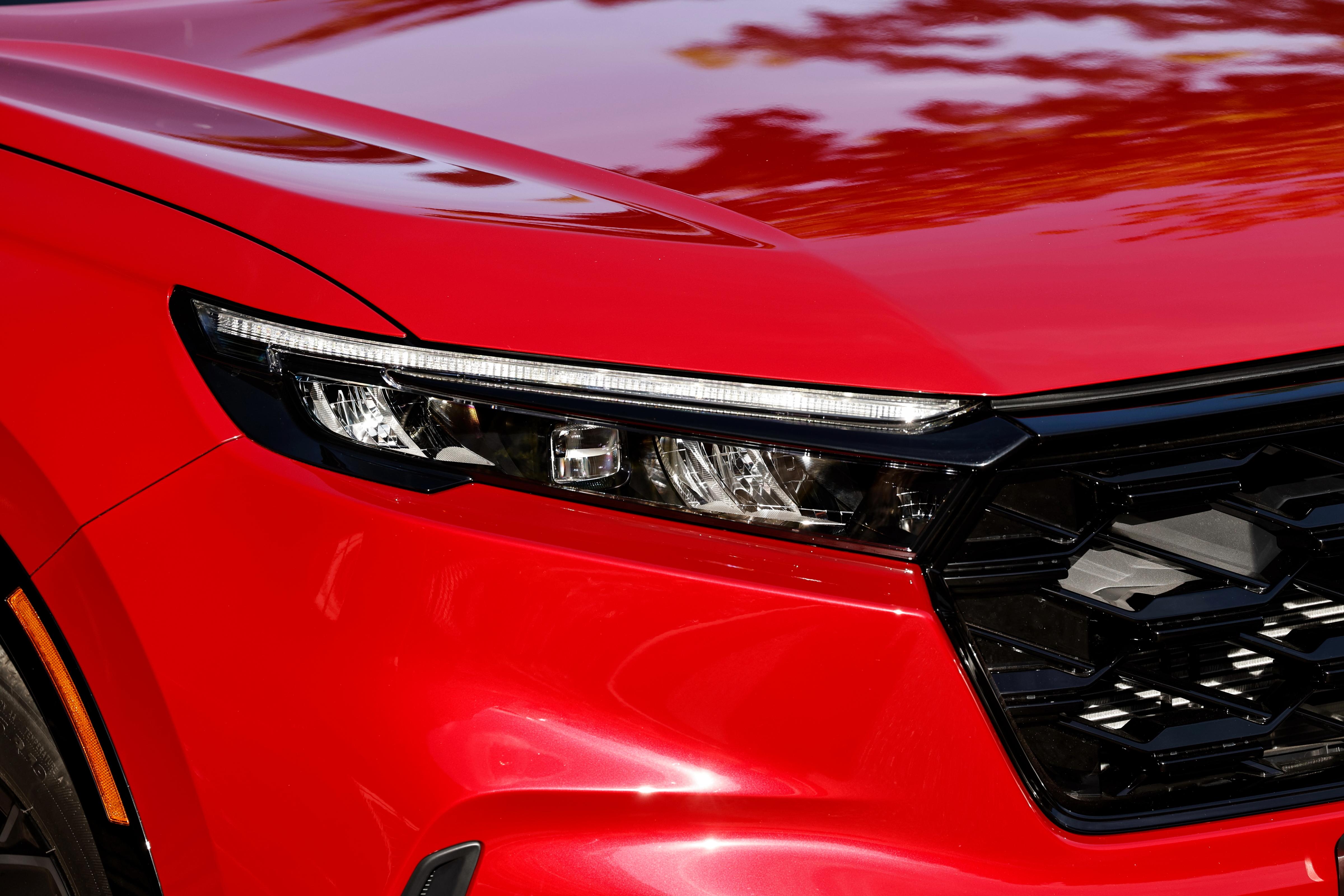
- Adaptive LED headlights
- LED active cornering lights
- Panoramic sunroof
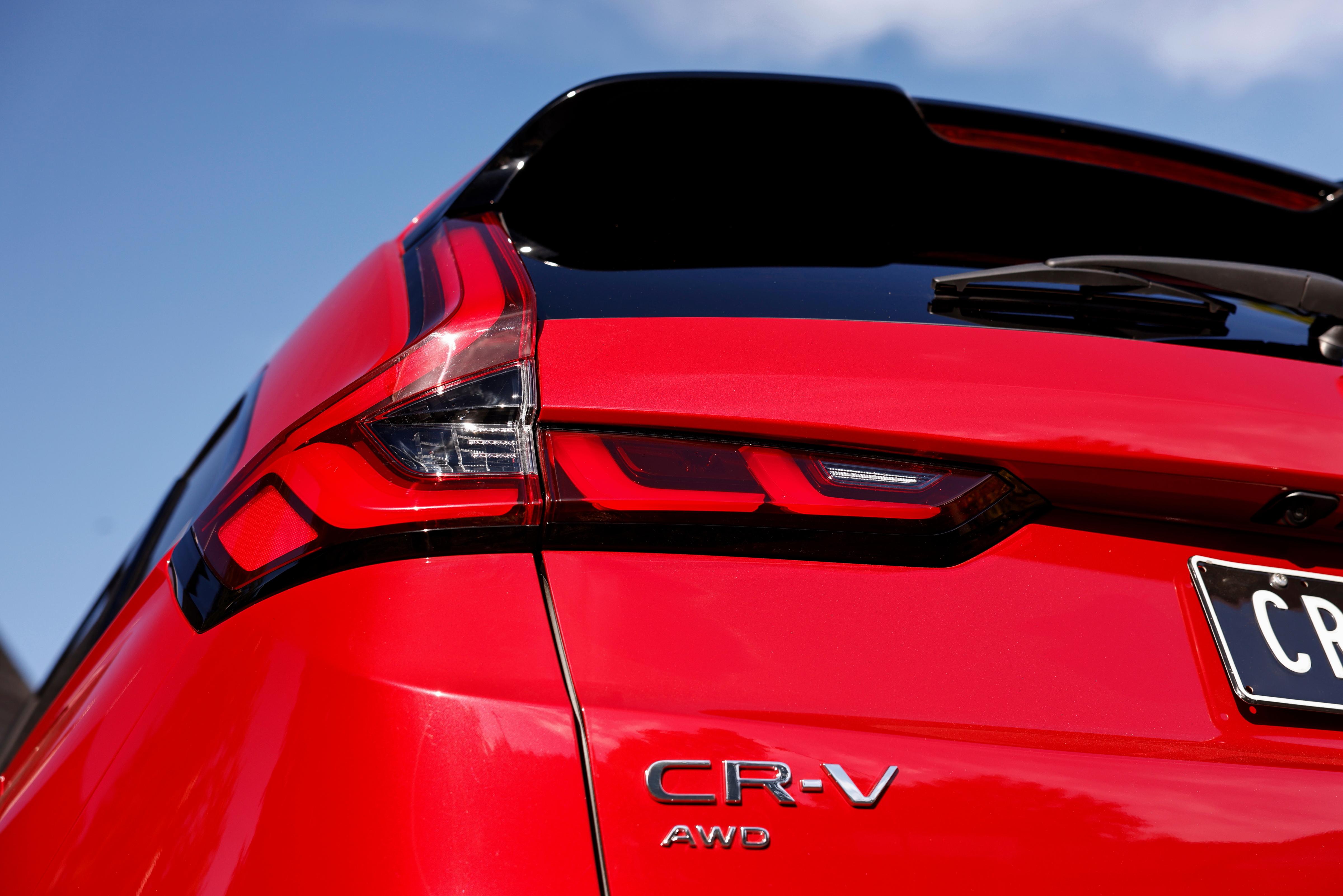
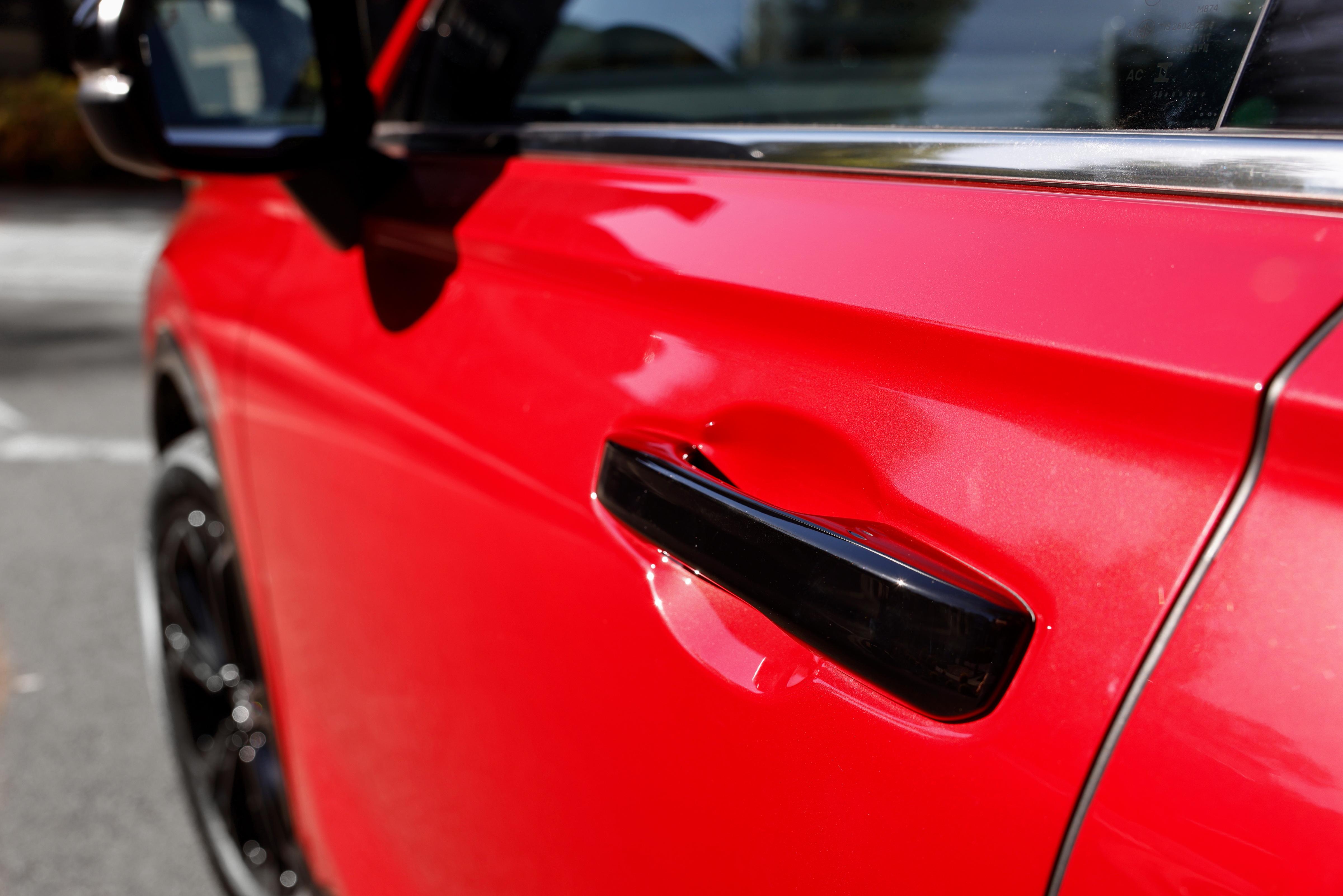
- Piano-black door handles, exterior mirrors, spoiler, wheel-arch garnish and B- and C-pillar trims (NEW)
- Head-up display (NEW)
- Ventilated front seats (NEW)
- Heated outboard rear seats (NEW)
- Heated steering wheel (NEW)
- Red stitching
- Alloy pedals
- Black headliner
To see how the Honda CR-V lines up against the competition, check out our comparison tool
Is the Honda CR-V safe?
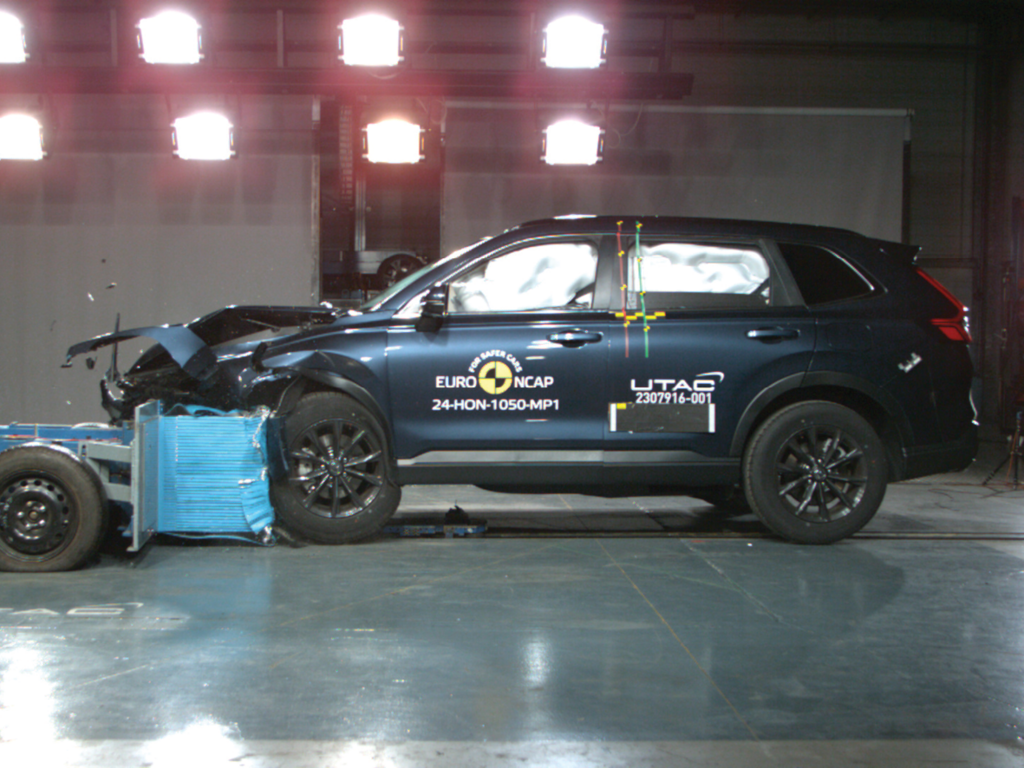
The Honda CR-V has a four-star rating from independent safety authority ANCAP, based on testing conducted in 2024.
| Category | Honda CR-V |
|---|---|
| Adult occupant protection | 88 per cent |
| Child occupant protection | 88 per cent |
| Vulnerable road user protection | 76 per cent |
| Safety assist | 68 per cent |
Standard safety equipment includes:
- Autonomous emergency braking
- Adaptive cruise control with low-speed follow
- Blind-spot monitoring
- Driver attention monitor
- Lane-keep assist
- Post-collision braking
- Rear cross-traffic alert
- Traffic Jam Assist
- Traffic sign recognition
- Tyre pressure monitoring
- Reversing camera
- Front and rear parking sensors
- Airbags
- Dual front
- Side for first and second rows
- Curtain for up to three rows
- Front knee
- Front centre
The e:HEV L, e:HEV LX and e:HEV RS also include a surround-view camera, new for 2026.
To see how the Honda CR-V lines up against the competition, check out our comparison tool
How much does the Honda CR-V cost to run?
The Honda CR-V is backed by a five-year, unlimited-kilometre vehicle warranty, with the hybrid’s battery covered by an eight-year warranty.
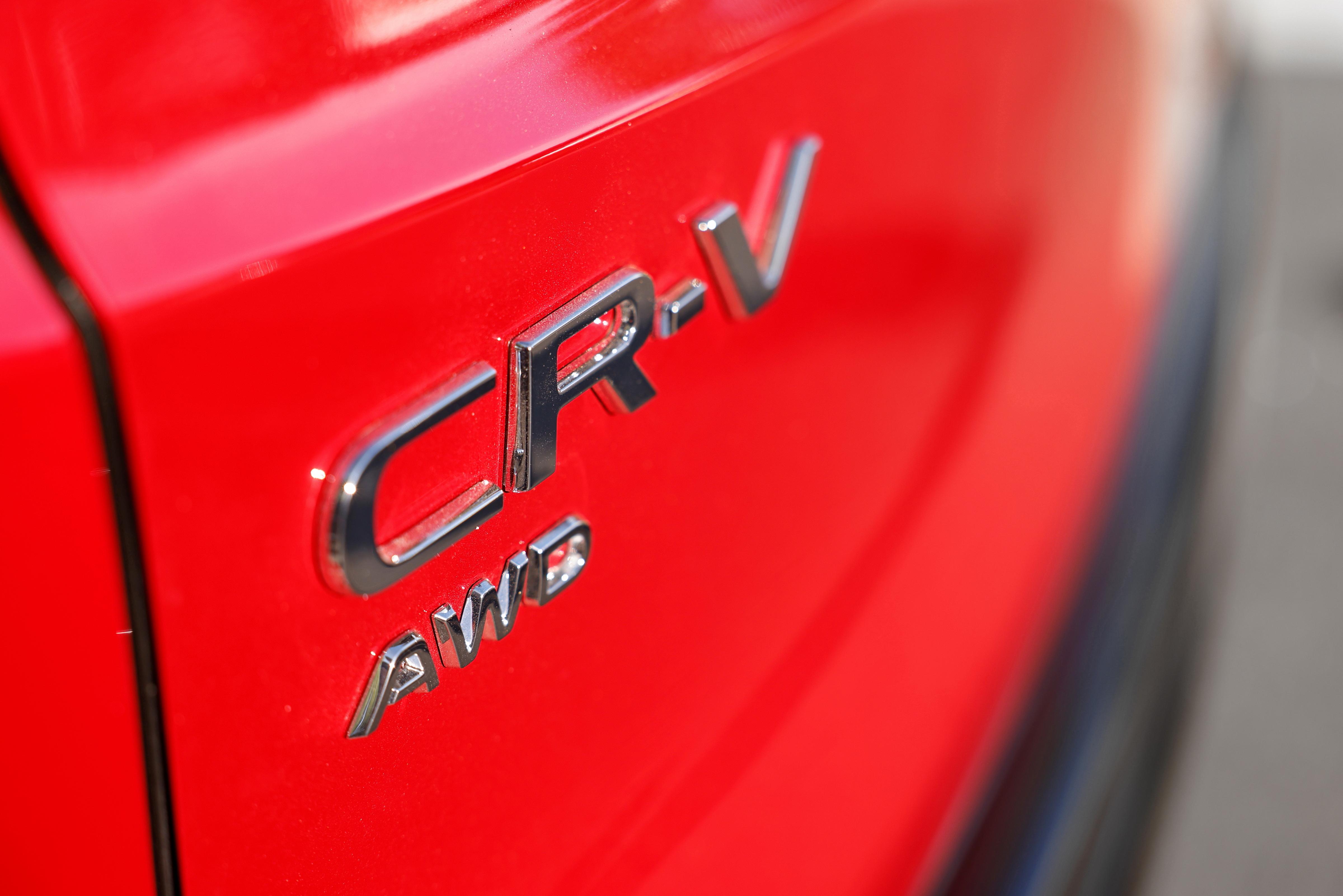
| Servicing and Warranty | Honda CR-V |
|---|---|
| Warranty | 5 years, unlimited kilometres |
| Roadside assistance | 5 years |
| Service intervals | 12 months or 10,000km |
| Capped-price servicing | 5 years |
| Annual service cost | $199 |
| Total capped-price service cost | $995 |
The first five services are capped at $199 each – less than you’ll pay to maintain most rival models. However, it’s worth noting that Honda’s 10,000km service intervals are on the shorter side.
To see how the Honda CR-V lines up against the competition, check out our comparison tool
CarExpert’s Take on the Honda CR-V
The CR-V rolls into 2026 refreshed and ready to take on old foes and new upstarts in Australia’s sprawling mid-size SUV market.
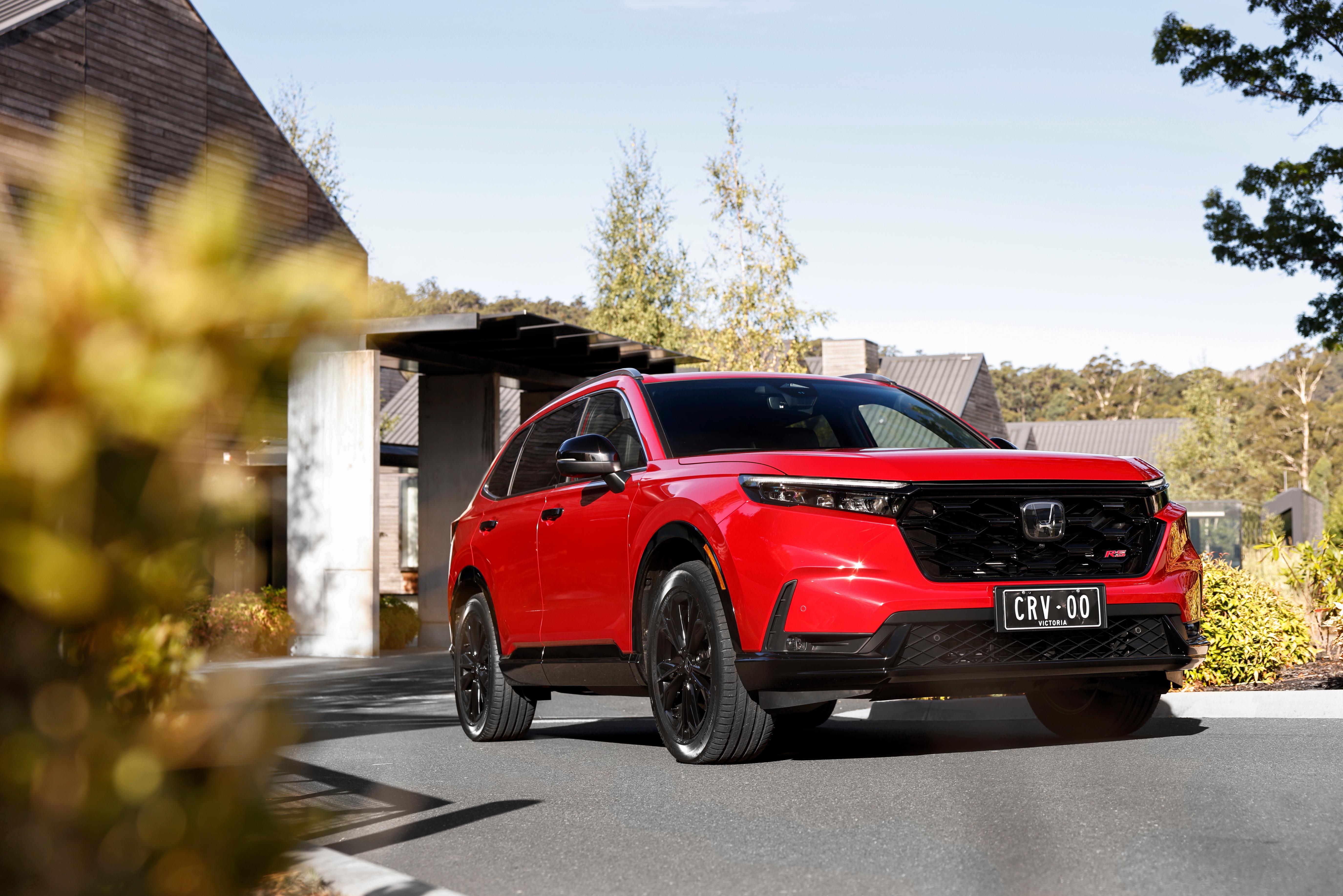
At its heart, the CR-V was already a practical, reliable, user-friendly and cheap-to-run family bus. It just wasn’t great bang for buck.
But the changes made as part of this facelift have had a palpably positive impact on the value proposition – range-wide Google integration helps the CR-V feel more modern inside, while the addition of cheaper hybrid variants affords more buyers access to efficient electrified motoring.
And, at the top-end of the range, the e:HEV RS AWD is now a more fitting flagship courtesy of a bolstered spec list.
However, it’s also $4500 more expensive than before, so my pick of the restructured CR-V range would be the e:HEV L, which still feels like a complete package for $53,900 drive-away.
CarExpert can save you thousands on a new Honda CR-V. Click here to get a great deal.
Click the images for the full gallery
MORE: Explore the Honda CR-V showroom