













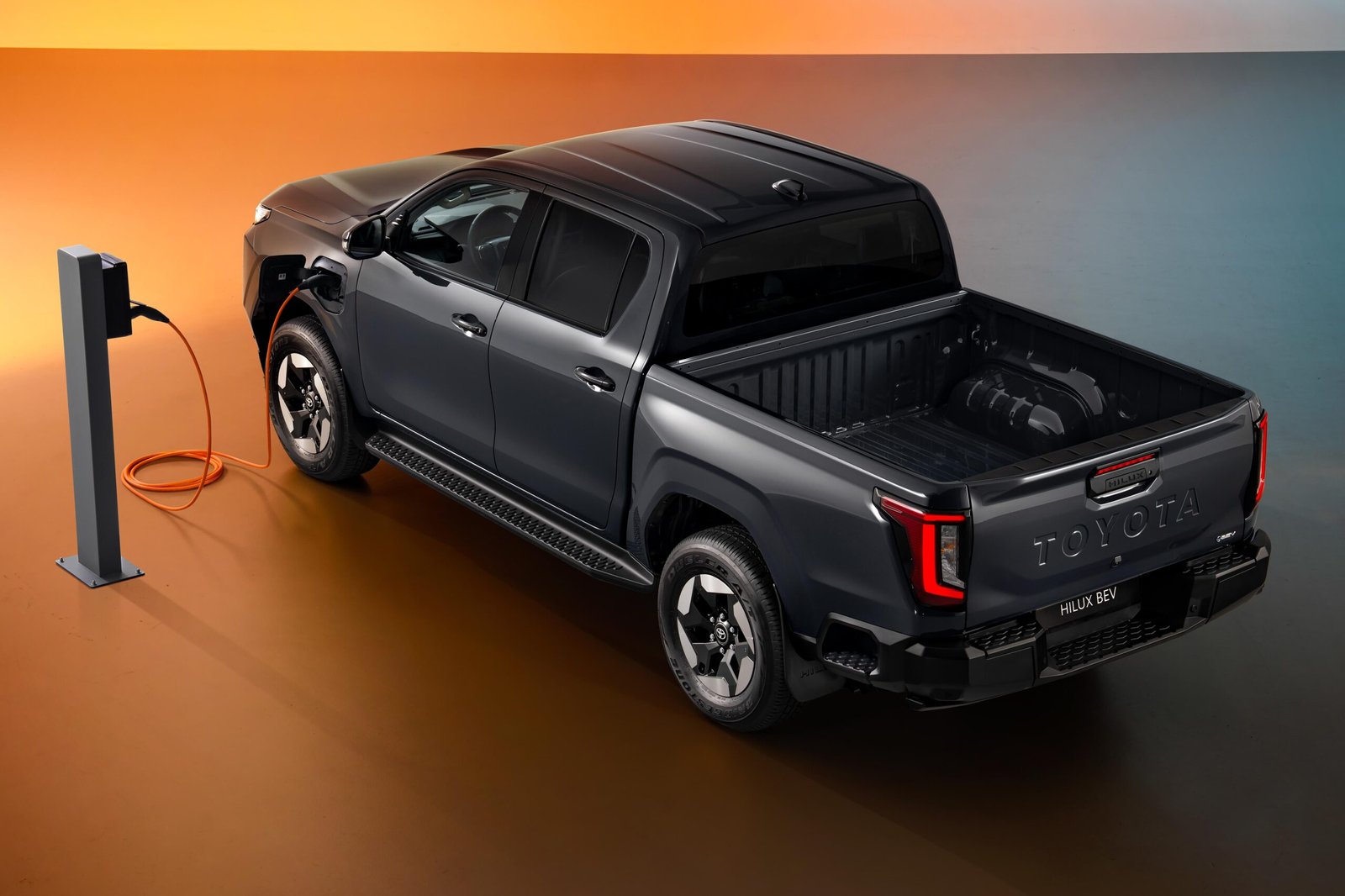
The new turbo-diesel 2026 Toyota HiLux will be joined by an electric variant in 2026, but the company has further confirmed a hybrid variant is under consideration for the future.
“It’s definitely something we’re looking into,” Rodney Lyons, senior product planning specialist for Toyota Australia, told CarExpert when asked about the possibility of a hybrid HiLux.
“[We’re looking at] future powertrains all the time. So, not to confirm anything, but we’re always looking at those things.”
However, the decision to release an electric HiLux ahead of a hybrid could be seen as going against the company’s much-publicised philosophy, which has typically prioritised hybrids over electric vehicles (EVs).
CarExpert can save you thousands on a new car. Click here to get a great deal.
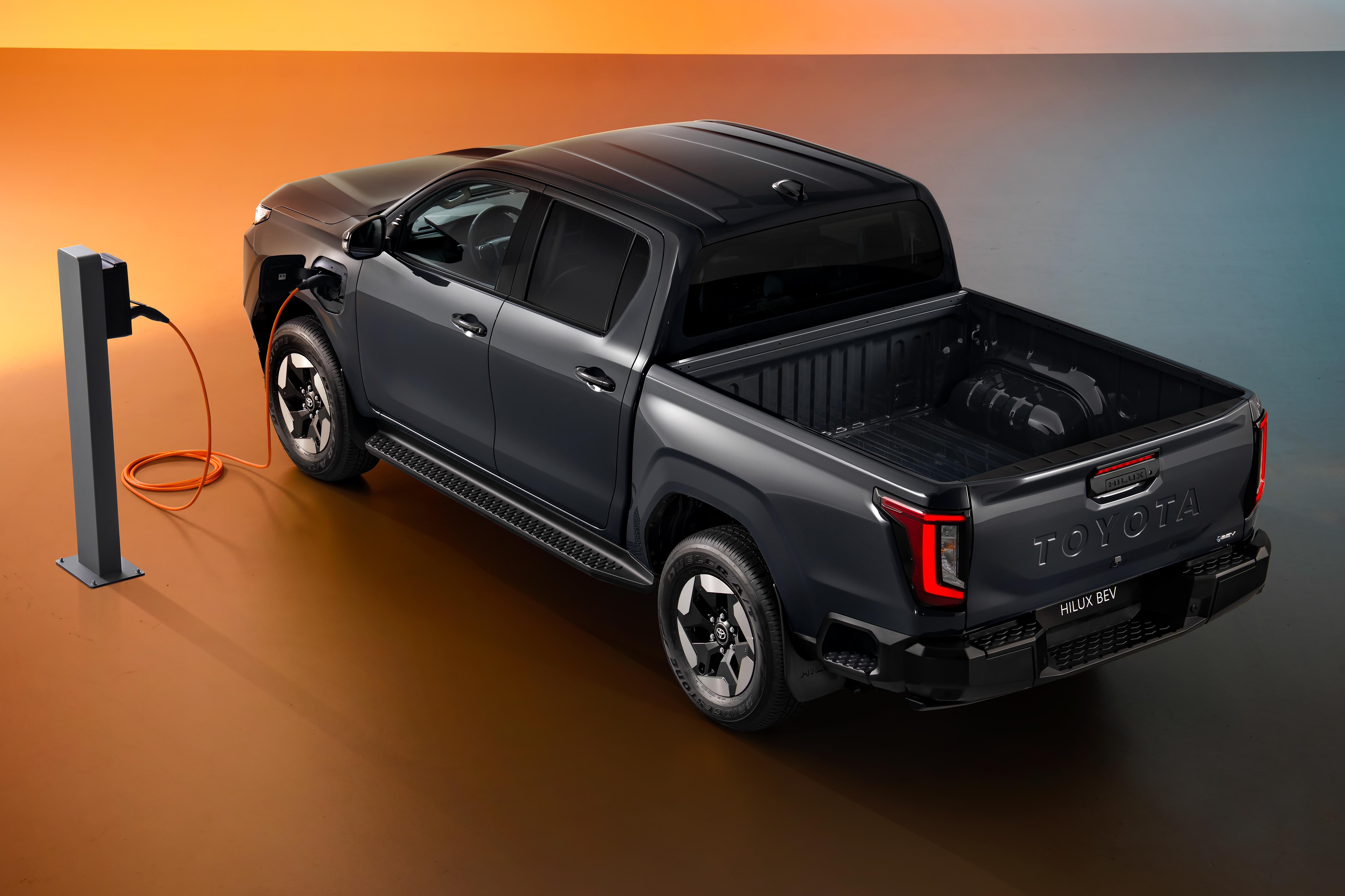
Toyota has been on the record in the past spruiking the benefits of hybrids over EVs, claiming there was a greater benefit to reducing the emissions of 90 cars rather than selling a single EV – with the amount of raw battery materials needed being roughly equivalent.
“[Making hybrids] enables us to reduce the tailpipe emissions of 90 cars, rather than focusing on a single car that is powered, in many cases, by electricity generated from coal – not to mention being impractical for the vast majority of Australian motorists,” Toyota Australia vice president of sales and marketing Sean Hanley told media in October 2023.
“Right now, hybrid-electric vehicles are a better fit than [battery-electric vehicles] for most consumers,” he said at the time.
“They are more affordable and don’t require charging infrastructure.”
While Toyota hasn’t explained its decision to prioritise an electric version ahead of a hybrid in the case of the latest HiLux, any future hybrid ute is likely to be confined to a dual-cab body.
Mr Lyons told CarExpert the reason Toyota only offers 48-volt mild-hybrid technology on some of its turbo-diesel models is because the battery has to live under the rear seats, essentially ruling out single-cab and extra-cab models.
While the current mild-hybrid technology – which it refers to as ‘V-Active’ – uses a small battery, it’s likely a traditional hybrid powertrain would need the battery to also be mounted in the same place.
“The main reason [V-Active is] only on 4×4 double-cabs [is] because the battery is positioned in the cabin to keep it out of water, and then it sits under the back seat, so there’s no packaging space inside a single-cab or extra-cab,” Mr Lyons said.
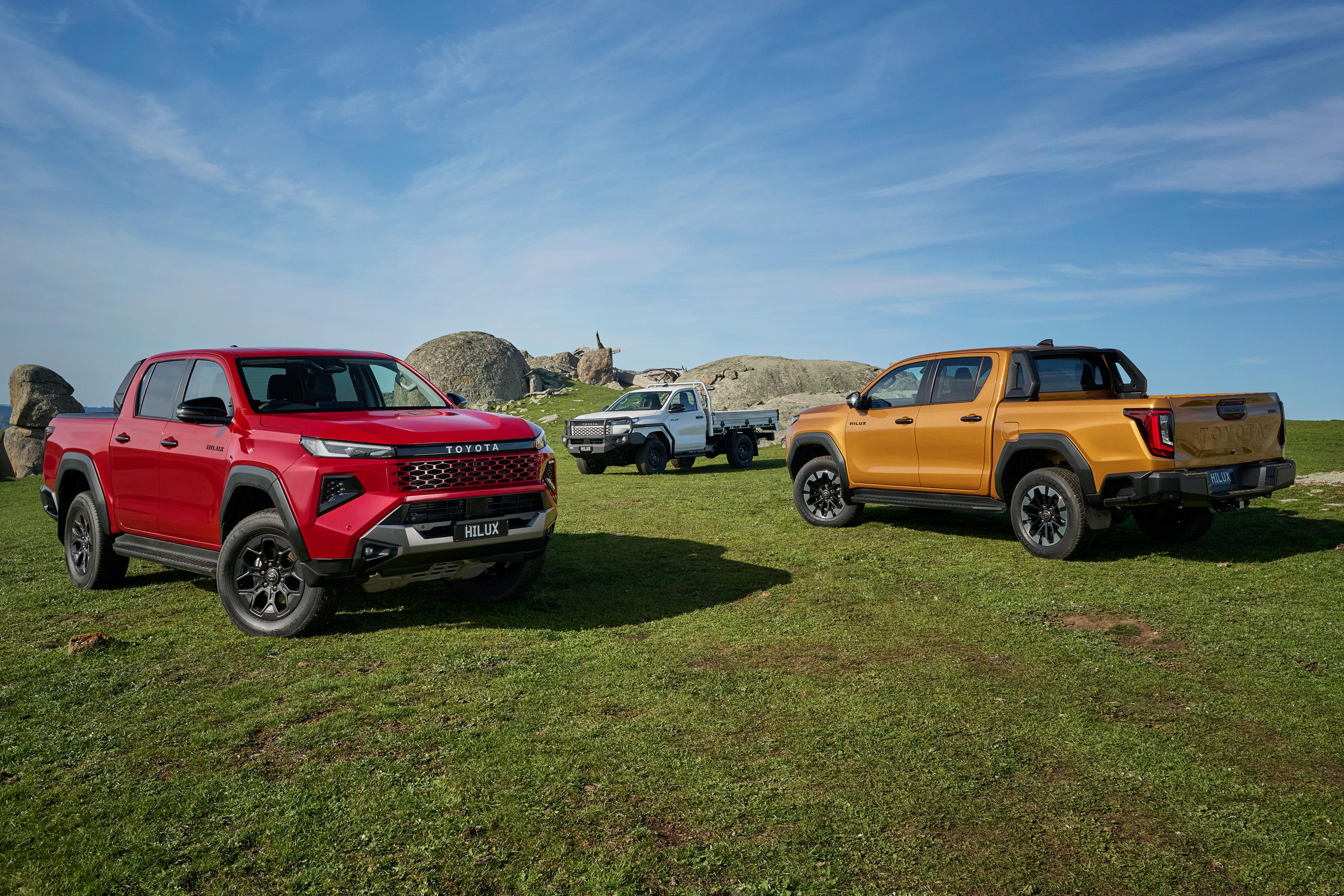
“Probably most of the Toyota hybrids, the hybrid battery [is] inside the passenger compartment to protect it from the environment.”
The addition of a future hybrid HiLux could also see the technology mated with a 2.0-litre petrol engine – similar to the powertrains found on the Corolla Cross and C-HR – rather than with the ute’s current 2.8-litre turbo-diesel engine.
Toyota has chosen to drop the 2.4-litre turbo-diesel and 2.7-litre petrol engines in the latest HiLux, instead offering the 2.8-litre turbo-diesel four-cylinder with and without mild-hybrid assistance.
MORE: Explore the Toyota HiLux showroom