














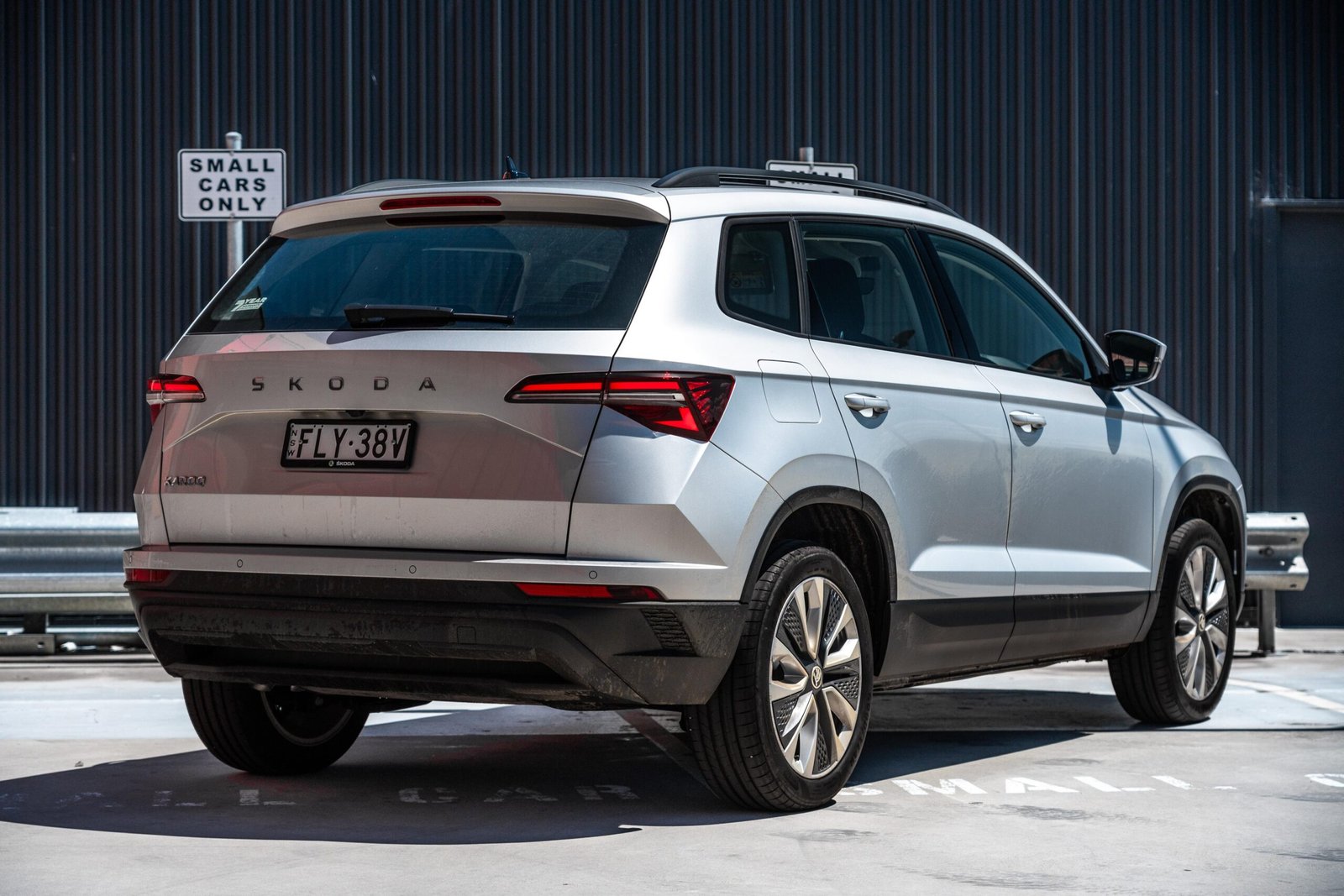
Skoda is hardly a volume brand in Australia, and the Karoq is among its slower-selling models.
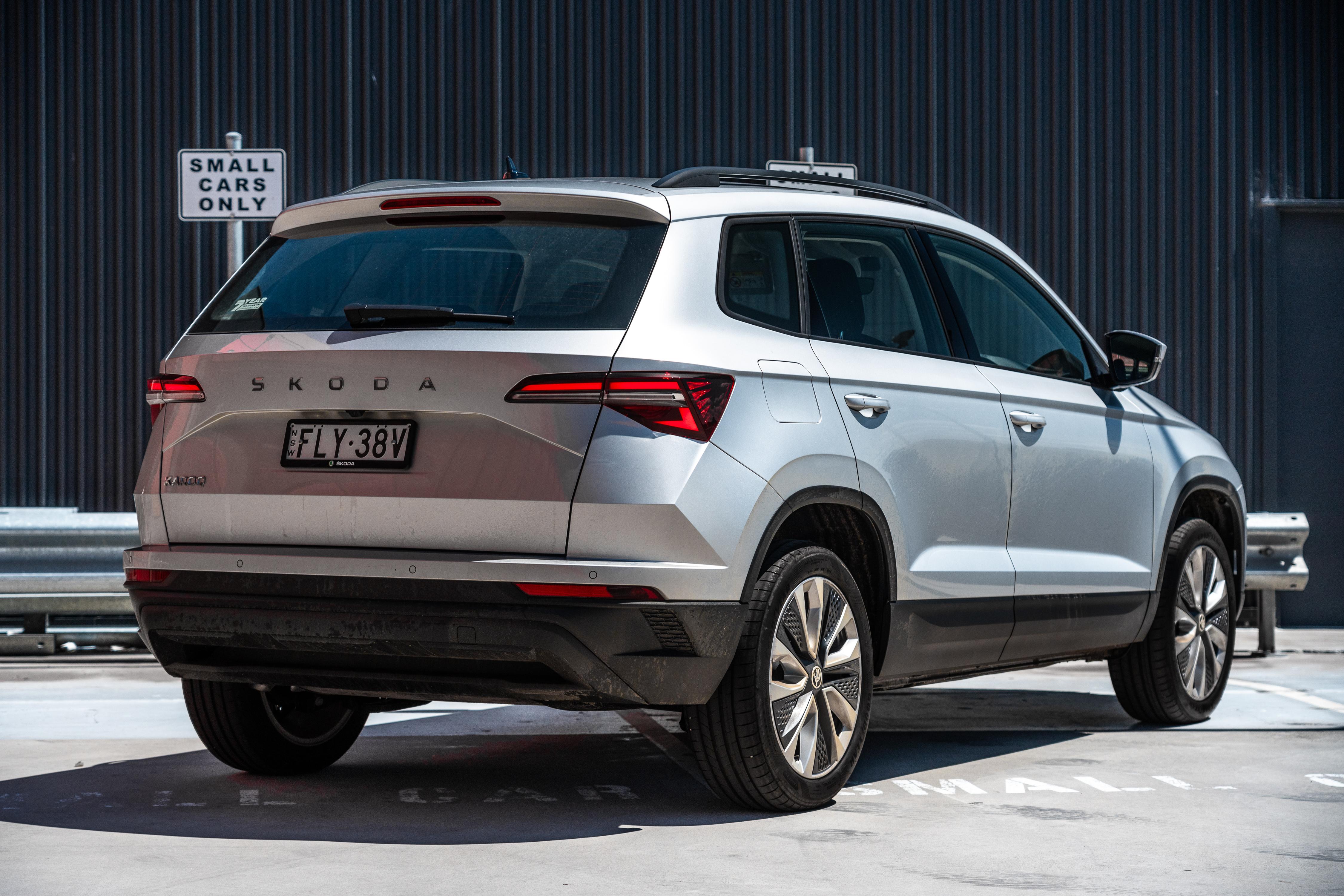
With fewer than 150 deliveries so far in 2026, it’s easily one of Australia’s least-popular mid-size SUVs. You could argue that it’s classed in the wrong segment given it’s smaller than some small SUVs, but it’s still outsold by most of its similarly sized rivals.
It’s also less popular than newer, more niche SUVs like the Deepal S07, Skoda’s own electric Elroq, the Mini Countryman, and even the Volvo EX30. For a model that shares its bones with the relatively popular Volkswagen T-Roc, that’s a concern.
At face value, there are a couple of things holding it back. It could be that Skoda is still a relatively unfamiliar brand in Australia, or that the Karoq is pricey but lacks hybridisation, or that it feels noticeably older than many of the SUVs in rival showrooms.
The latter is the result of only incremental updates since its launch in 2017. In fact, the Karoq is still in its first generation, which makes it Skoda Australia’s equal-oldest model, and it’s no secret that the Czech brand’s latest technologies are absent here.
But basic motoring might be what some buyers are looking for in an age of computers on wheels, and the 2026 Skoda Karoq 110TSI Select FWD on test here is the best example of just how basic Skoda’s middle-child SUV can be.
Does that make it an SUV worth considering for automotive traditionalists?
How much does the Skoda Karoq cost?
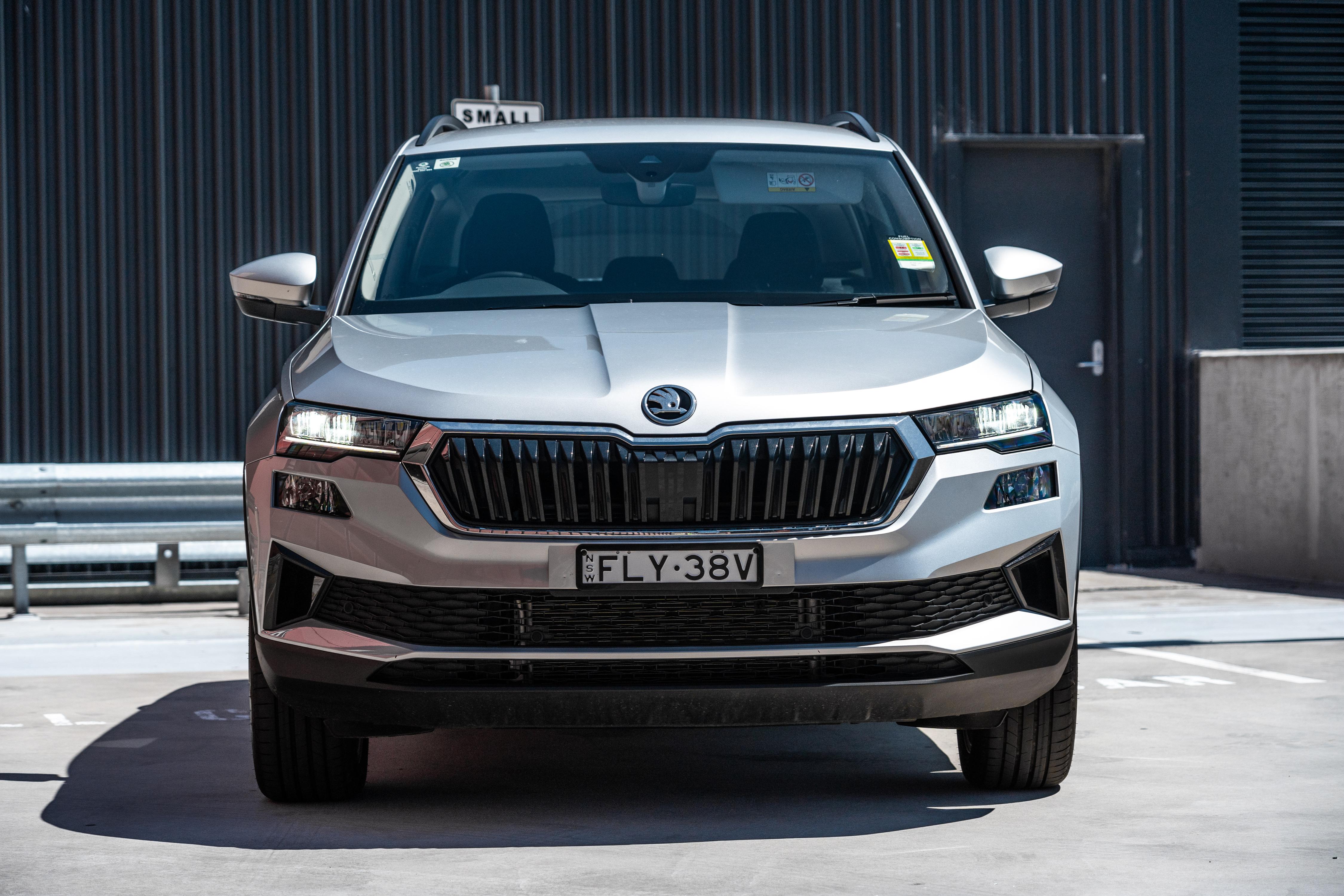
The Select is currently the cheapest Karoq on sale, priced at $40,990 drive-away.
| Model | Drive-away pricing |
|---|---|
| 2026 Skoda Karoq 110TSI Select FWD | $40,990 |
| 2026 Skoda Karoq 110TSI Sportline FWD | $46,990 |
| 2026 Skoda Karoq 110TSI 130 Years Edition FWD | $49,990 |
| 2026 Skoda Karoq 140TSI Sportline AWD | $54,990 |
In terms of size, the Karoq’s closest rivals are the Nissan Qashqai and Kia Seltos. The new hybrid-only Qashqai starts at $45,640 before on-road costs for the base ST-L, while the Seltos – which is about to be replaced by a new hybrid-only model – currently starts at $31,250 before on-roads.
You might also consider the hybrid-only Toyota Corolla Cross, which is slightly larger than the Karoq despite being classified as a smaller SUV, priced from $37,440 before on-roads.
Given its shared DNA, it’s also important to consider the smaller Volkswagen T-Roc, which starts at $38,990 before on-roads for the base 110TSI CityLife.
To see how the Skoda Karoq stacks up against the competition, use our comparison tool
What is the Skoda Karoq like on the inside?
The Karoq is getting on in years, and nowhere is that more apparent than inside its cabin.
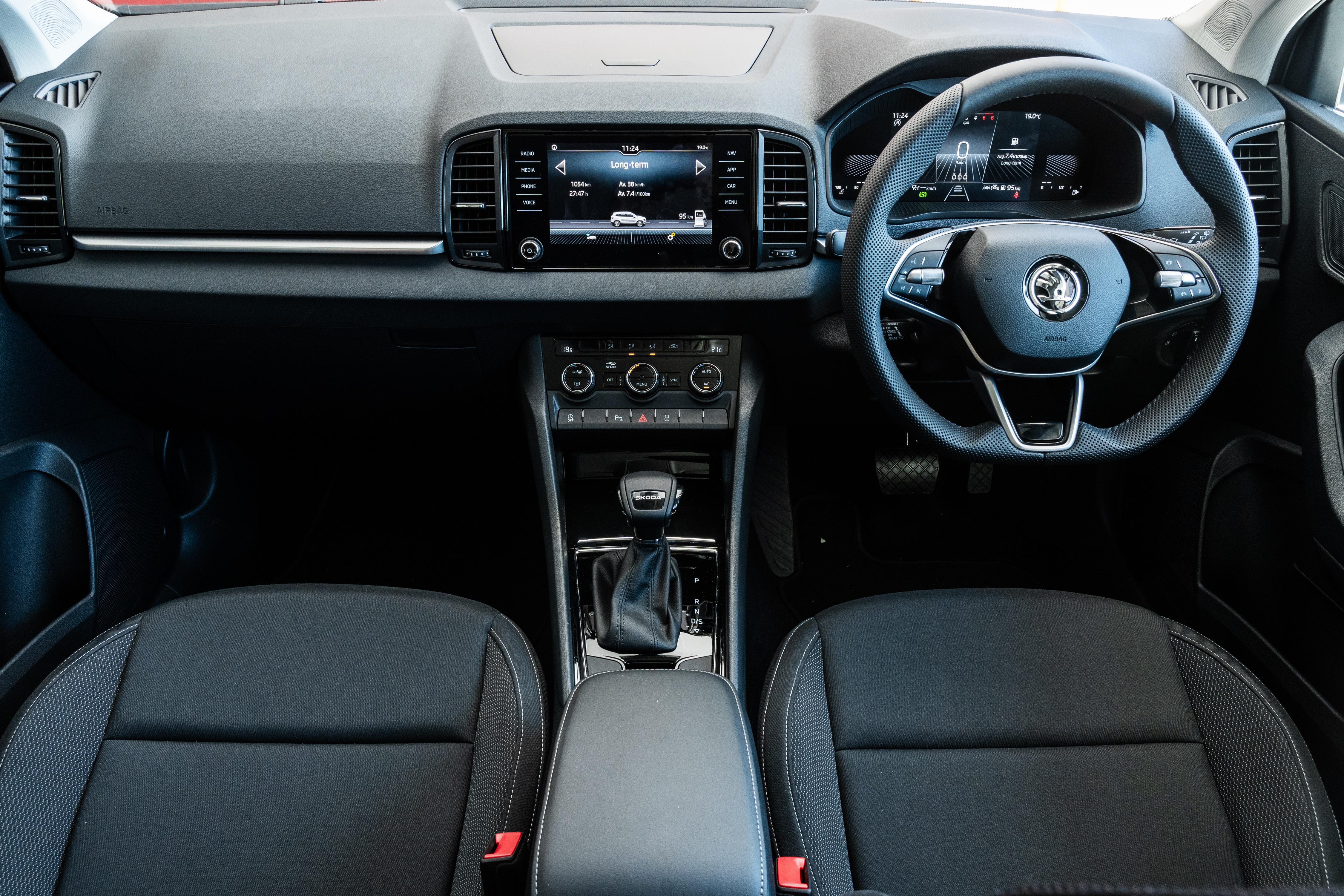
This small SUV’s interior really is a relic of previous-generation Volkswagen Group engineering and design. But while it looks a touch drab in the modern age, it’s nothing if not functional. Like the now-defunct Cupra Ateca, the Karoq’s interior is dominated by simple shapes and physical buttons that won’t intimidate new-car buyers.
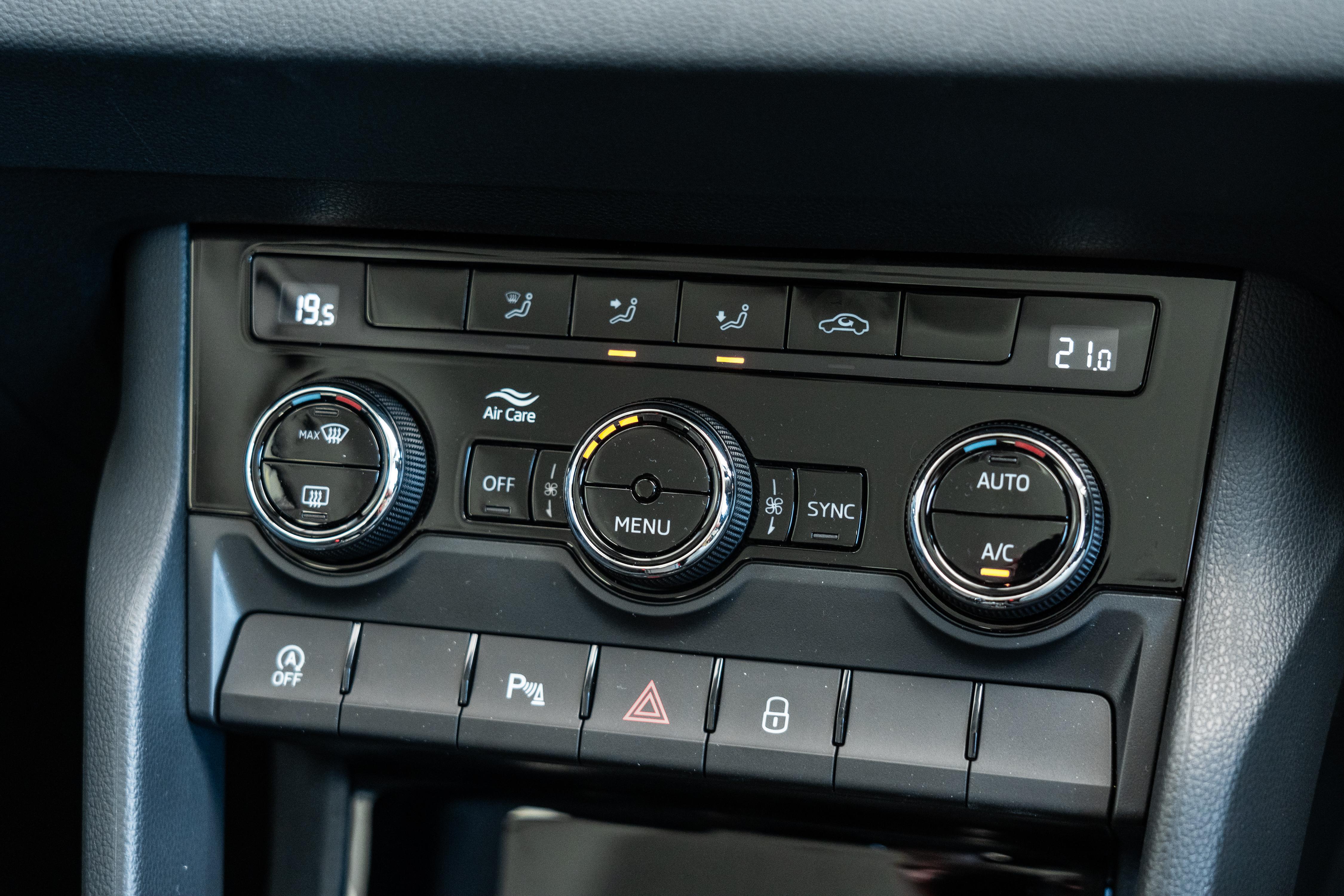
That’s true even if you consider the Ateca’s recent demise a bad omen for the current Karoq. That functionality is best exemplified by the climate system, which features three dials and a simple array of buttons that are easy to figure out, and it’s even a dual-zone system.
We’ll still complain about the application of piano-black plastic here, but once again the physical climate controls are far preferable to a screen-only setup. In fact, it’s a real shame Volkswagen moved to touch-sensitive sliders in its newer models, and the Karoq remains a stark reminder of what basic, user-friendly cabin controls can and should be.
Similarly, the infotainment touchscreen is microscopic by modern standards. The base Karoq Select gets an 8.0-inch unit – down from the 9.2-inch system fitted across much of the range – which looks almost aftermarket compared with the competition.
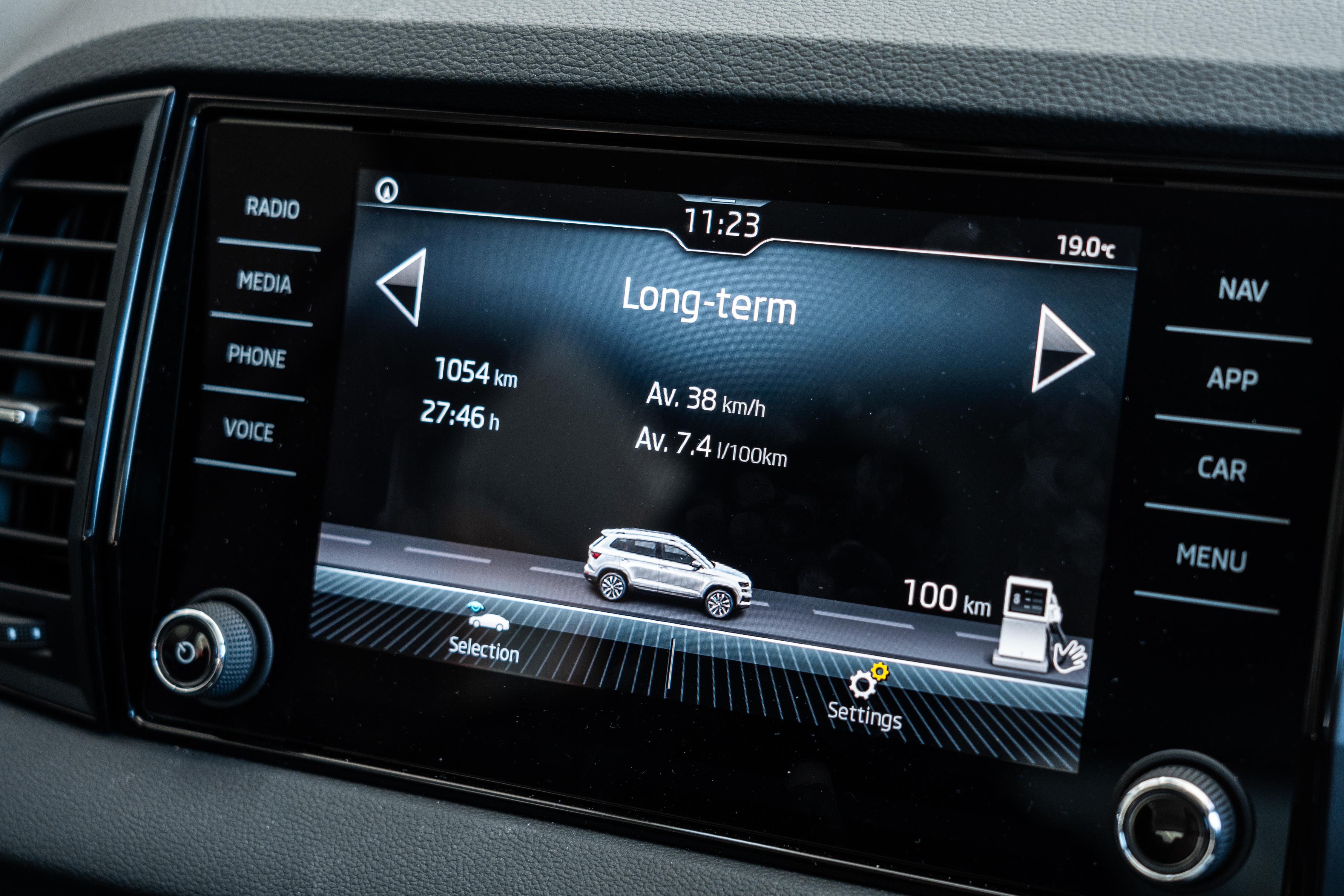
Realistically, though, it’s all you’d ever need in a car like this. It offers most of the same settings you’ll find in many newer rivals, plenty of information including from the trip computer, and even wireless Apple CarPlay and Android Auto as standard.
All that is handy to have, even if the wireless smartphone mirroring was sometimes patchy under Melbourne’s toll gantries. Making it all easier to use are clearly legible (touch-sensitive) buttons flanking the screen, along with a pair of knobs.
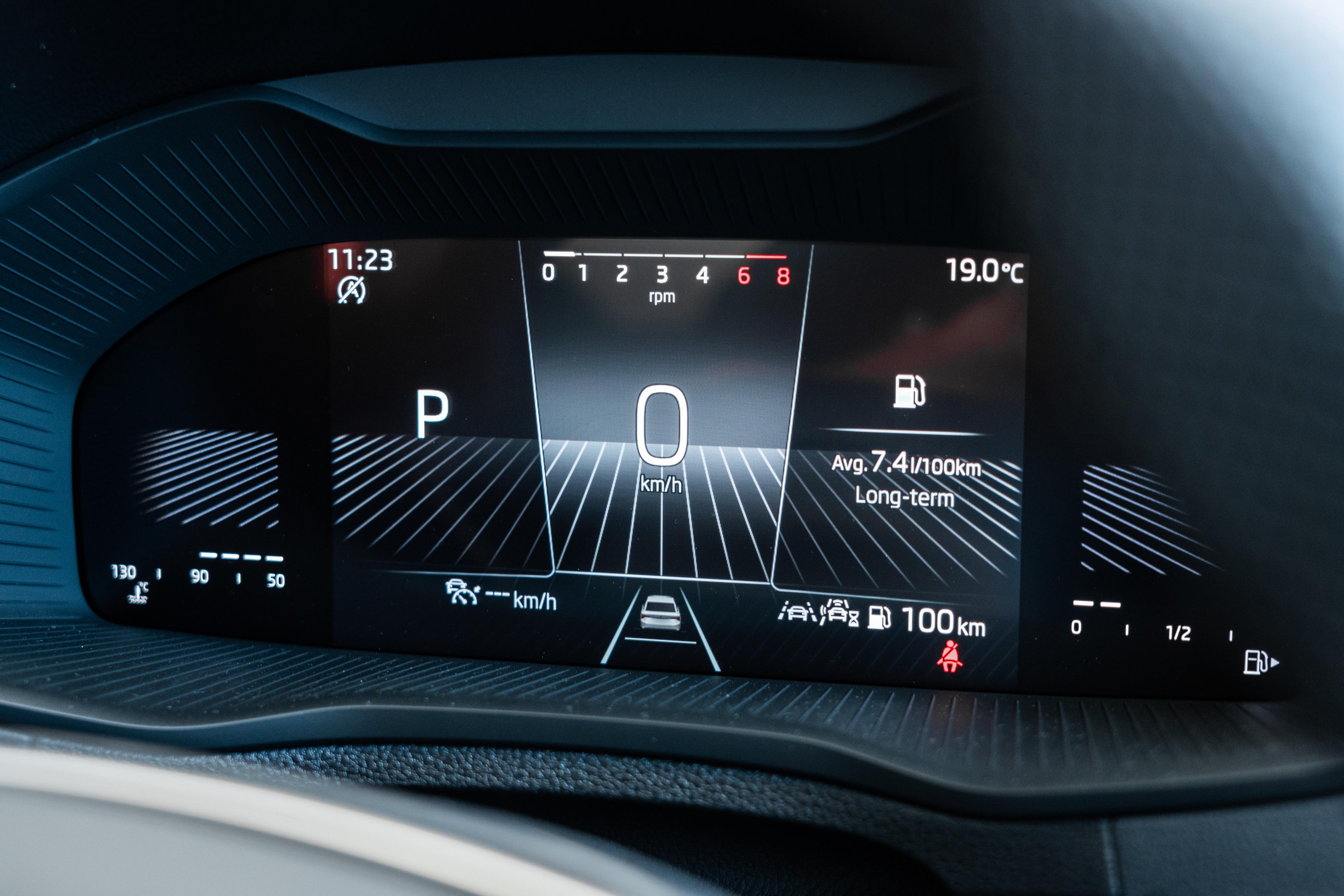
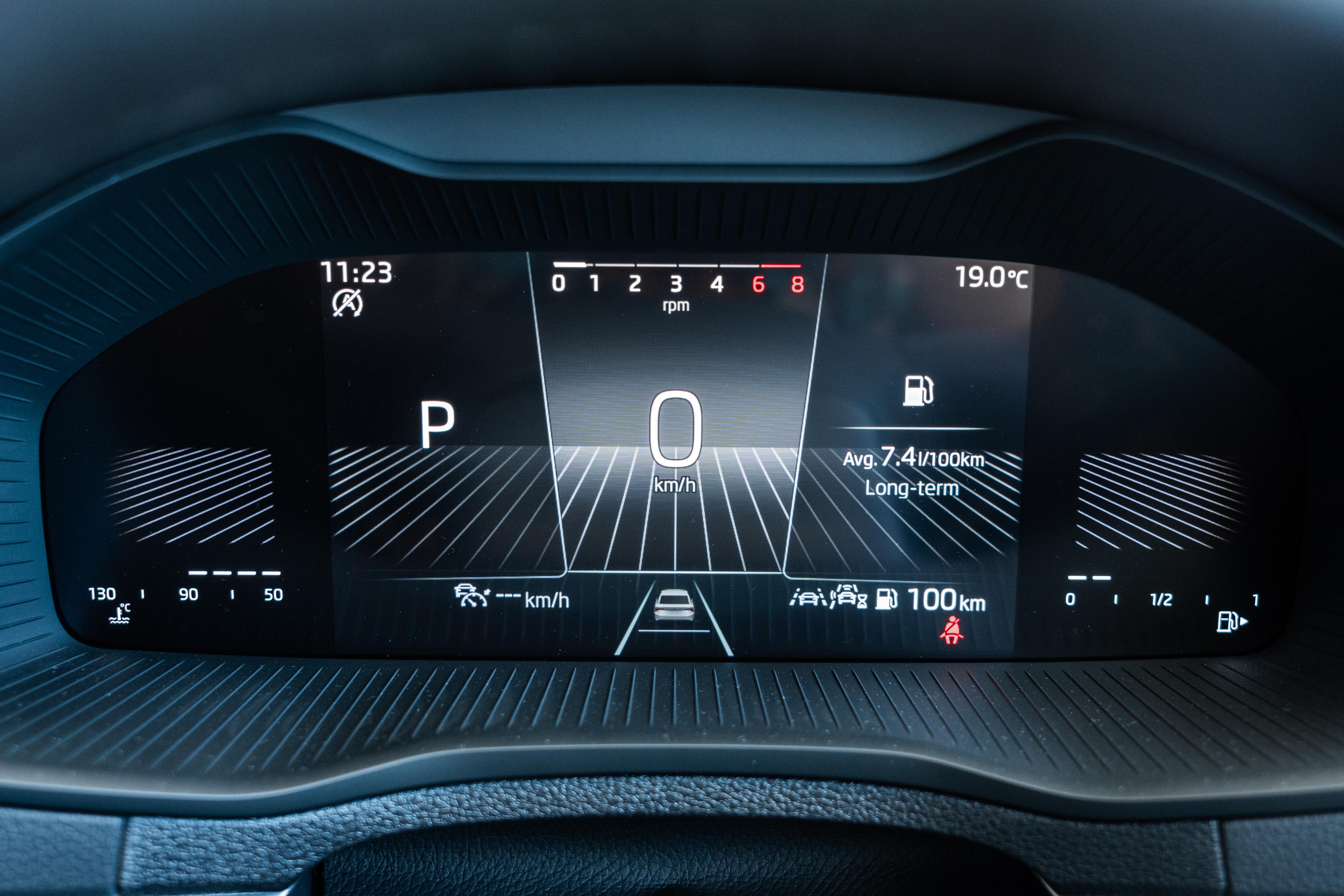
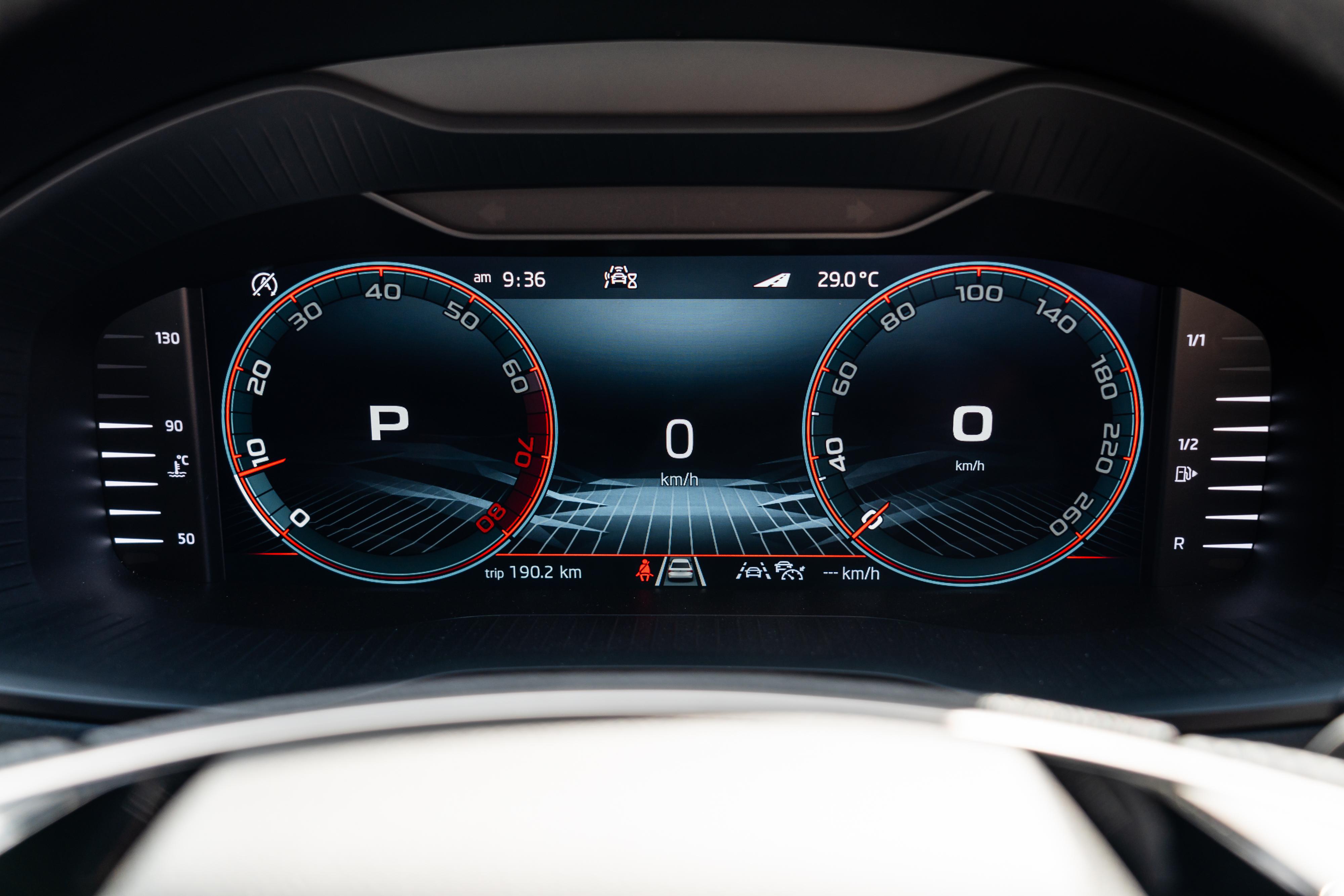
The driver’s instrument display, meanwhile, is slightly larger at 8.25 inches and features very basic design elements that give it a hint of character without thinking too far outside the sensible Skoda box. It offers a handful of layouts that are navigable via steering wheel buttons, but it’s largely a case of what you see is what you get.
On that note, the Karoq’s tiller is basic but arguably the most premium element in the base Select. It’s wrapped in perforated leather that’s accentuated by Skoda’s characteristically sporty sculpting, and is of a near-perfect size for a vehicle of the Karoq’s stature.
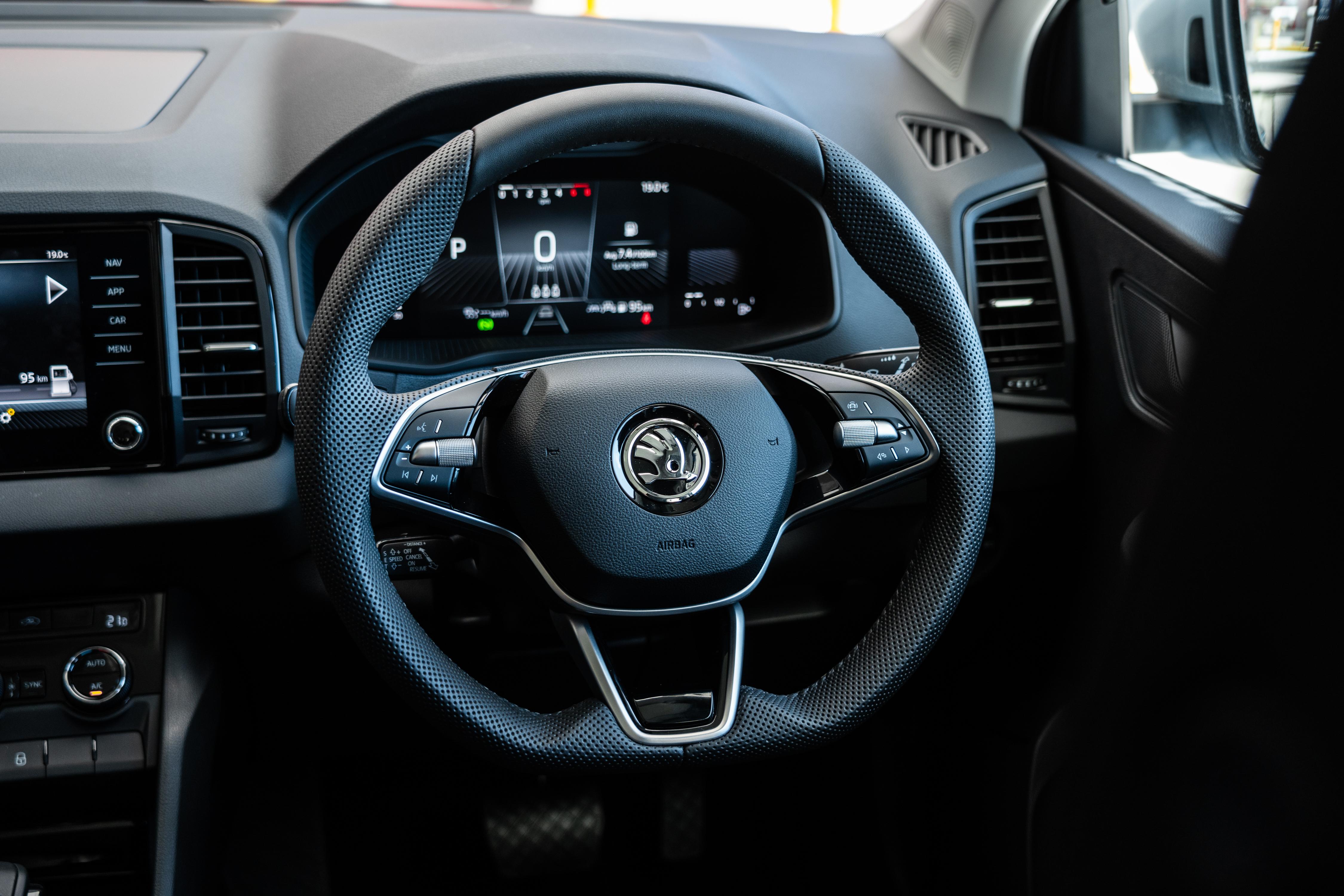
The only buttons missing here are for the cruise control. Instead, the Karoq still has a smaller third stalk on the left side of the steering column. We’ll talk about that more in the driving section below, but suffice to say it’s refreshing to find dedicated fixtures like this in a new car.
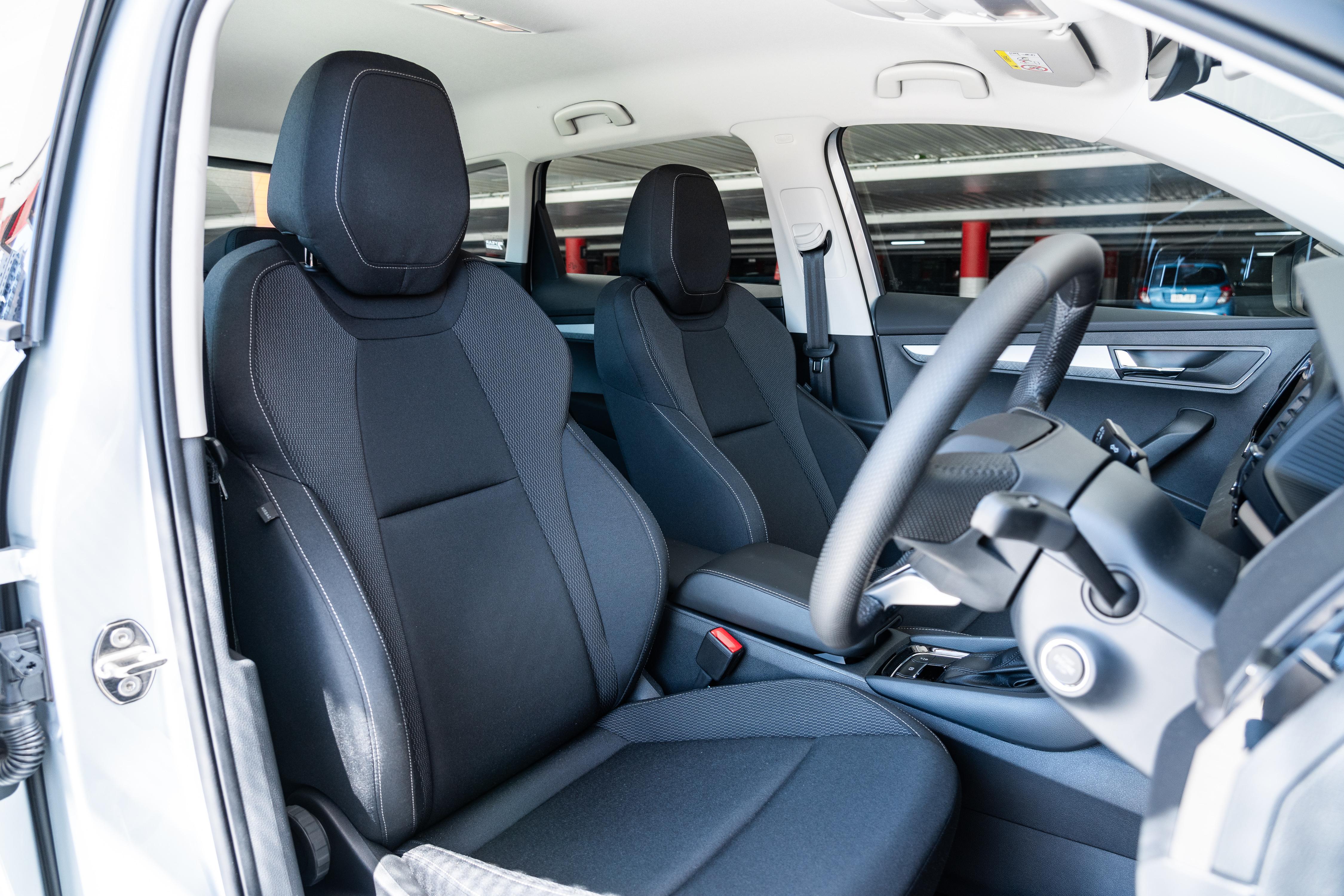
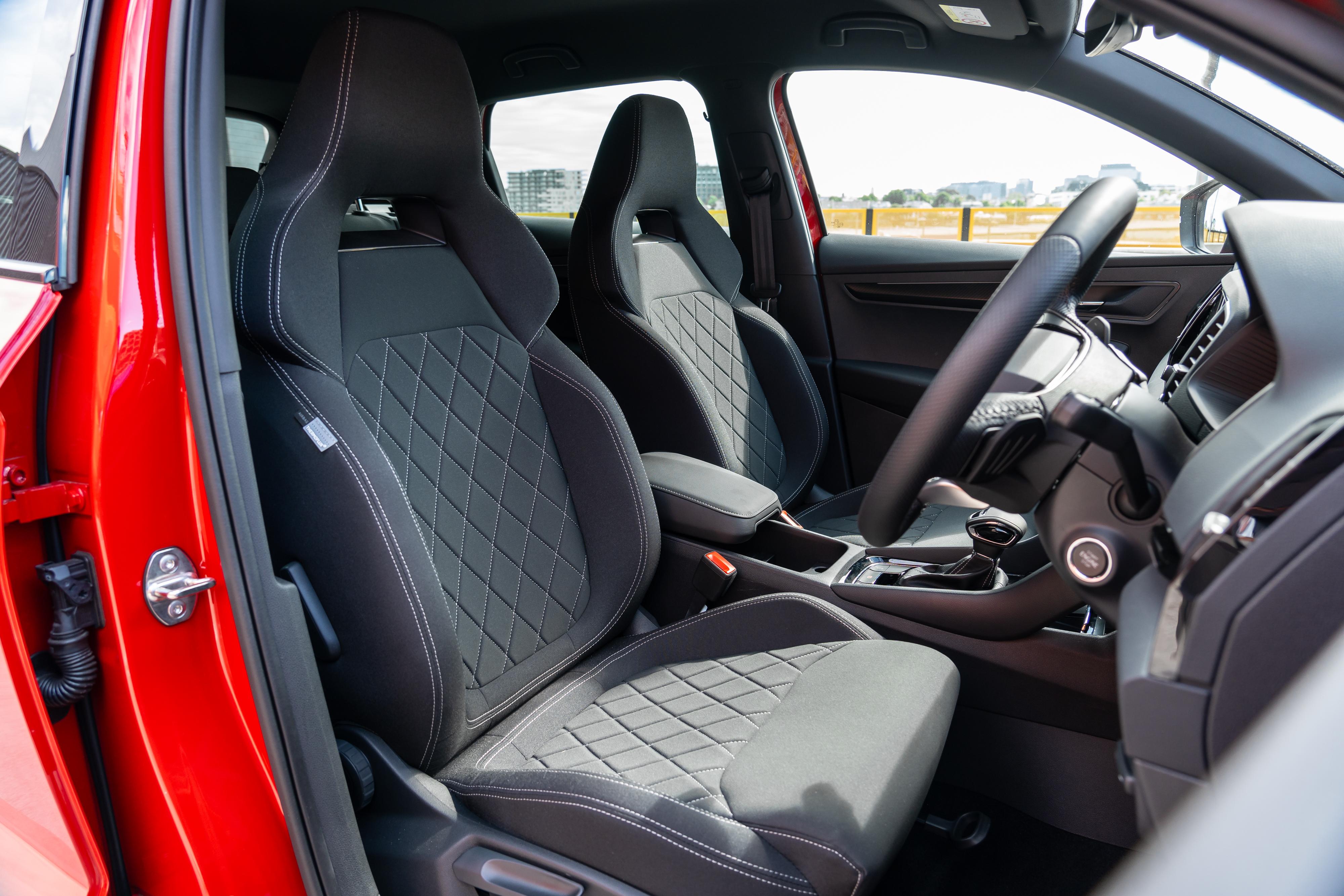
The rest of the cabin remains tidy and functional. The seats are upholstered in cloth and are plenty comfortable without being anything extraordinary, and it’s easy enough to get comfortable using their manual adjustment.
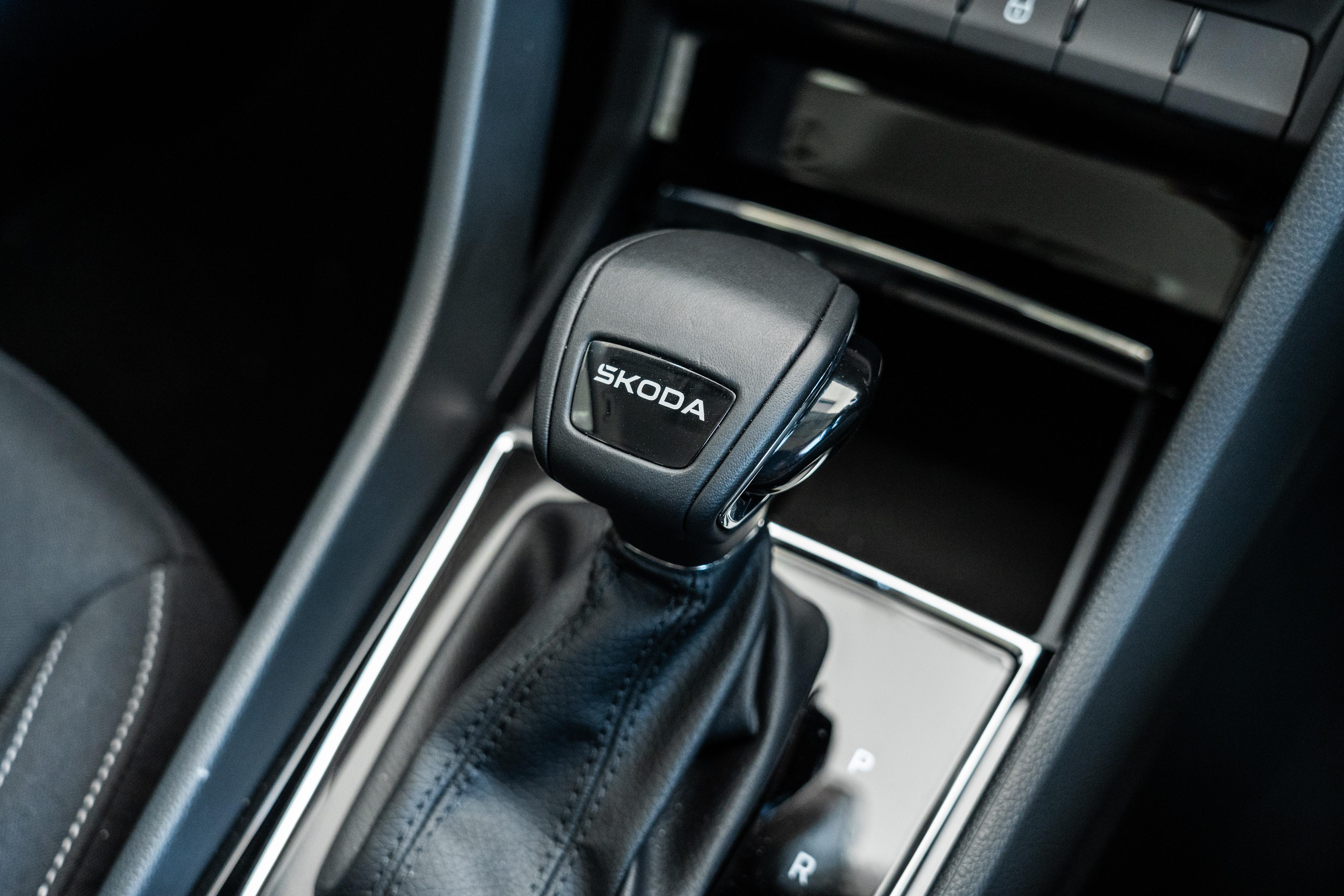
There’s a real PRNDL gear selector that looks and feels the part, and while it’s on a large glossy panel, we like that most interior buttons are finished in dull plastic, which tends to be more durable. That said, there’s still plenty of scratchy plastic everywhere you look.
Skoda has also done well to maximise storage space in this small SUV. There are the usual items – a box under the centre armrest that slides to reveal cupholders, a passenger-side glovebox, and a small lidded cubby ahead of the shifter housing dual USB-C ports – but there’s also a unique lidded tray on top of the dashboard if you need more room.
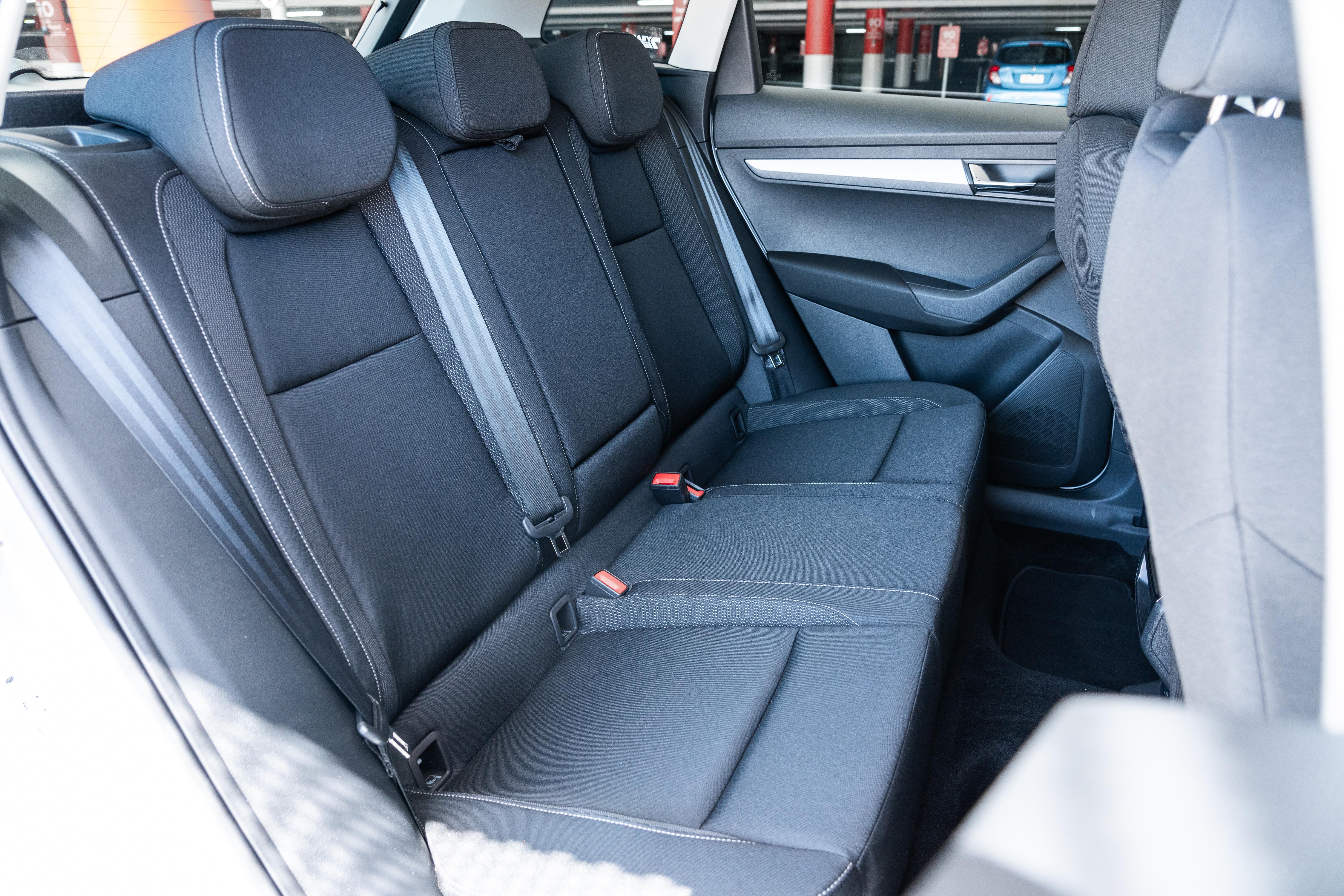
Unfortunately, you won’t find a lot of room in the second row, which will feel cramped for those of above-average height. At 173cm, I was able to sit behind my driving position with little issue, though even the shortest of my taller colleagues were a bit short on legroom.
Rear headroom is okay, and the bench itself is soft enough not to wear you down. It’s finished in the same basic cloth as up front, which fits the bill but looks cheap compared to the upholstery found across the rest of the Karoq range.
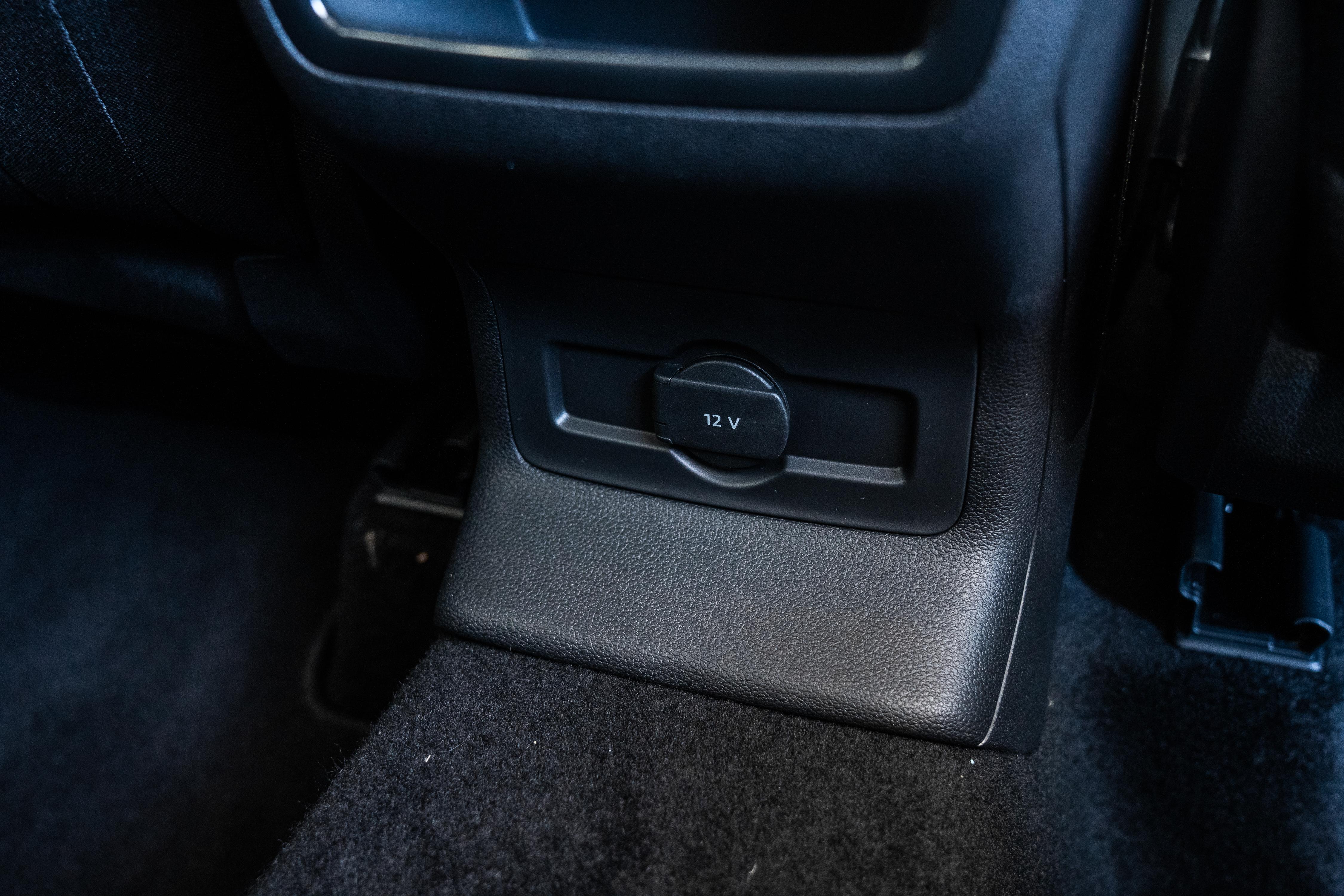
As a base model, the Select offers few second-row amenities, which are limited to rear-facing air vents and a 12V outlet on the back of the centre console, as well as a small nook where the controls for rear-seat heating would be in the more expensive Karoq variants.
There’s also a fold-down centre armrest – hiding a pass-through opening to the boot – and the requisite ISOFIX and top-tether points for child seats.
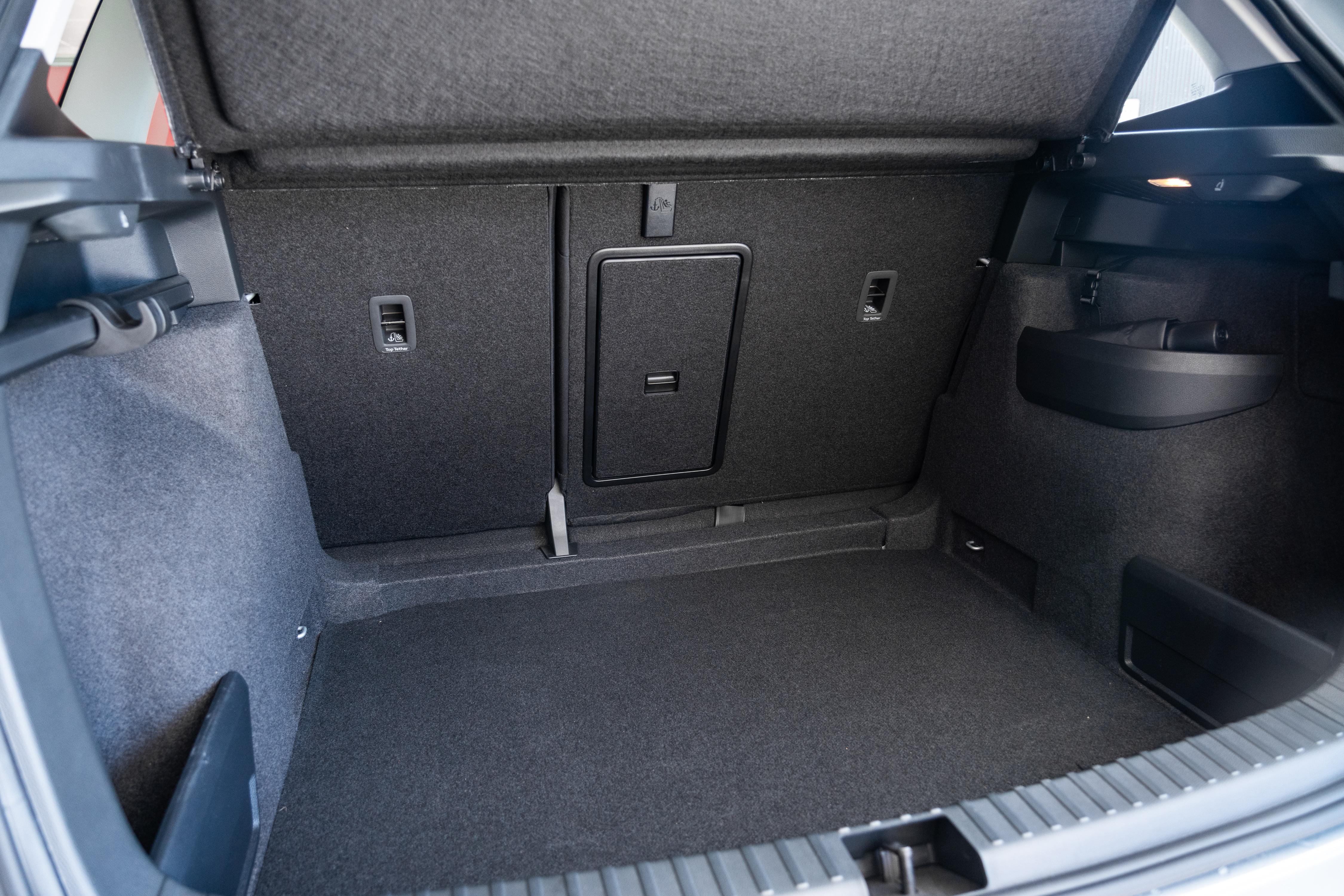
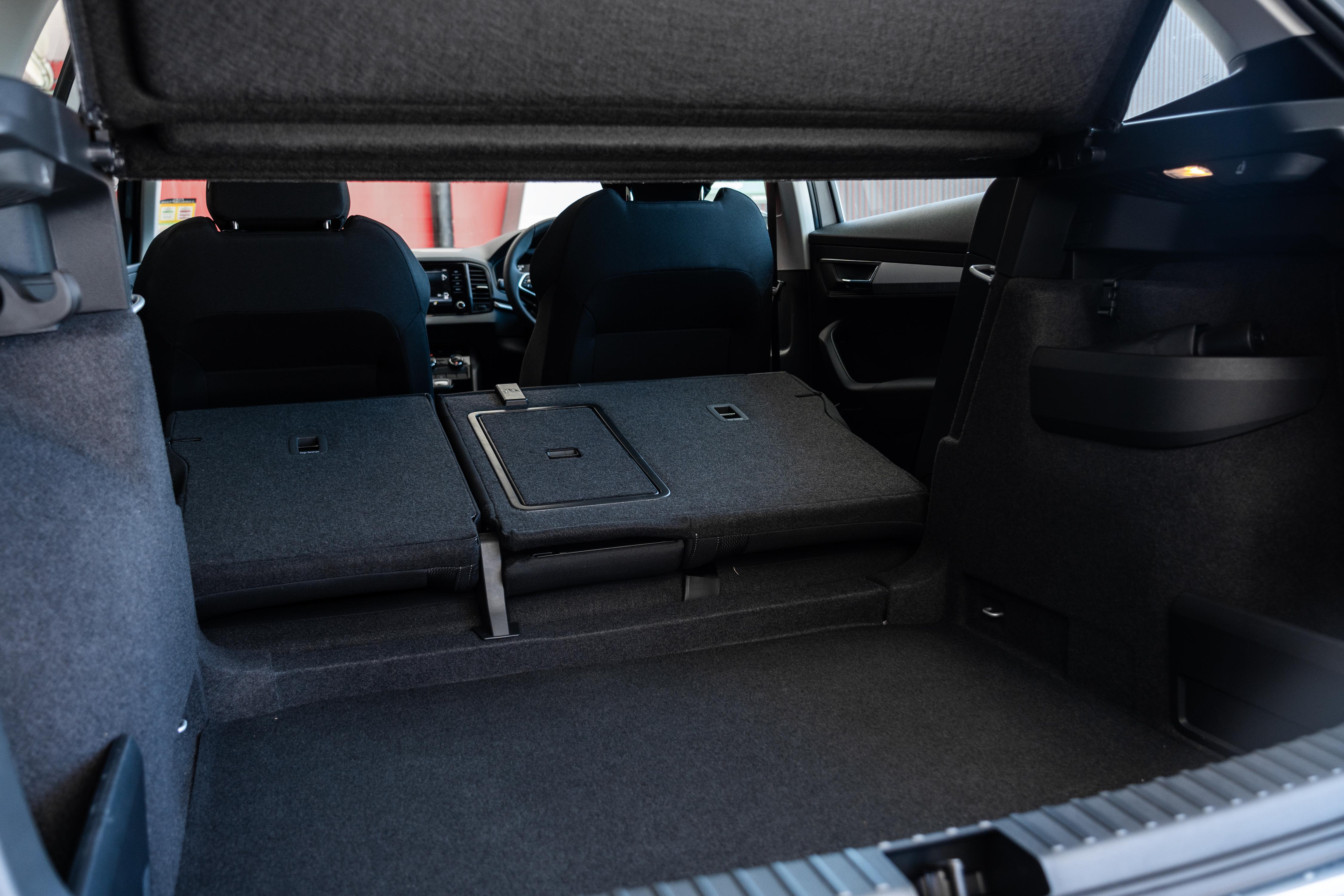
The boot is a bare-bones affair, save for a handful of ‘Simply Clever’ Skoda features. Highlights include a small shelf on the driver’s side that neatly fits a Skoda umbrella, along with movable hooks on a rail on the passenger side.
There are also several tie-down anchors on the floor, fenced cubbies on either side, and convenient handles to fold the rear seats flat. Unfortunately, the rear seatbacks don’t fold down flat and instead create a large step, which isn’t ideal for stowing long and flat cargo.
This and a pronounced rear loading lip is the result of an exceptionally low boot floor, which maximises cargo volume. The Karoq’s 521 litres of cargo capacity places it well ahead of rivals like the Corolla Cross (425L), and it certainly feels spacious in the metal.
The Select doesn’t get a power tailgate like other Karoqs, but it does have a space-saver spare wheel under the boot floor.
| Dimensions | Skoda Karoq 110TSI Select |
|---|---|
| Length | 4390mm |
| Width | 1841mm |
| Height | 1603mm |
| Wheelbase | 2638mm |
| Cargo capacity | 521L (rear seats up) 1630L (rear seats folded) |
To see how the Skoda Karoq stacks up against the competition, use our comparison tool
What’s under the bonnet?
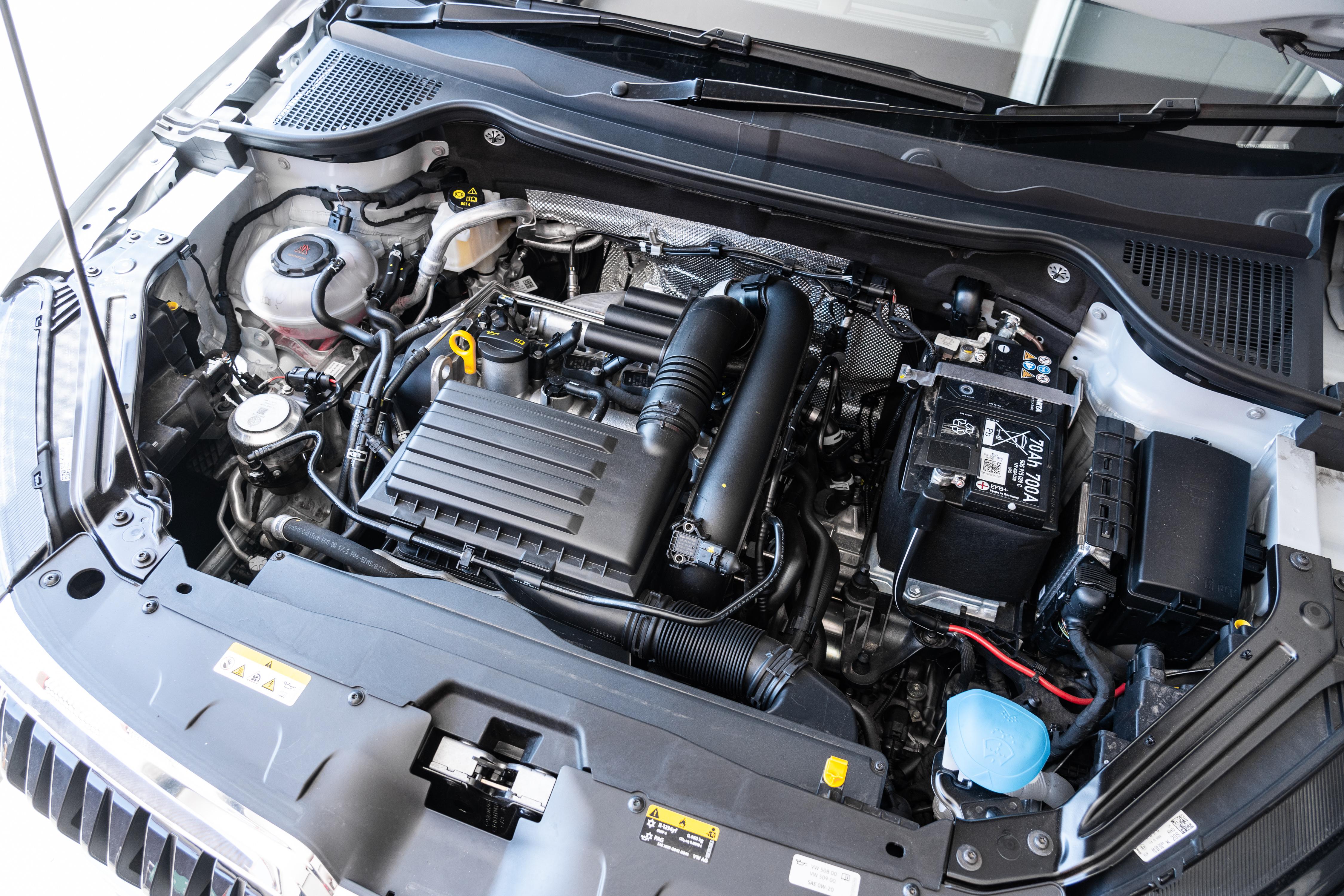
Powering the Karoq is a 1.4-litre turbocharged four-cylinder petrol engine. In 110TSI form, it sends 110kW of power and 250Nm of torque to the front wheels through an eight-speed automatic transmission.
| Specifications | Skoda Karoq 110TSI Select |
|---|---|
| Engine | 1.4L 4cyl turbo-petrol |
| Power | 110kW |
| Torque | 250Nm |
| Transmission | 8-speed auto |
| Drive type | Front-wheel drive |
| Tare mass | 1372kg |
| 0-100km/h (claimed) | 9.2 seconds |
| Fuel economy (claimed) | 6.6L/100km |
| Fuel economy (as tested) | 7.2L/100km |
| Fuel tank capacity | 50L |
| Fuel requirement | 95-octane premium unleaded |
| CO2 emissions | 149g/km |
| Emissions standard | Euro 6 |
| Braked tow capacity | 1500kg |
Our week with the car involved a mix of highway commuting and inner-city crawling. There was also an unplanned detour along lower-speed gravel roads, which contributed to our higher-than-claimed fuel consumption.
To see how the Skoda Karoq stacks up against the competition, use our comparison tool
How does the Skoda Karoq drive?
Unremarkable is the easiest way to describe driving the base Karoq. Mind you, that might be exactly what you’re after.
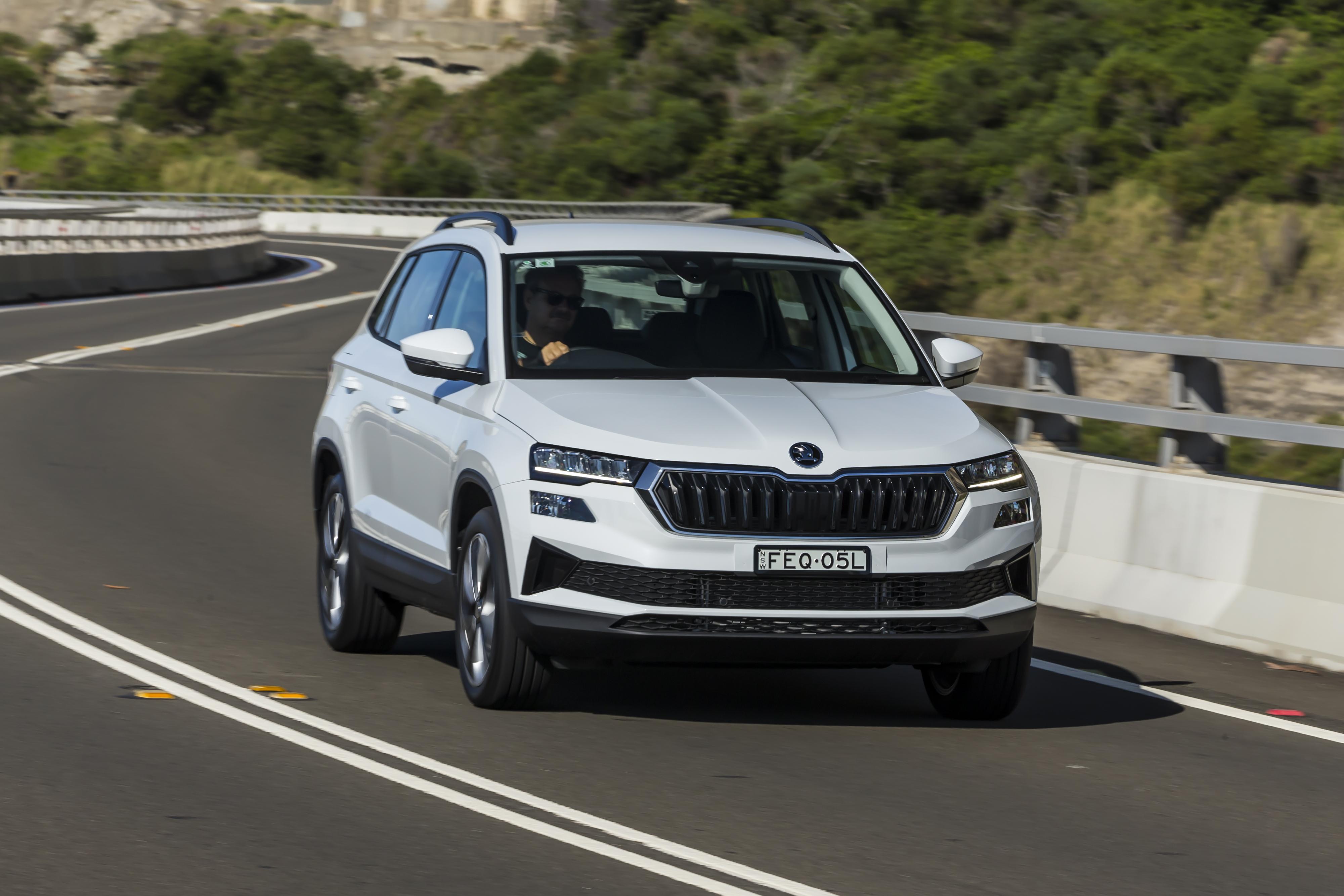
There are no fancy bells and whistles to distract you at any given moment, nor does it ever feel like it’s trying to be something it isn’t. Skoda knows this is a budget-minded European SUV with easy, economical commuting in mind, and the Karoq does a good job of sticking to the brief.
In 110TSI tune, the Karoq is certainly no rocketship, but its engine has enough gusto to get things moving once you lay into the throttle. Power delivery is predictable, too.
It’s not enough for the front wheels to consistently break traction from a standstill, but it livens up once you get higher in the rev range where the turbo spools up to help things along. While it’s not particularly sonorous, the engine stays comfortably quiet even with your foot planted.
The transmission, meanwhile, is competent and easy to understand. It’s far more palatable than the dual-clutch units found in abundance across Skoda’s combustion-powered range, as it does away with low-speed stumbling while maintaining snappy and well-timed shifting.
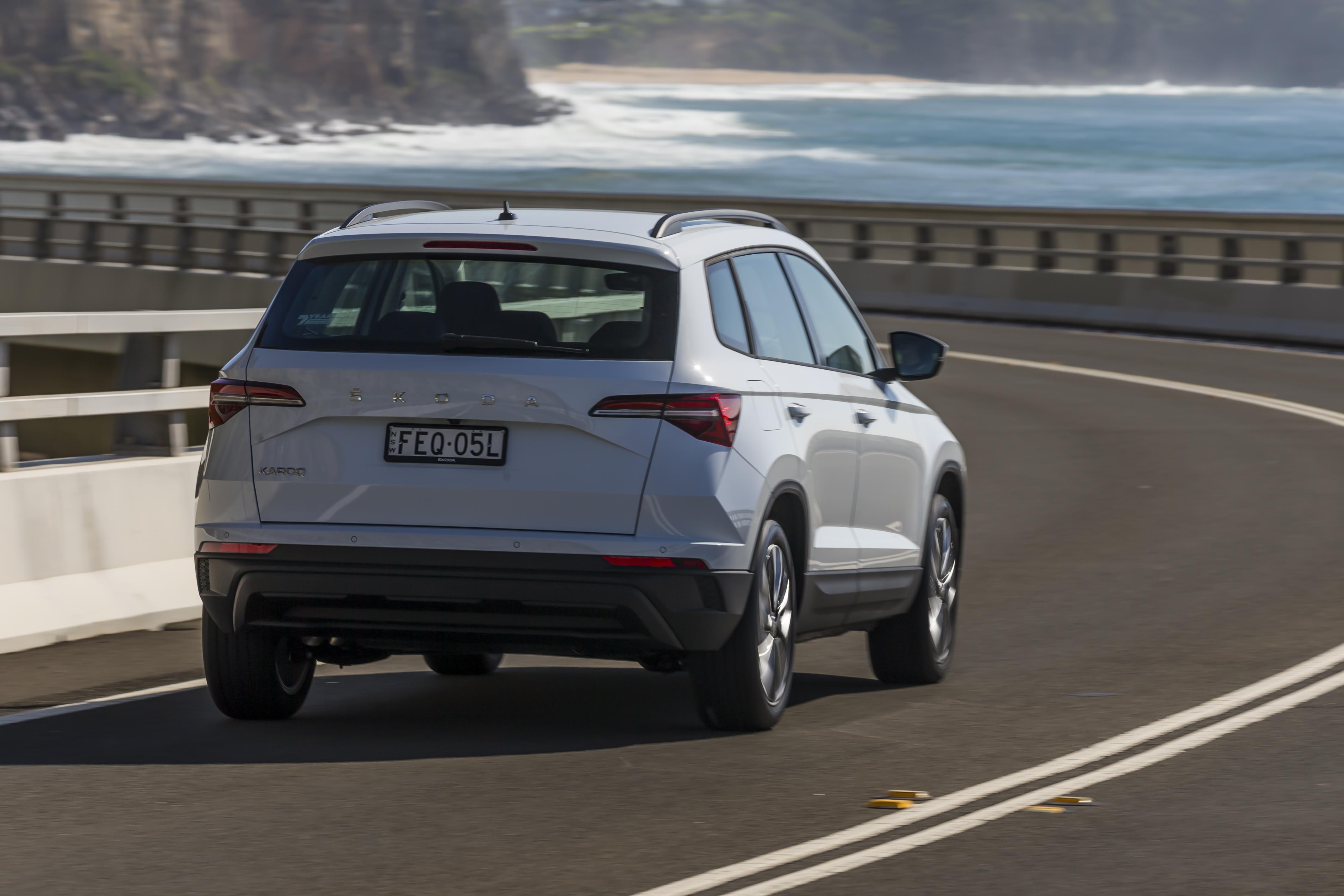
The solid powertrain performance is backed by sensible steering feel and good ride comfort. Neither is outstanding, but the fact there’s nothing really of note to mention when it comes to ride and handling – be it positive or negative – is a good thing. Once again the Karoq nails its brief with a well-resolved chassis tune that doesn’t attract your attention unless you actively think about it.
The steering is agile and appropriately light, and the car follows tiller inputs diligently and with confidence. Ride quality is on the firmer side, shouldering bumps with decent composure whether it’s around town, on the freeway, or navigating a poorly maintained dirt road.
The firmer suspension also translates into decent handling, with a sporty edge to the Karoq’s road manners. It won’t beat Skoda’s RS cars on a twisty road, but there’s a good compromise here between daily comfort and dynamic sharpness.
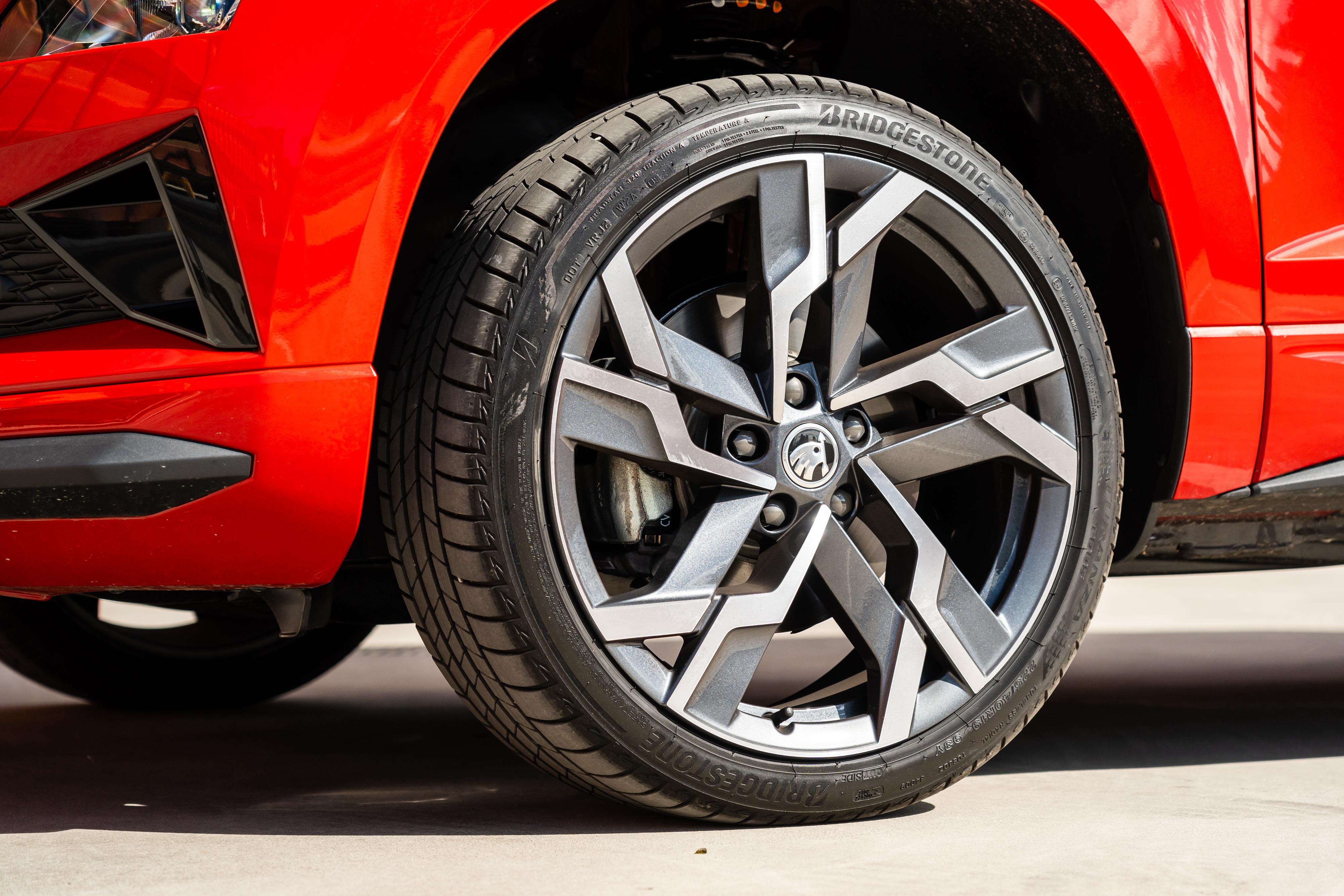
More noticeably, though, the base Select’s 18-inch wheels and tyres – as opposed to the 19s fitted across the rest of the range – offer a touch more cushioning over surface defects and more insulation from road noise. Both contribute to a very livable SUV that’s easy to hop in and drive with little extra thought.
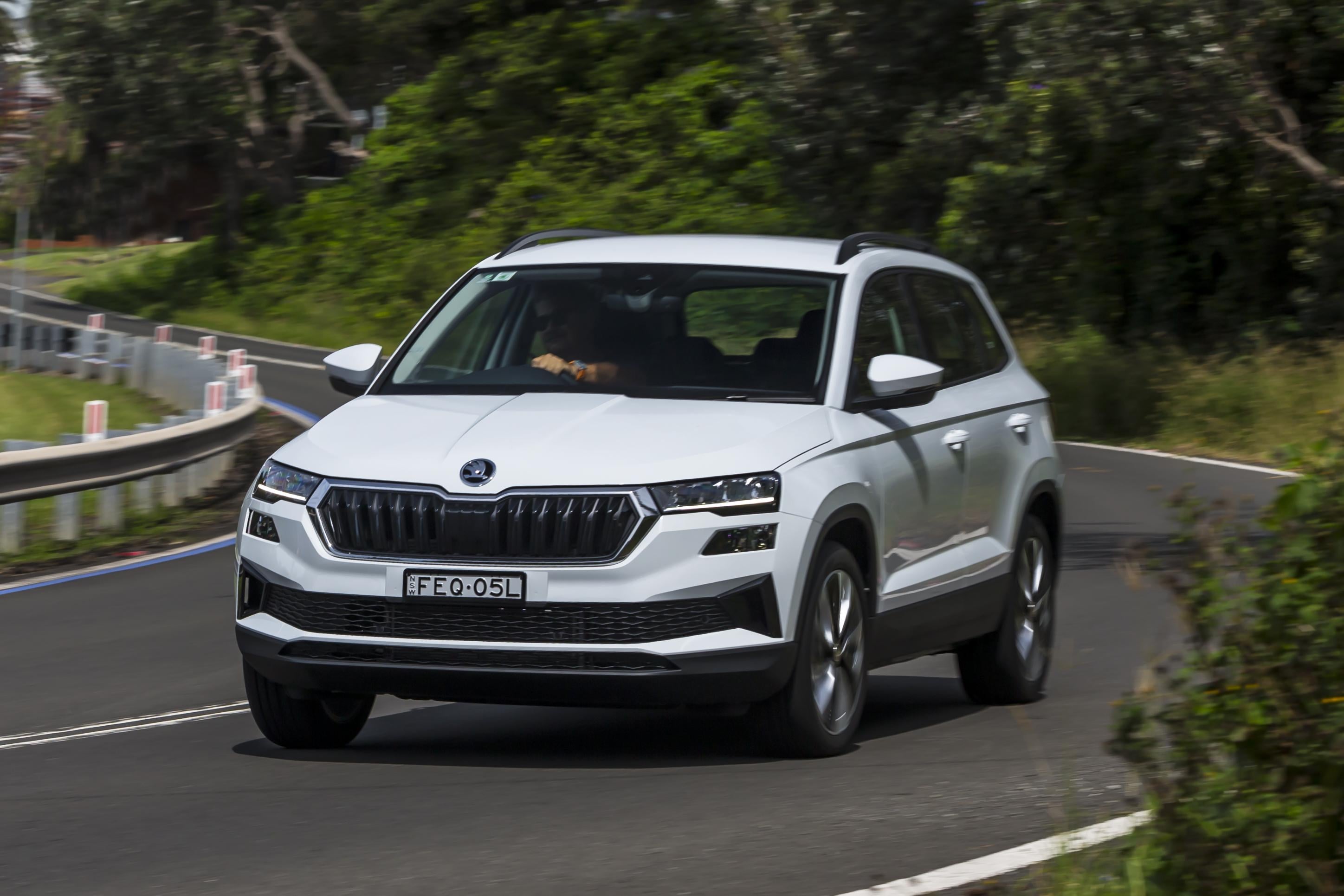
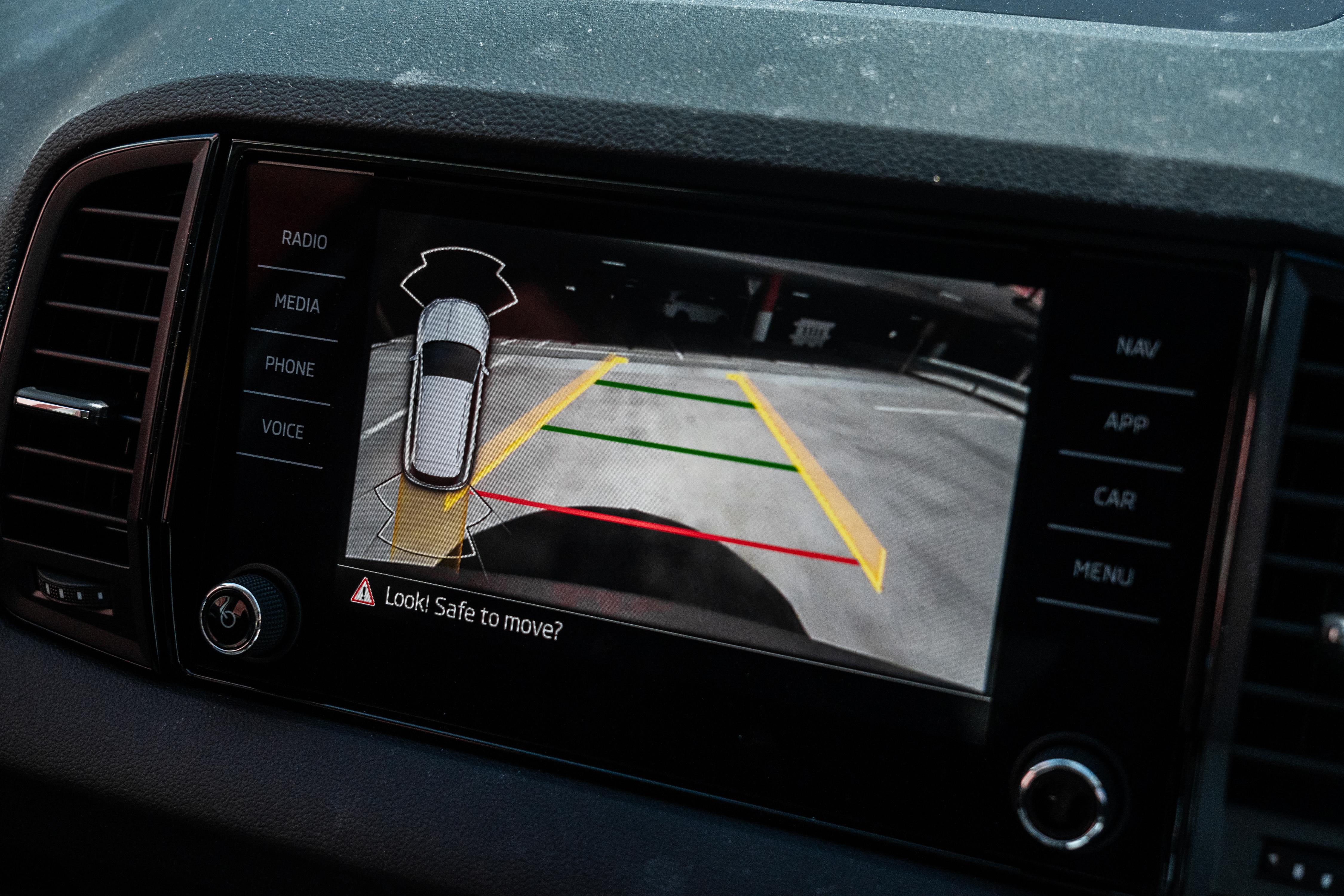
When it comes time to park, you’ll appreciate the Karoq’s compact feel. It provides a good sense of how big the car is around you, and manoeuvring tight car parks is a breeze as a result. Pulling into a parking spot is just as easy, though it could do with a higher-resolution reversing camera.
Visibility out of the cabin is also good, aided by large windows and side mirrors, and you get front and rear parking sensors to make squeezing into tight spaces easier. All that makes the Karoq an accomplished city car, though you may still yearn for the surround-view camera in the flagship Sportline AWD.
Speaking of safety aids, there’s a well-calibrated suite of gear designed to help you on the move, including adaptive cruise control (without lane-centring) which is decent but can sometimes be a little slow to react to traffic, and all of the driver assistance systems only pipe up if there’s something genuinely wrong.
In a world of incessant warning lights and chimes from many new cars, this is a refreshing trait and makes the Karoq all the more appealing. And if systems like the lane-keep assist bug you, it’s easy enough to toggle everything on or off via the infotainment display.
To see how the Skoda Karoq stacks up against the competition, use our comparison tool
What do you get?
Four grades of Karoq are currently available, including the recently added 130 Years Edition.
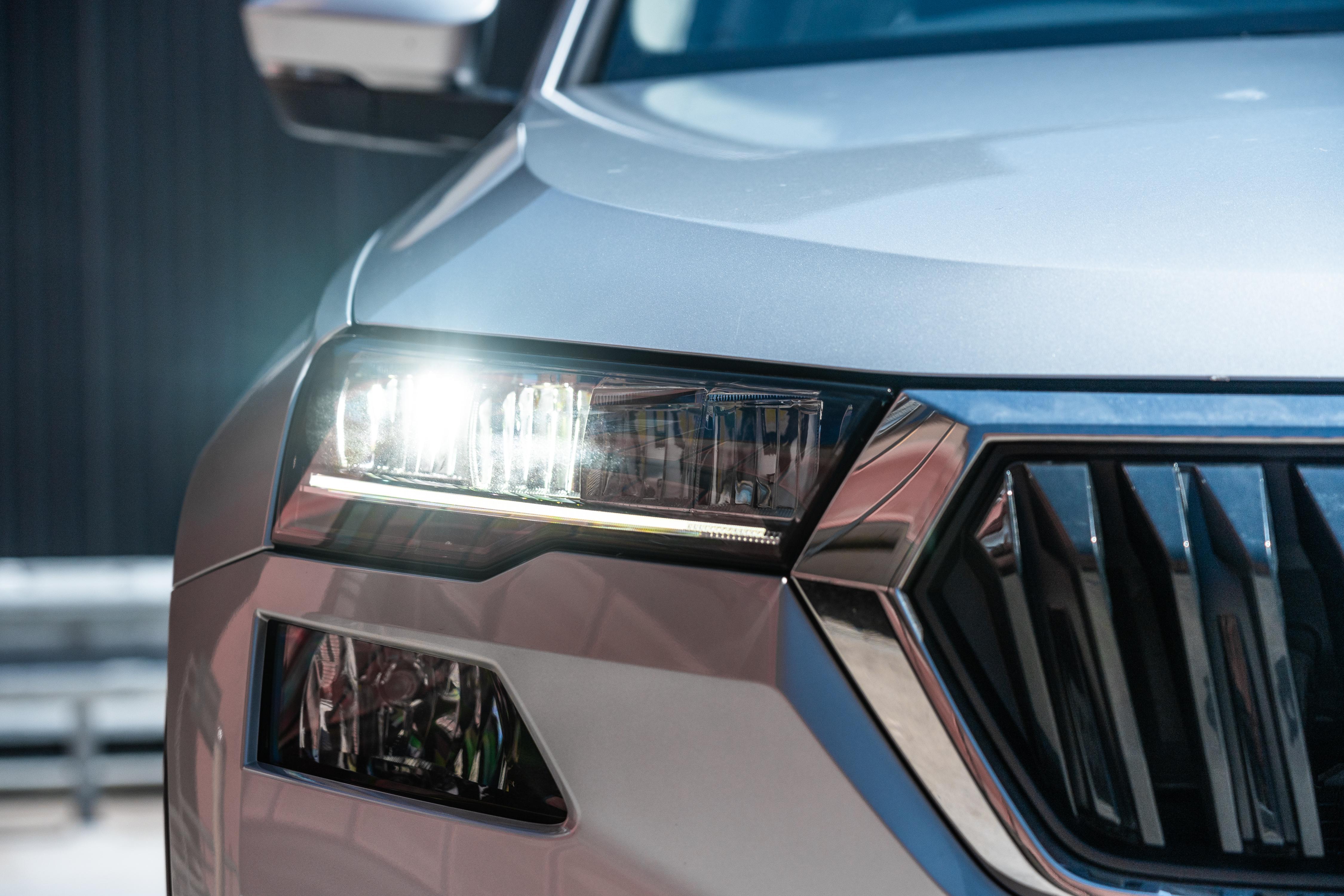
2026 Skoda Karoq Select equipment highlights:
- 18-inch alloy wheels
- Space-saver spare wheel
- Silver roof rails and window frame surround
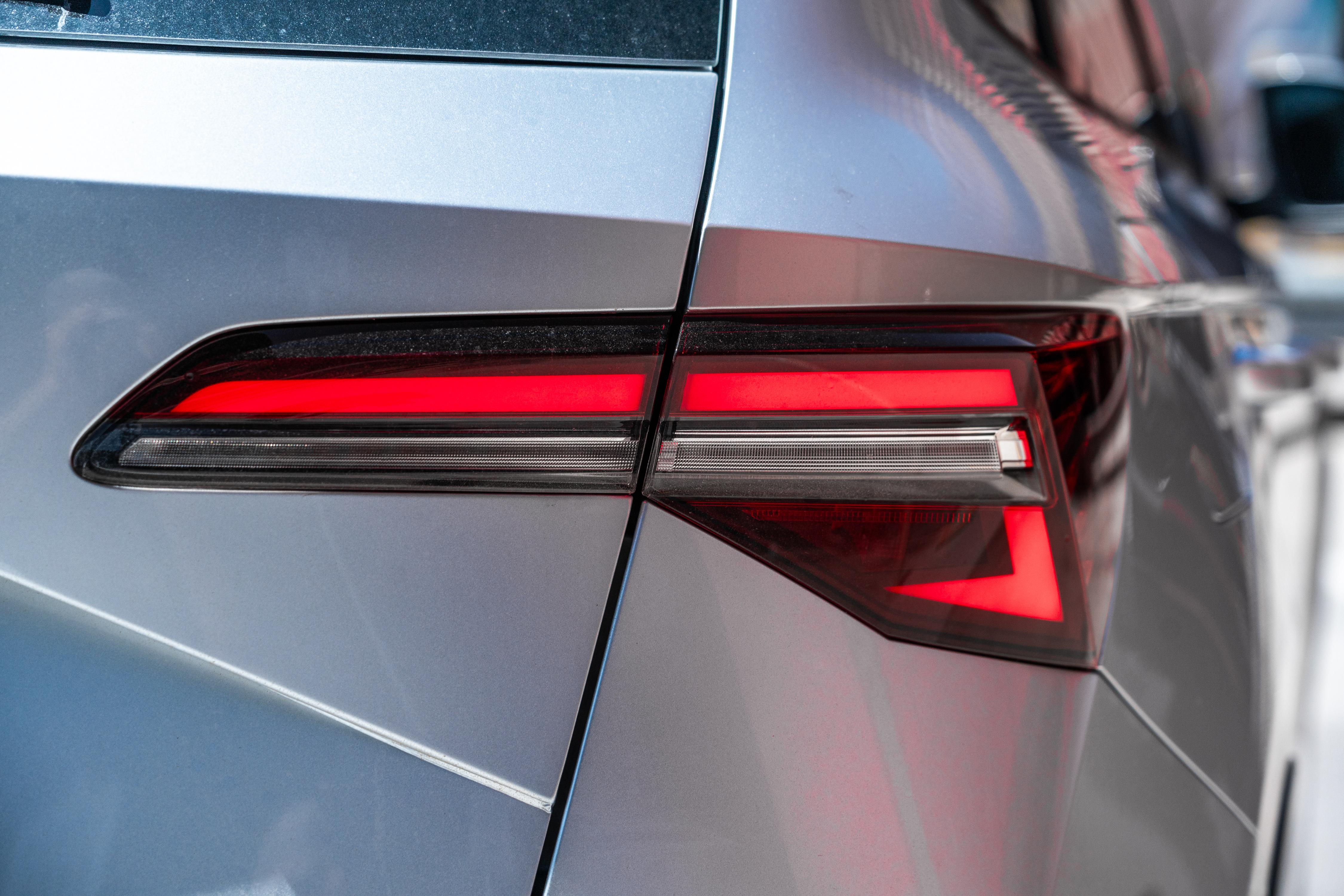
- LED headlights and tail-lights
- Automatic high-beam
- Dynamic indicators
- Power-folding and heated mirrors
- Rain-sensing wipers
- Leather-trimmed steering wheel
- Manual front seat height adjustment
- Auto-dimming rear-view mirror
- Dual-zone climate control
- 8.25-inch digital instrument cluster
- 8.0-inch infotainment touchscreen
- Wireless Apple CarPlay and Android Auto
- 2x USB-C ports
- Voice control
- Keyless start
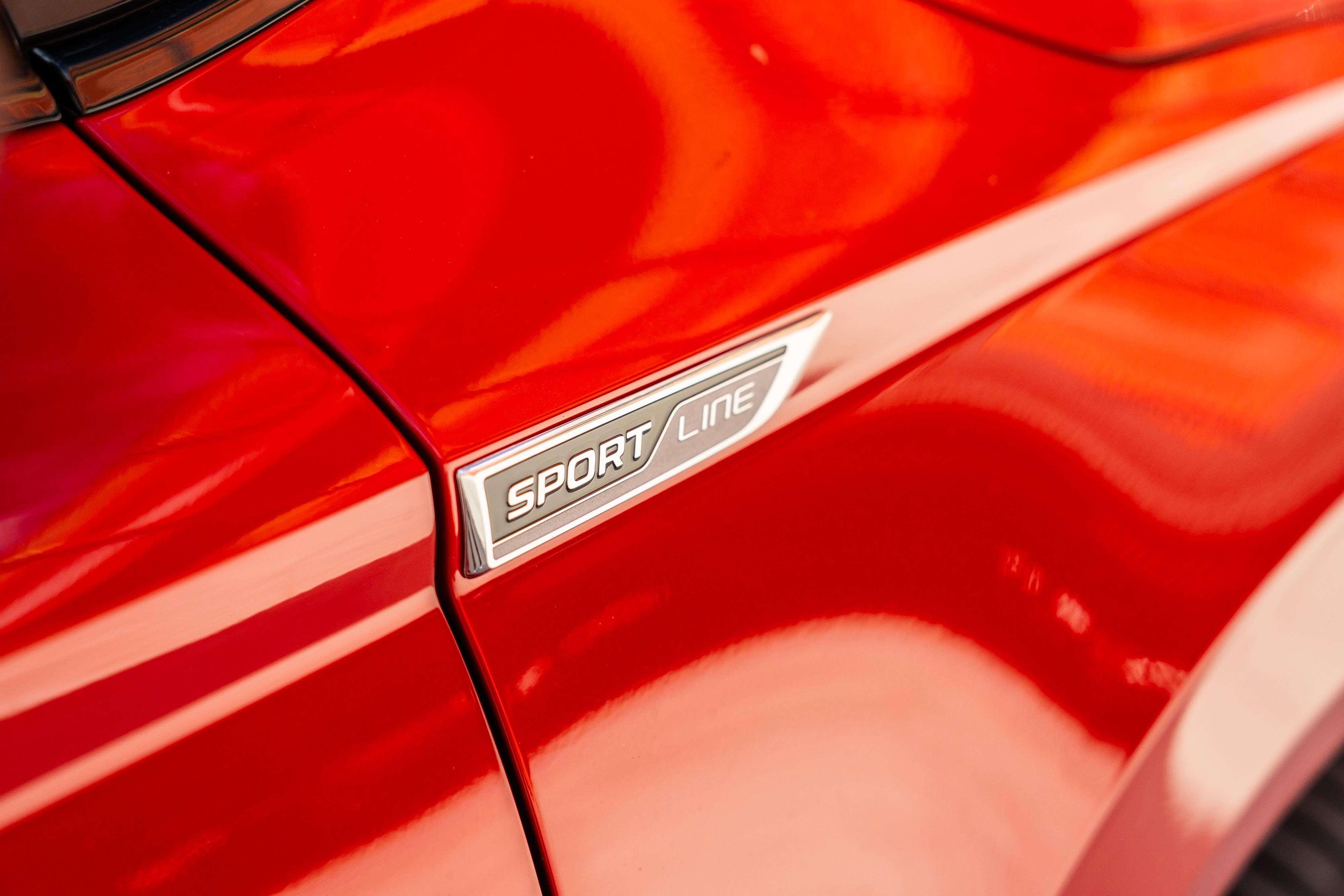
Karoq Sportline FWD adds:
- 19-inch ‘Sagitarius’ alloy wheels in silver
- Heated windscreen
- Power-folding side mirrors with memory
- Privacy glass
- Anthracite front spoiler and rear diffuser
- Black roof rails
- Black window frame surrounds
- Matrix LED headlights with dynamic cornering
- LED interior lighting
- LED puddle lamps
- Sports comfort front seats
- Heated front seats
- Heated steering wheel with shift paddles
- Aluminium-faced pedals
- 9.2-inch touchscreen infotainment system
- 10.25-inch digital instrument cluster
- DAB+ digital radio
- Wireless phone charger
- Ambient lighting
- Black headliner
- USB-C port in rear-view mirror
- Heated outboard rear seats
Karoq 130 Years Edition adds:
- Chrome roof rails and trim
- Unique ‘130 Years’ tailgate badge
- Keyless entry
- Leather-appointed upholstery
- Power-adjustable front seats
- Hands-free power tailgate
- Satellite navigation
- 10-speaker Canton sound system
Karoq Sportline AWD adds:
- Dynamic Chassis Control (DCC) adaptive suspension
- Progressive steering
- Semi-autonomous parking assist
A panoramic glass sunroof is available for Sportline variants as a $2000 option.
To see how the Skoda Karoq stacks up against the competition, use our comparison tool
Is the Skoda Karoq safe?
The Skoda Karoq’s five-star ANCAP safety rating, awarded in 2017, expired at the end of 2023, which means this SUV is currently unrated by the independent auto safety organisation.
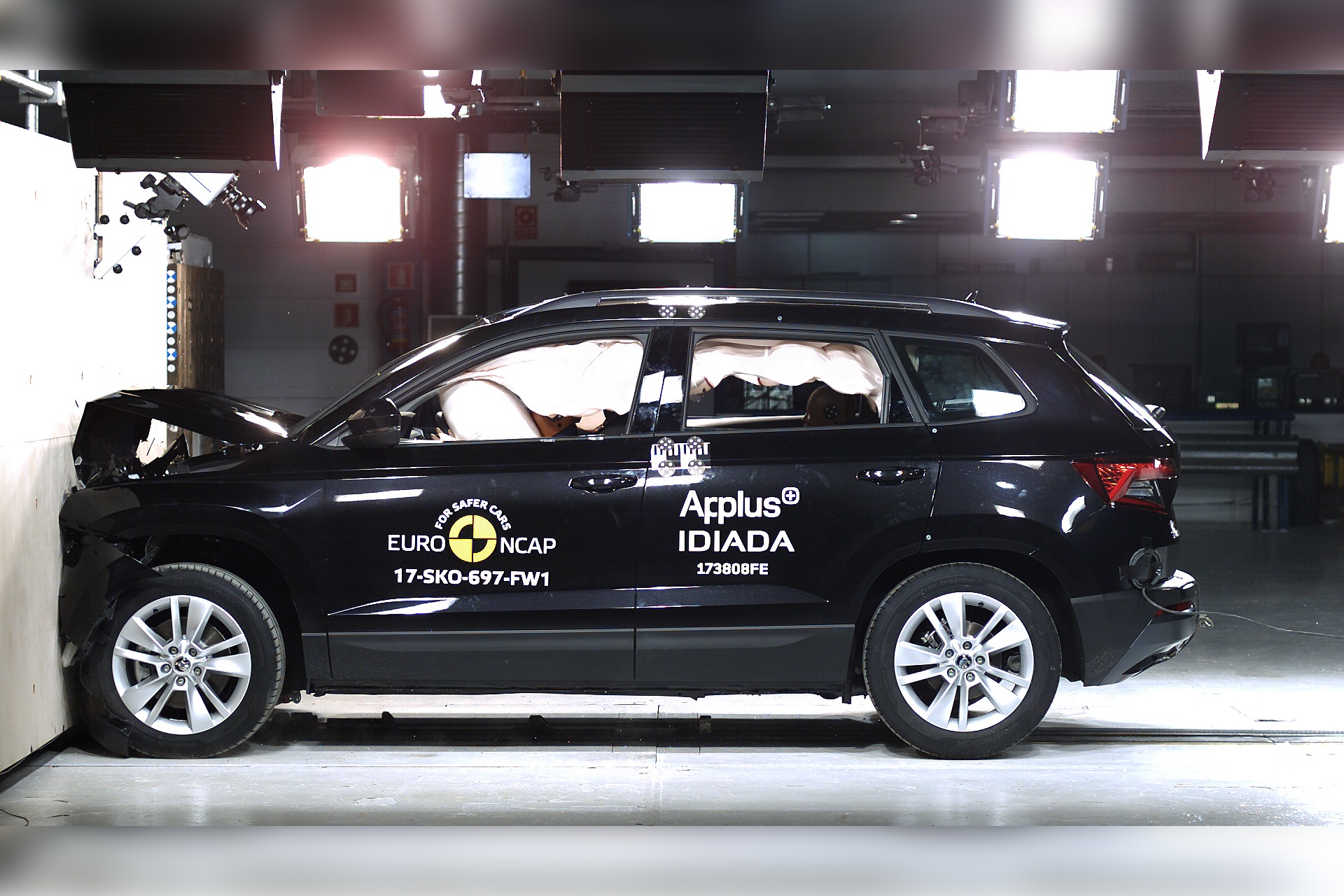
Previously, however, all Karoq variants were covered by this rating, which was based on scores of 93 per cent for adult occupant protection, 79 per cent for child occupant protection, 73 per cent for pedestrian protection, and 58 per cent for safety assist.
Standard safety equipment includes:
- 7 airbags, incl:
- Driver’s knee
- Side
- Adaptive cruise control
- Autonomous emergency braking (AEB)
- Pedestrian detection
- Cyclist detection
- Blind-spot monitoring
- Driver attention monitoring
- Front and rear parking sensors
- Lane-keep assist
- Manoeuvre braking assist
- Multi-collision brake
- Reversing camera
- Tyre pressure monitoring
Stepping up to the Sportline FWD adds traffic jam assist, lane-centring and emergency assist, while the Sportline AWD gets a surround-view camera and hill-descent control.
To see how the Skoda Karoq stacks up against the competition, use our comparison tool
How much does the Skoda Karoq cost to run?
Skoda Australia backs its range with a seven-year, unlimited-kilometre warranty, and service intervals for the Karoq are 12 months or 15,000km, whichever comes first.
| Servicing and Warranty | Skoda Karoq |
|---|---|
| Warranty | 7 years, unlimited kilometres |
| Roadside assistance | Lifetime (conditional) |
| Service intervals | 12 months or 15,000km |
| Capped-price servicing | Prepaid plans |
| Total capped-price service cost | $2590 (5-year plan, FWD) $2990 (5-year plan, AWD) $3490 (7-year plan, FWD) $3990 (7-year plan, AWD) |
All service plans listed above are $500 cheaper than they were for MY25 vehicles.
In terms of rivals, Nissan offers five years of capped-price servicing for the Qashqai, totalling $1995, while five years of servicing for the current entry-level Kia Seltos costs $2094.
Five years of servicing for the Volkswagen T-Roc 110TSI is pricier at $2907, but Toyota has them all beat with maintenance for the Corolla Cross being just $1375 over five years.
To see how the Skoda Karoq stacks up against the competition, use our comparison tool
CarExpert’s Take on the Skoda Karoq 110TSI Select
The Karoq is a sensible car from a sensible brand, and the base Select is the most sensible version of this pragmatic small SUV.
While its price may seem a little steep for a fairly basic compact SUV, the Karoq is arguably among the easiest vehicles of this type to live with. A big reason for that is its age, which means it lags behind its stablemates in terms of tech, and harks back to days when cars were simpler and less screen-heavy.
There are no annoying bings or bongs, but there is a generous number of buttons and an unintrusive infotainment screen inside, where everything is easy to learn and live with, making the Karoq a refreshing option in a world of increasingly tech-laden new cars.
Of course, there are downsides, such as the way this entry-level variant presents like a rental car, and the fact it’s a little underpowered. And servicing is slightly pricier than its direct rivals, as you’d expect for a European car, even if front-wheel drive Karoqs are the cheapest to maintain.
But overall, the Karoq is a prime example of what Skoda is all about: sensible, approachable motoring in a well-considered package that ticks the requisite boxes but remains slightly unique and outside the mainstream.
The entry-level Select really is the epitome of a basic SUV, but it still feels fairly modern – even if the Czech brand’s ‘mid-size’ SUV is technically a generation behind the rest.
CarExpert can save you thousands on a new Skoda Karoq. Click here to get a great deal.
Click the images for the full gallery
MORE: Explore the Skoda Karoq showroom