














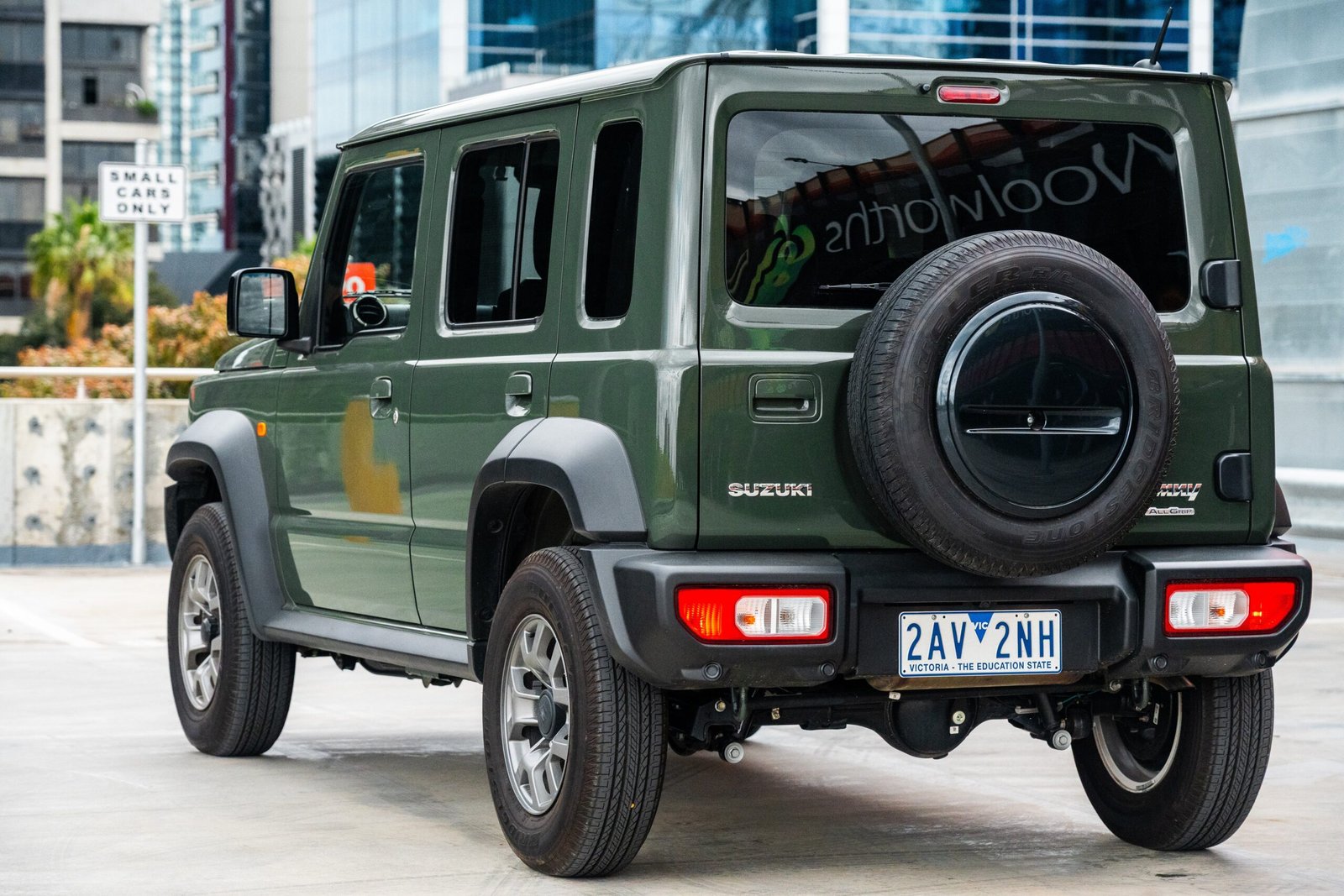
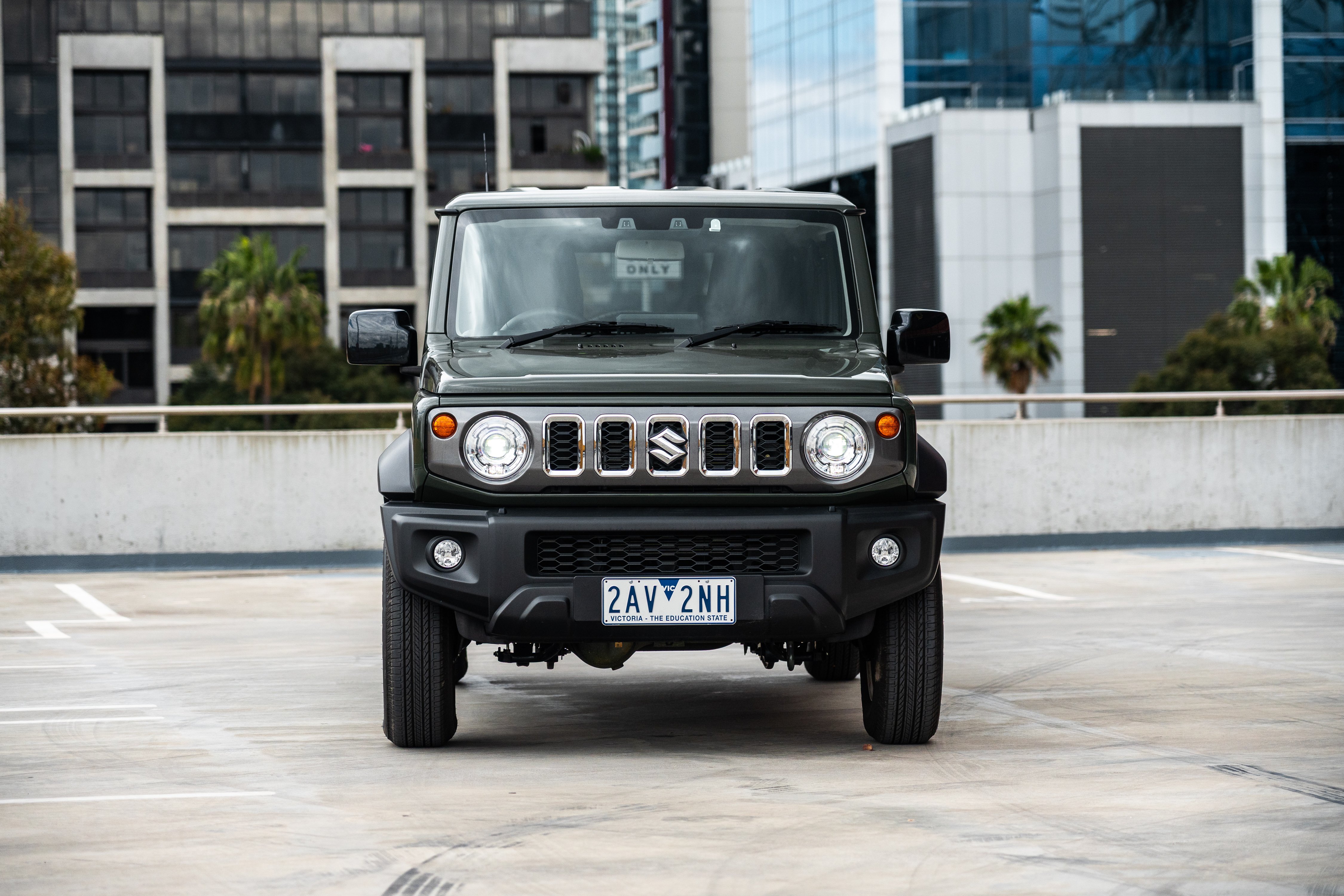
The Suzuki Jimny is a car that never really seems to go away.
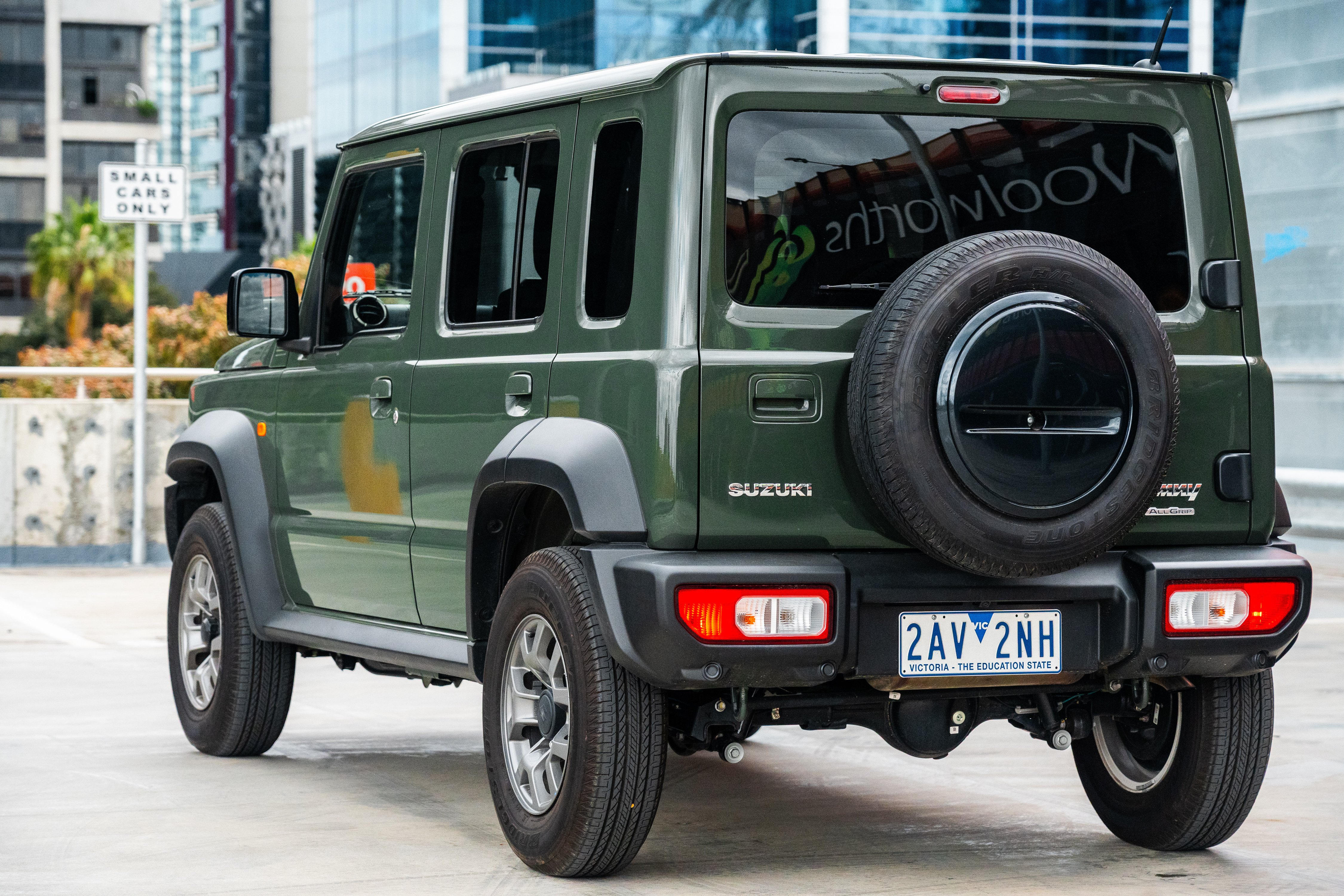
The three-door version of the iconic compact off-roader has been off-sale until very recently, when Suzuki rolled out a raft of safety upgrades and brought it back to life – but that hiatus didn’t mean Suzuki stopped selling the Jimny entirely.
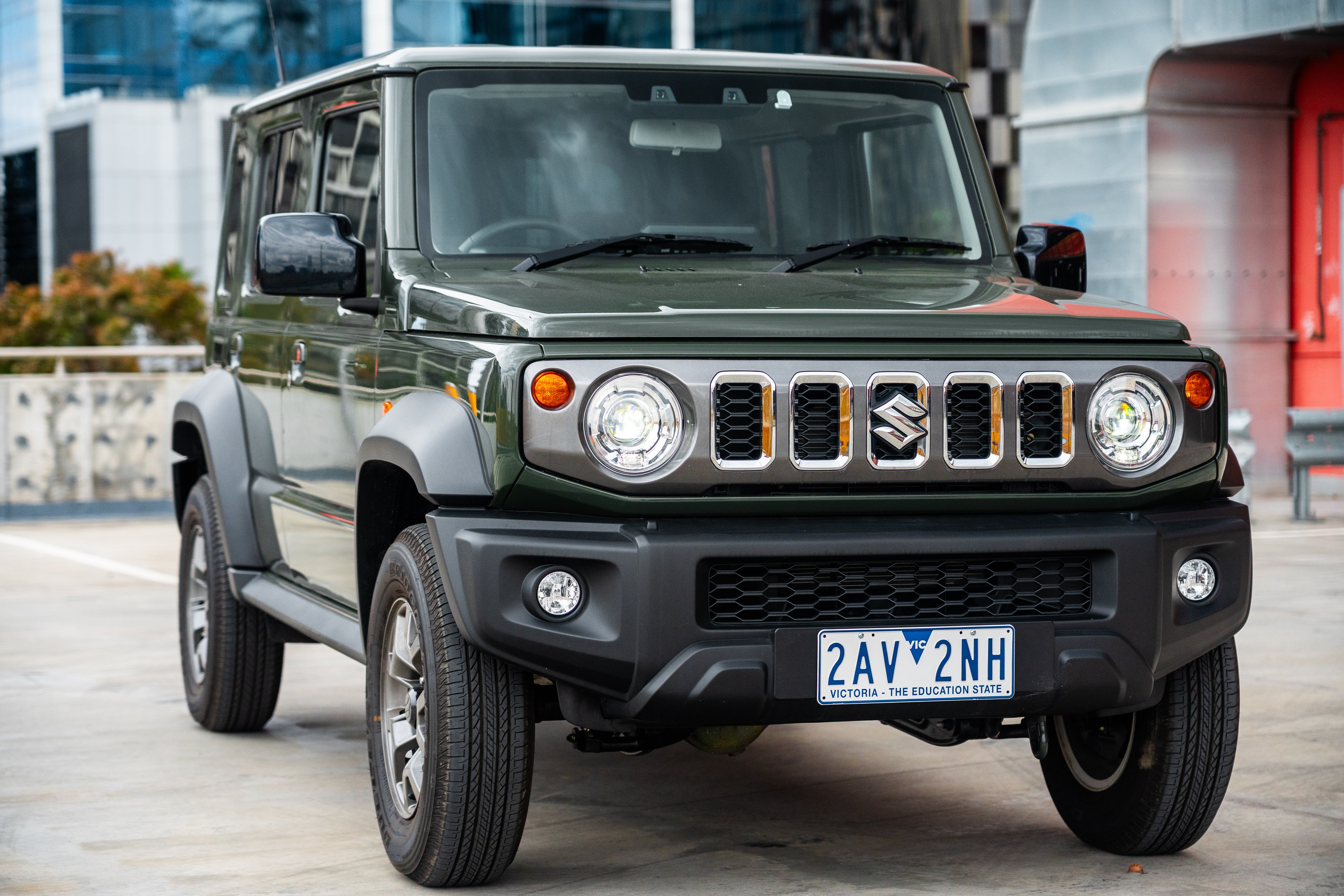
Unaffected by previous safety issues was the five-door XL version, which apart from a brief production pause flew Suzuki’s Jimny flag until its short-wheelbase sibling was back in fighting form.
It hasn’t received any upgrades, though, and prices continue to rise. On test here is the 2026 Suzuki Jimny XL auto, which now costs $1000 more than it did at the start of 2025.
Now that the three-door is back and promises more than ever, is the XL still worth a look if you’re in the market for a pint-size, back-to-basics off-road SUV?
How much does the Suzuki Jimny cost?
The automatic Jimny XL is the most expensive Jimny currently on sale, priced at $37,490 before on-road costs.
| Model | Price before on-road costs |
|---|---|
| 2026 Suzuki Jimny Lite 4×4 manual | $31,990 |
| 2026 Suzuki Jimny GLX 4×4 manual | $33,990 |
| 2026 Suzuki Jimny XL 4×4 manual | $34,990 |
| 2026 Suzuki Jimny GLX 4×4 auto | $36,490 |
| 2026 Suzuki Jimny XL 4×4 auto | $37,490 |
Suzuki also offers drive-away pricing across the Jimny range, with the base Jimny Lite priced at $36,490 drive-away and the flagship Jimny XL at $42,990 drive-away.
Rivals are limited to small SUVs that promise some off-road capability. The most worthy candidates are the Renault Duster, which tops out at $37,990 before on-roads for the Techno 4×4 manual, and the Subaru Crosstrek which tops out at $43,990 before on-roads for the non-hybrid 2.0S.
To see how the Suzuki Jimny stacks up against its rivals, use our comparison tool
What is the Suzuki Jimny like on the inside?
The Jimny is undeniably a utilitarian vehicle, but even the flagship XL auto doesn’t add much to make it feel luxurious.
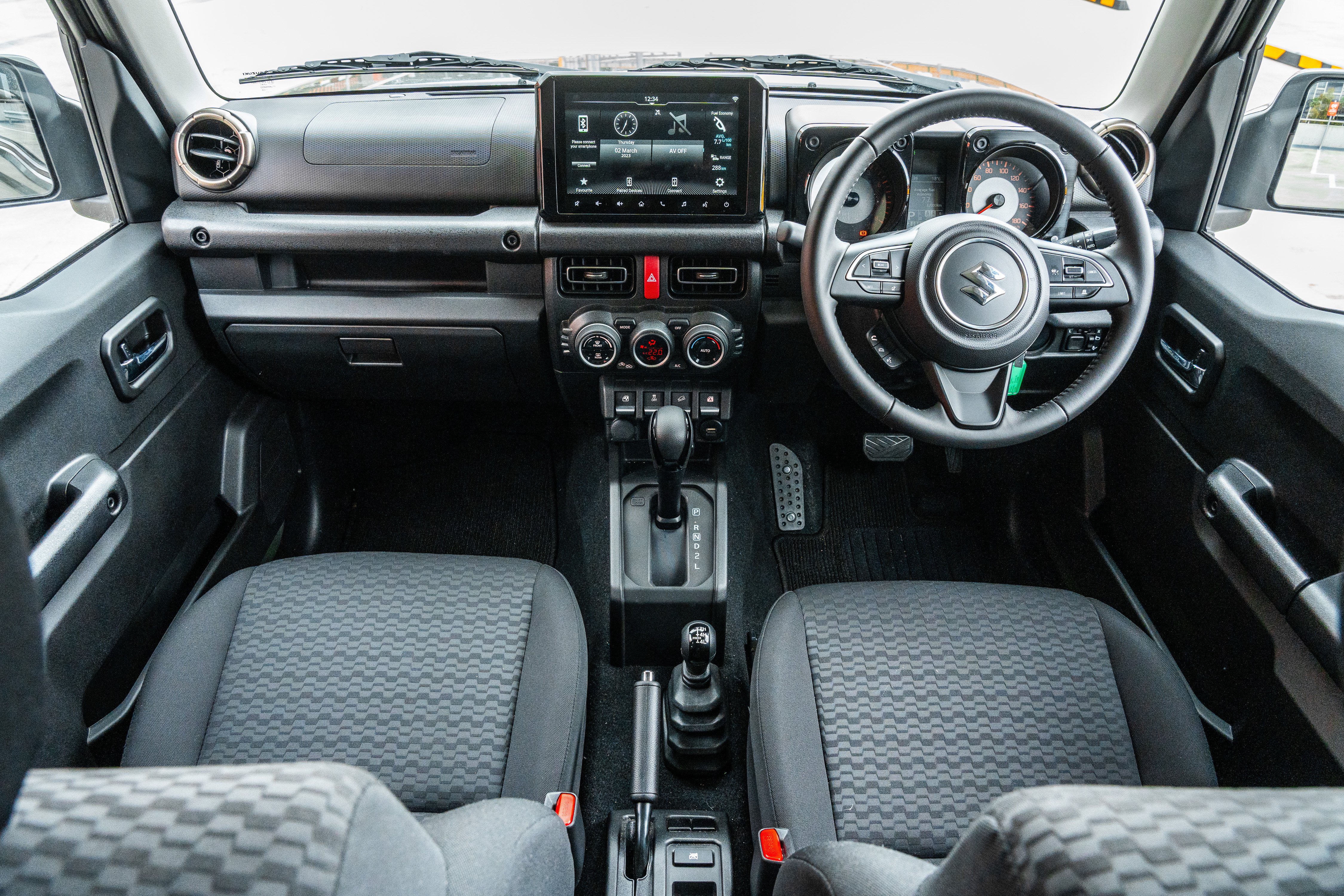
Don’t get us wrong – we’re well aware of the fact the Jimny isn’t meant to be a luxury vehicle. It’s here to serve a purpose – one we’ll detail further in our driving impressions – and the cabin reflects that intention.
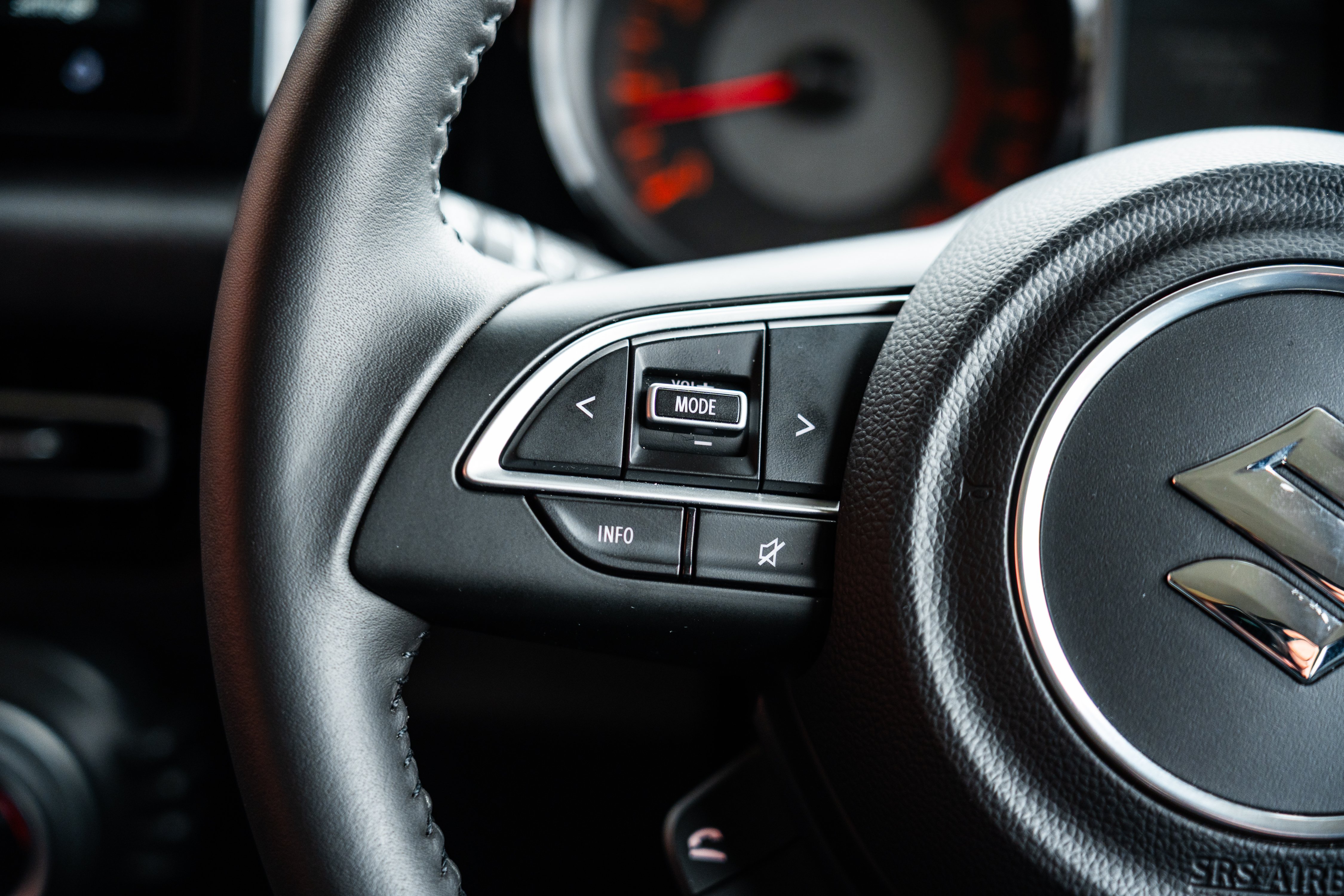
As such, it’s unfair to expect more than the swathes of black plastic and cute-tough elements that the XL presents. There’s no leather (or even fake leather) anywhere other than the steering wheel, and most of the key touch points are cold and hard.
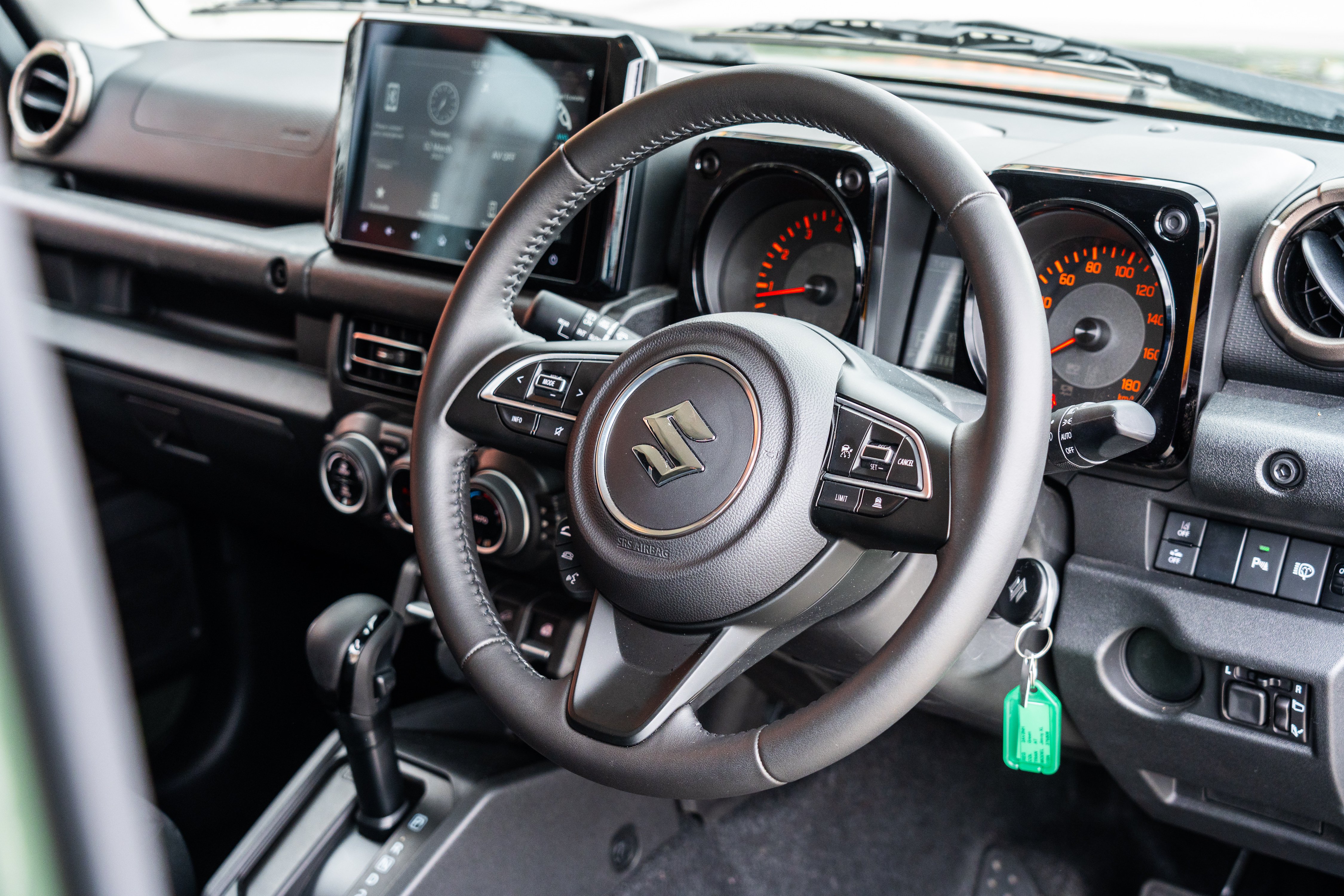
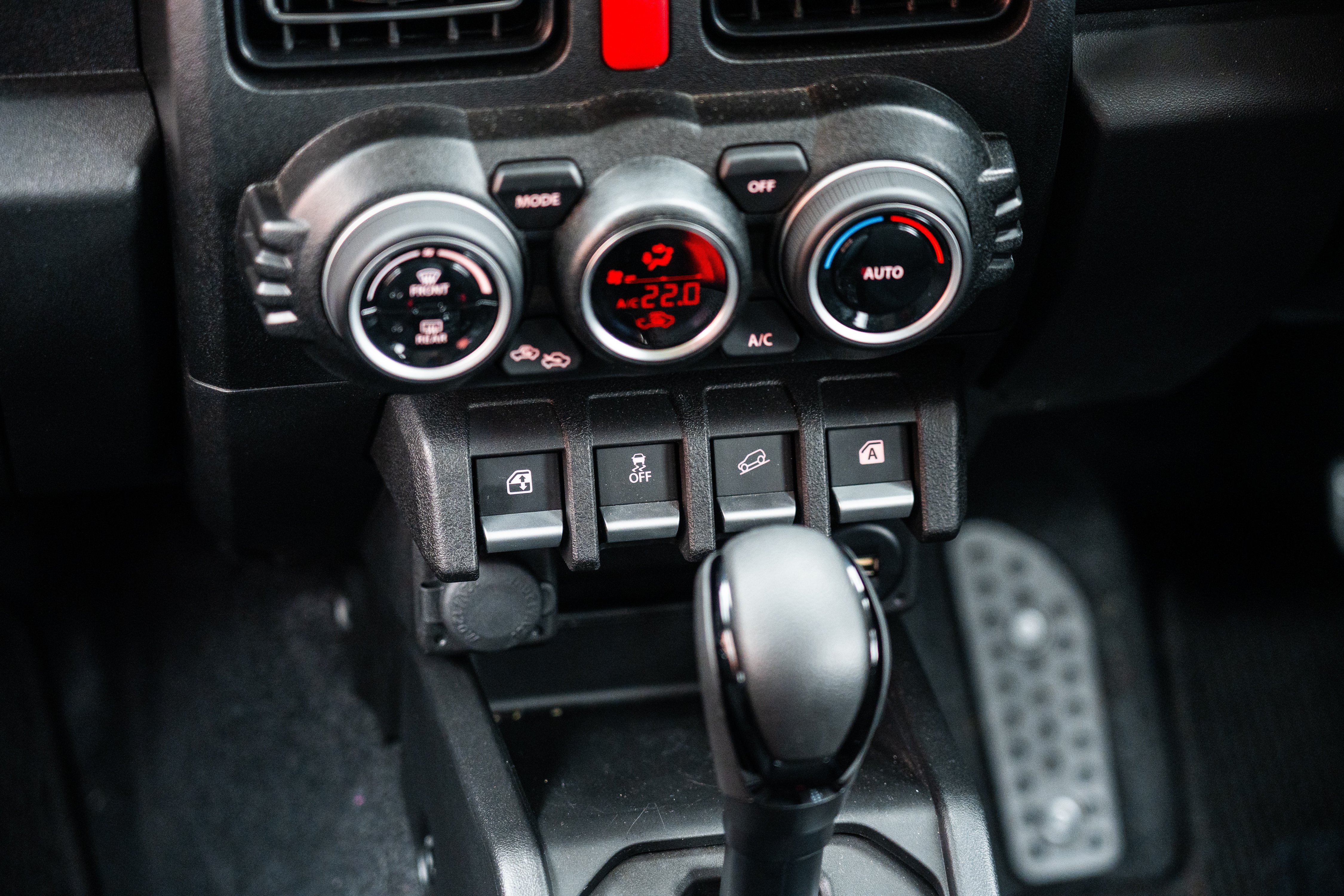
The lack of higher-end appointments creates an undeniably robust interior, dominated by physical controls that suggest it was built in the mid-2000s rather than in 2026. It isn’t even an unpleasant place to spend time.
But the issue is you’re getting that in a $40,000 car, as tested here. That’s hardly chump change, even for larger, more powerful cars, which makes this Jimny difficult to justify.
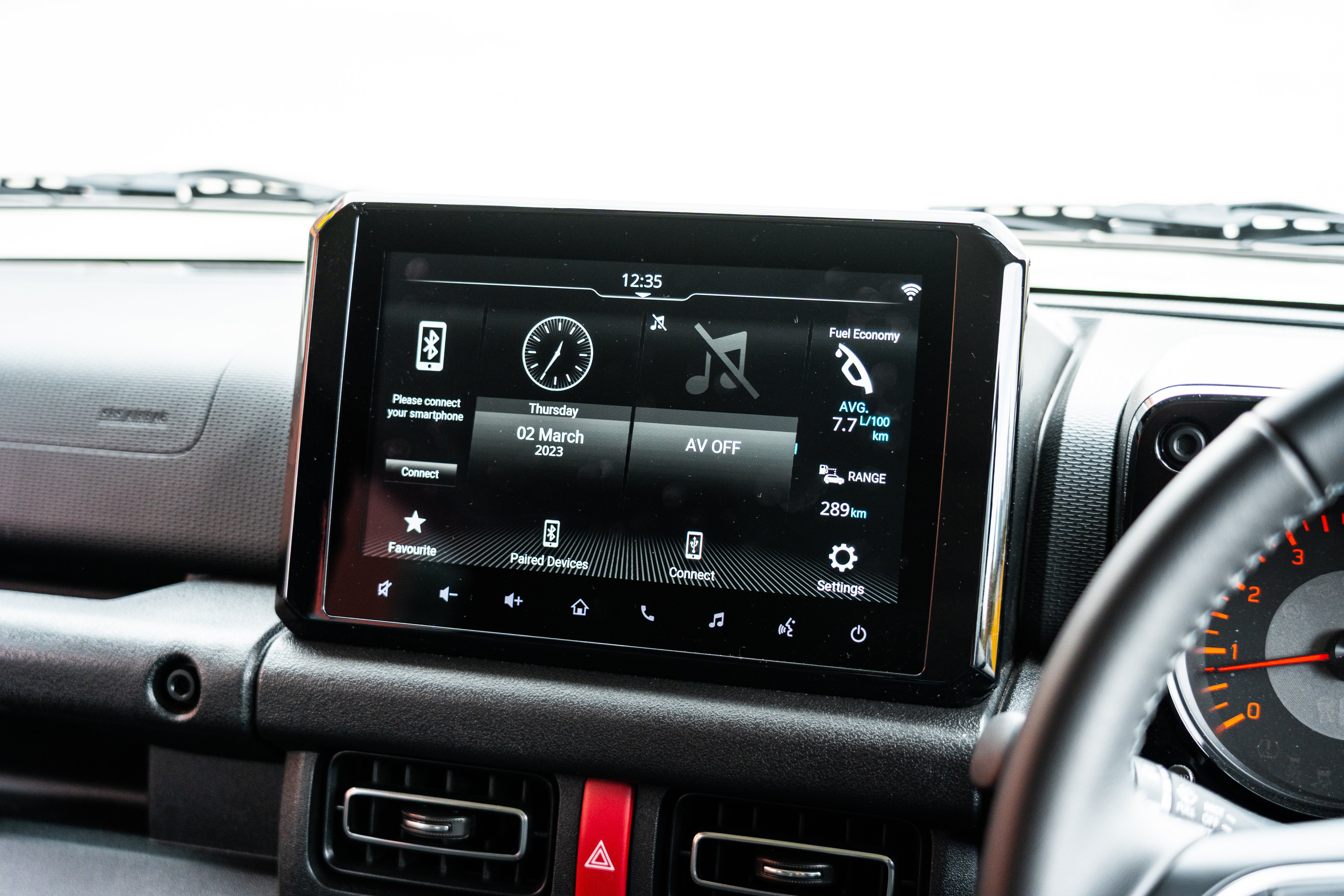
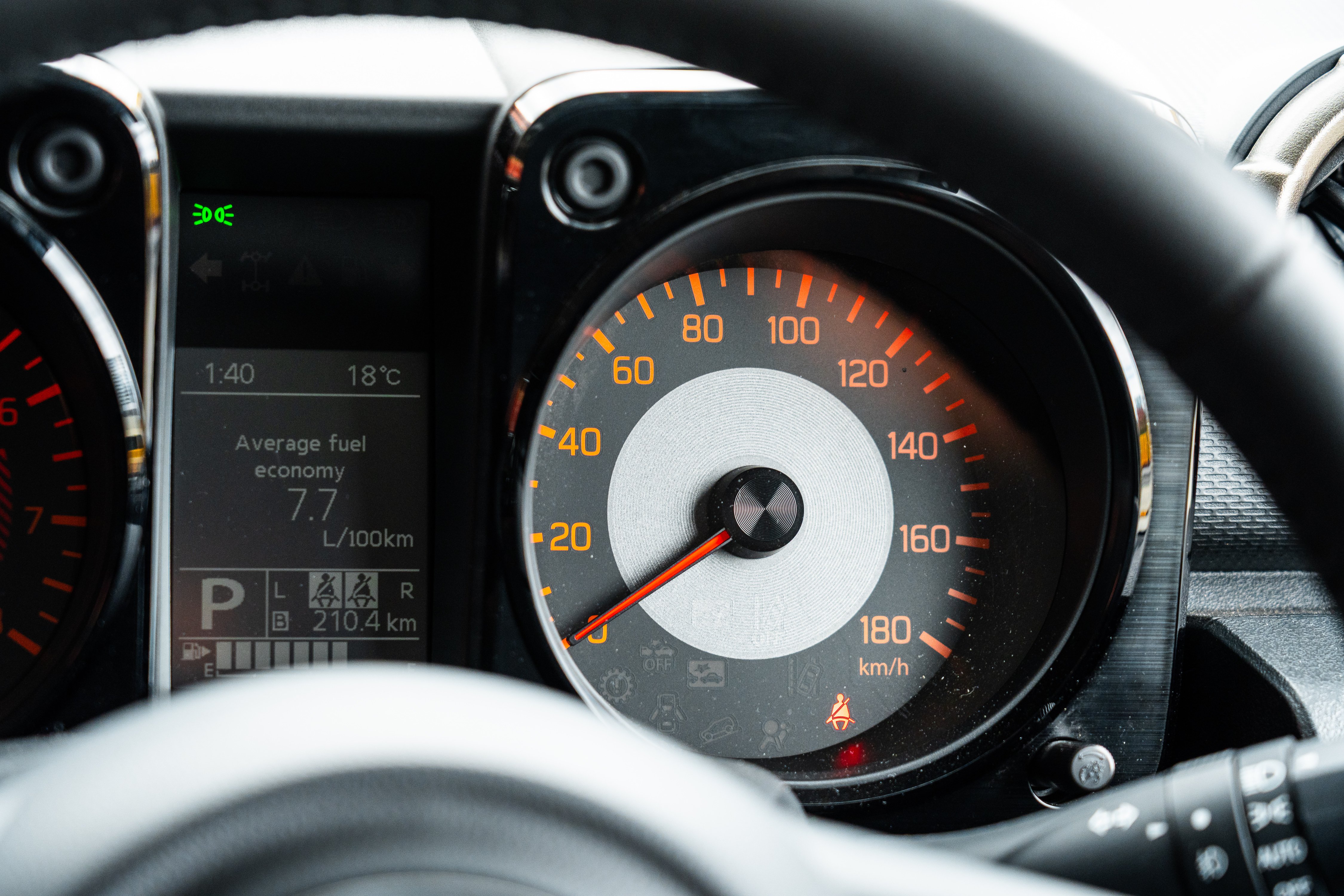
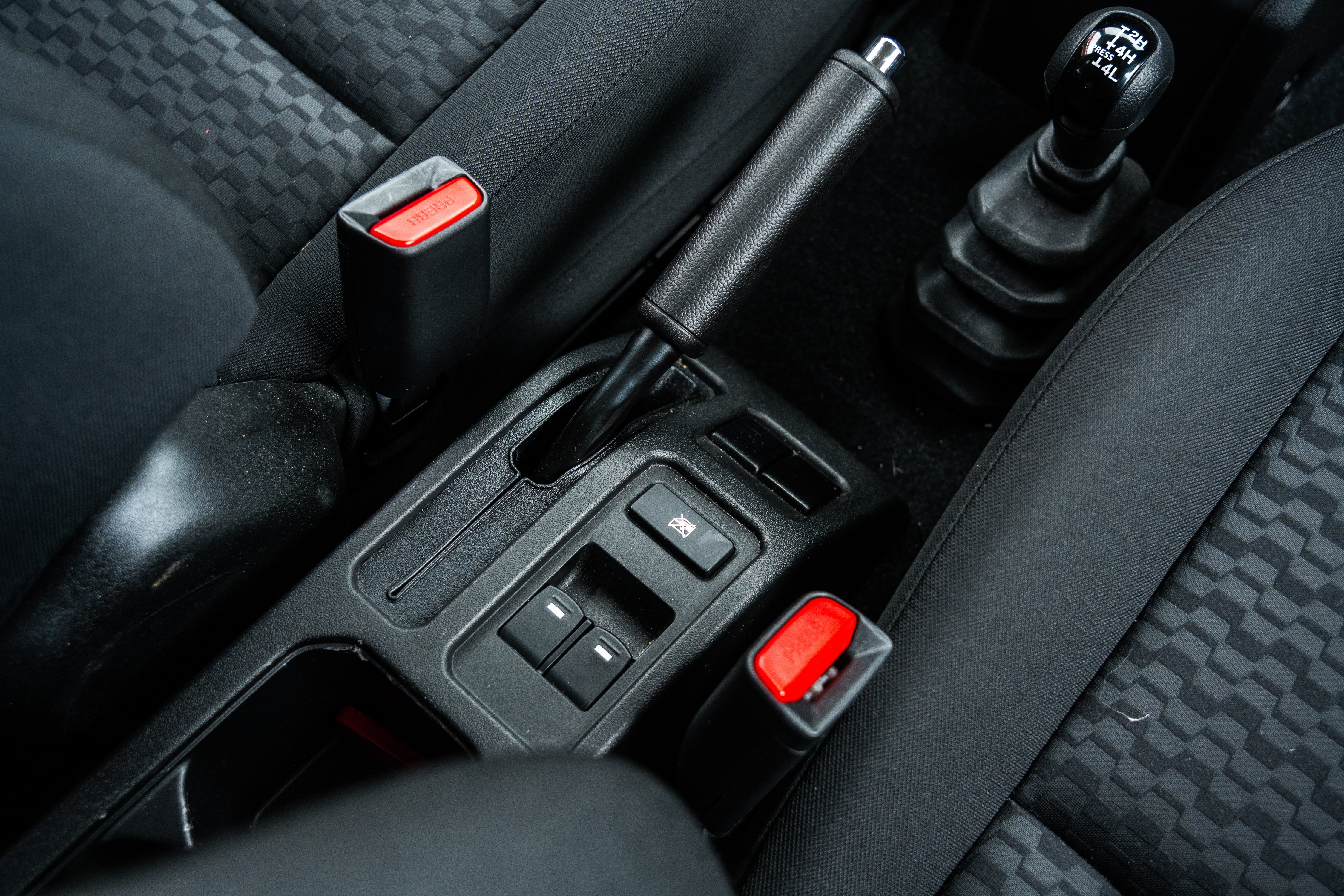
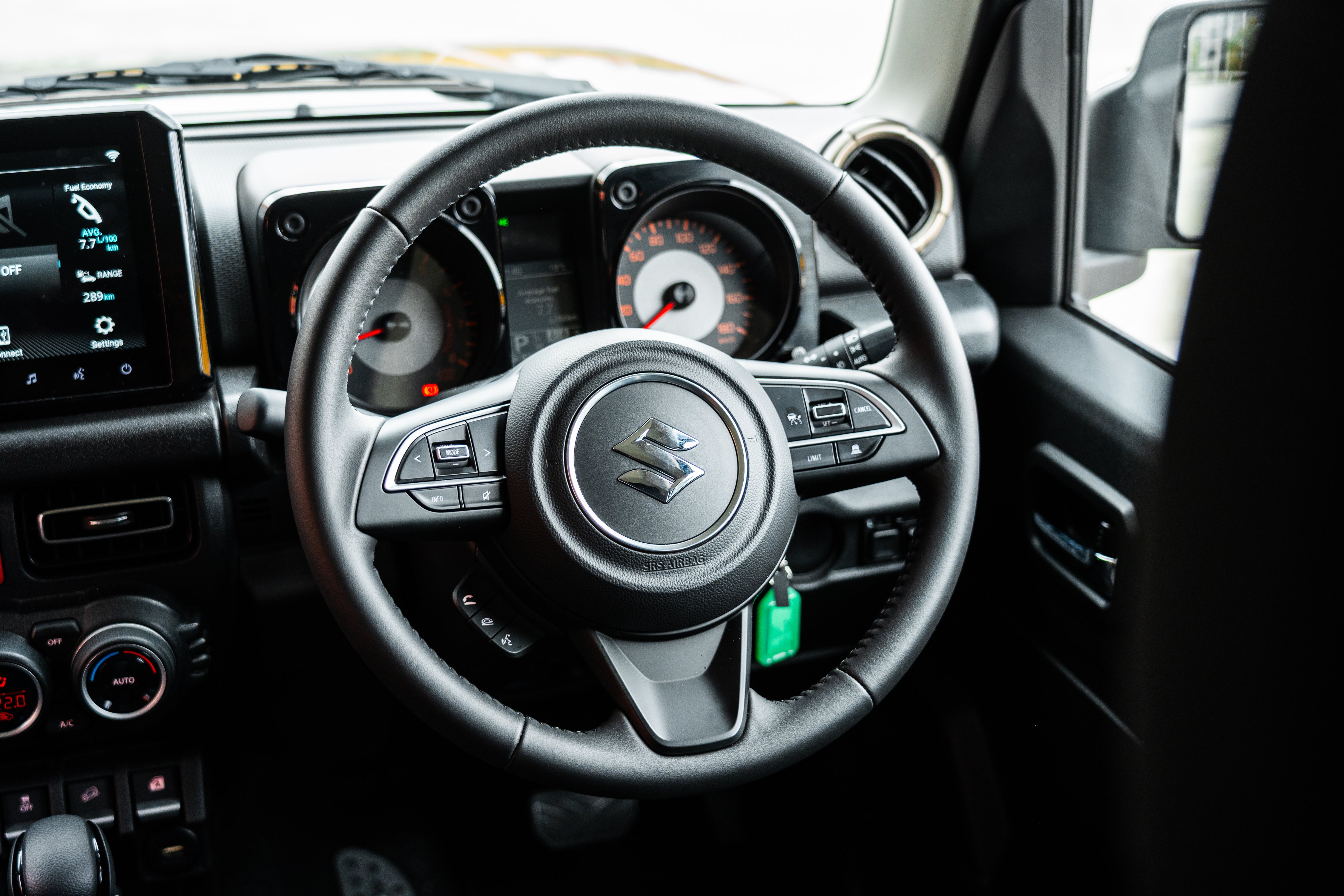
Still, at least everything works. It takes no time at all to figure out the pseudo-three-dial climate system (the middle one is an info display), the basic controls are huge and easy to locate, and there are real levers and shifters for the handbrake, gears, and low-range.
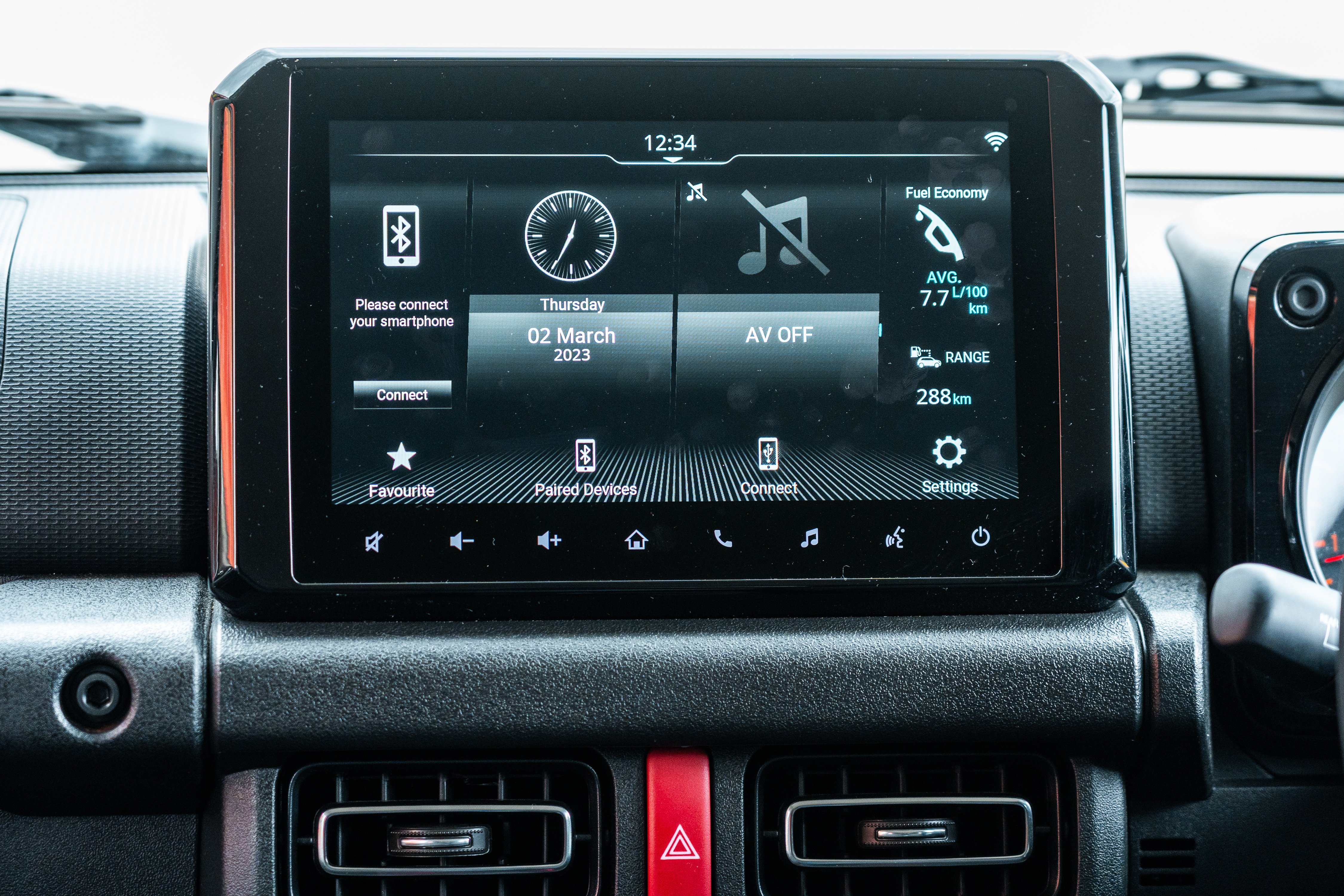
The reliance on screens is also kept to a minimum. There’s a 9.0-inch touchscreen infotainment system with wireless Apple CarPlay and Android Auto as standard, and it also offers very basic settings and economy info.
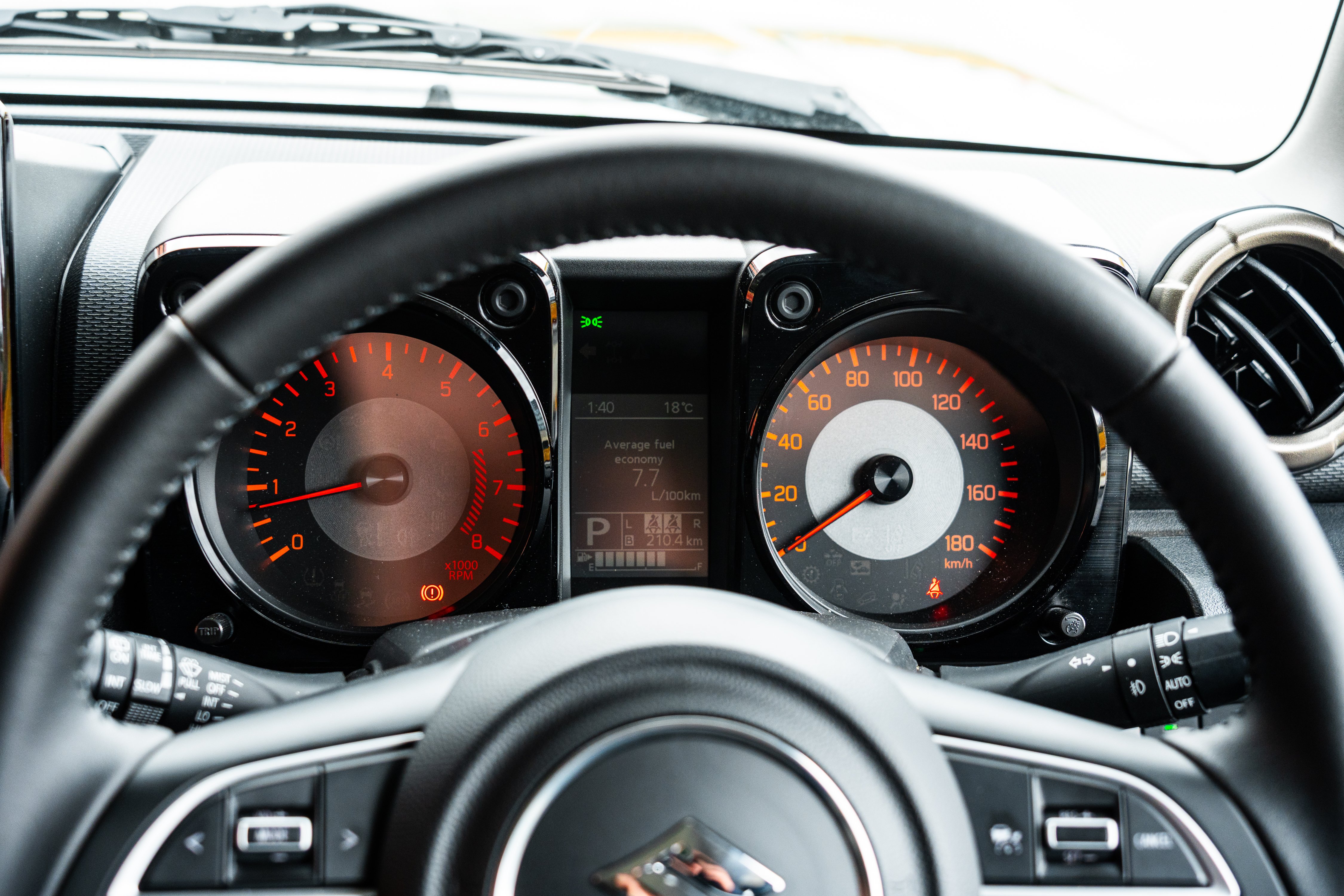
There’s also a simple LCD-style display in front of the steering wheel, which is where you get the rest of the car’s trip computer info. Everything else is as real and simple as it gets, particularly the two large gauges flanking that little display.
In fact, the squared-off gauge housings are decorated with the Jimny’s only real interior design motif – if you can call it that. That’s the exposed bolt heads seen elsewhere across the dash and door cards, which are as real as they look and feel.
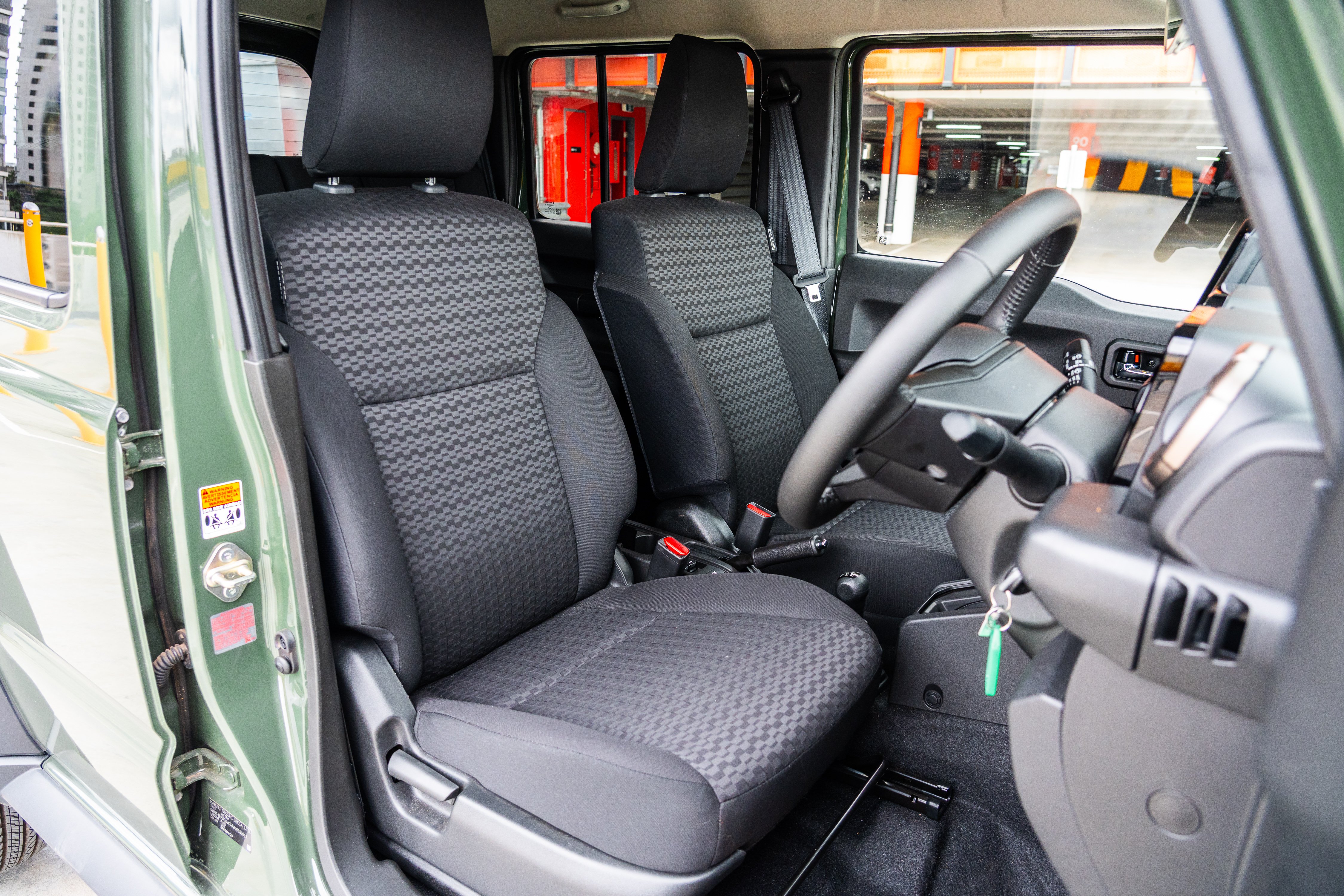
Beyond all that, it’s impossible to ignore how small the Jimny feels. Though you get extra length behind the front seats in the five-door XL, its body is still quite narrow, and your front passenger will feel almost uncomfortably close.
That limitation has also seen Suzuki shed bulk where possible. You’ll notice the door cards are almost completely flat, except for the bolt-on armrests/grab handles, with the window switches relocated to the centre console.
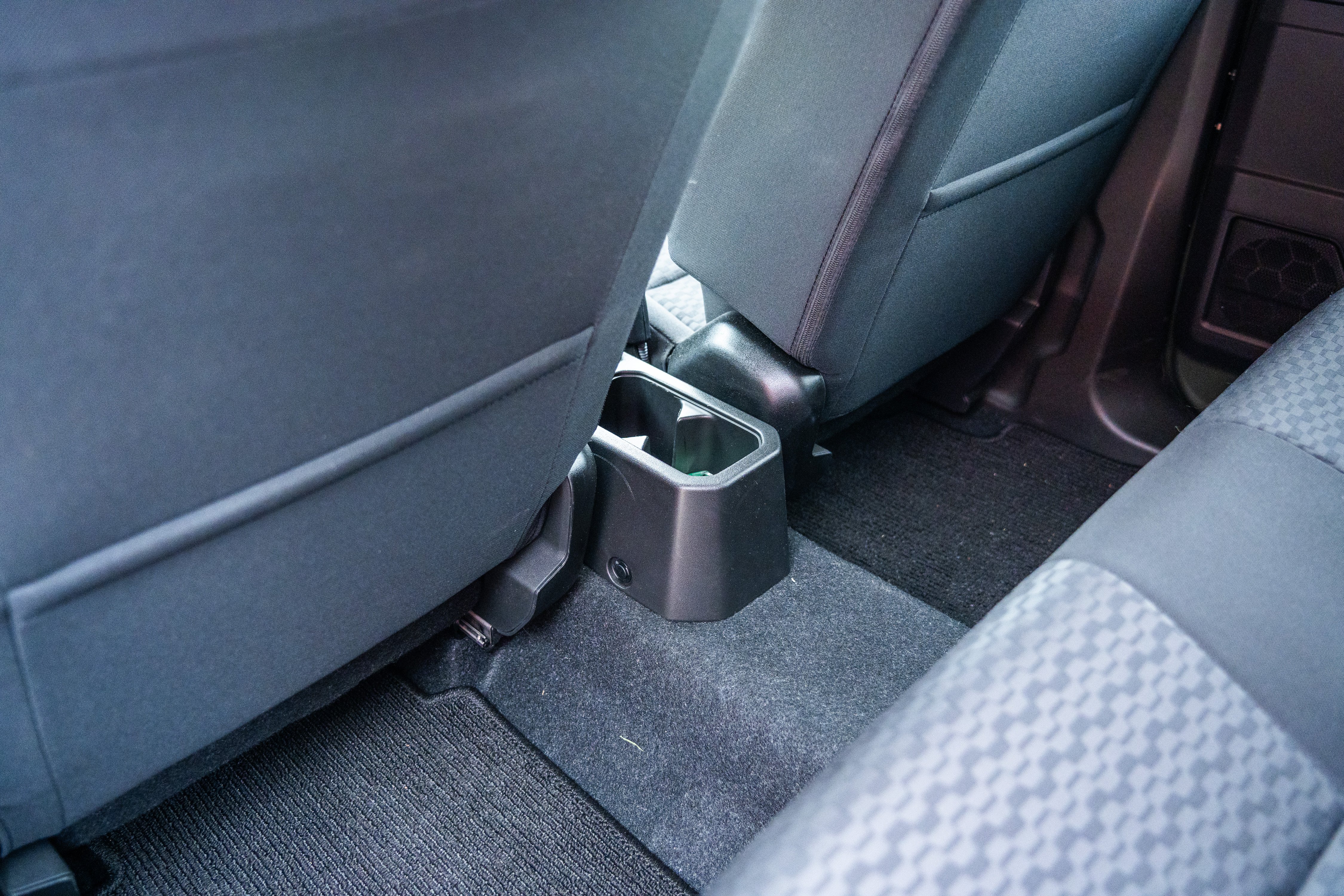
There are no bottle holders either, and the only cupholders are located between the front seats, behind the handbrake lever. That doesn’t necessarily make the Jimny difficult to live with; it’s just something you’ll have to get used to.
As for storage, there’s a small tray ahead of the gear selector, a passenger-side glovebox, and a small dashboard nook above that. There’s no central storage box – which also means no central armrest.
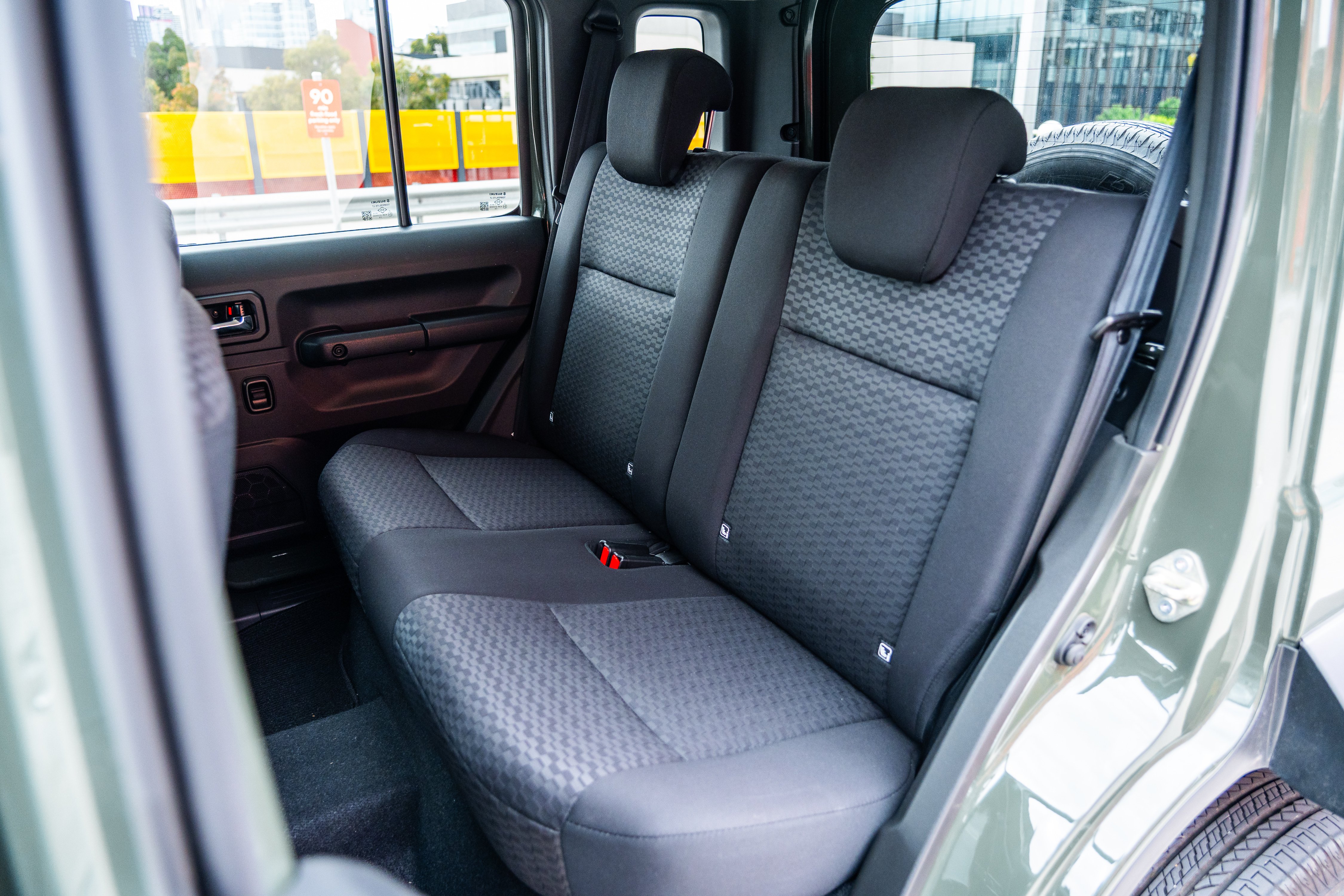
At least the seats are finished in relatively durable cloth, and they’re comfortable enough without setting a new ergonomic benchmark. If nothing else, everything feels appropriate by four-wheel drive standards, even for a little one.
That’s also true of the second row, which has no amenities to speak of. The fact that it’s a two-person bench means passengers back here have a reasonable amount of space, while headroom and legroom are ample enough to fit two grown adults with relative ease.
It’s still unfortunate there’s no fold-down armrest, and rear-seat occupants will have to fight those in the front for use of those two cupholders. At least there are map pockets for a little bit of extra storage.
Unlike up front, the rear doors have window switches, but the driver can also operate the rear windows using a pair of switches next to the handbrake – completely separate from the front window switches.
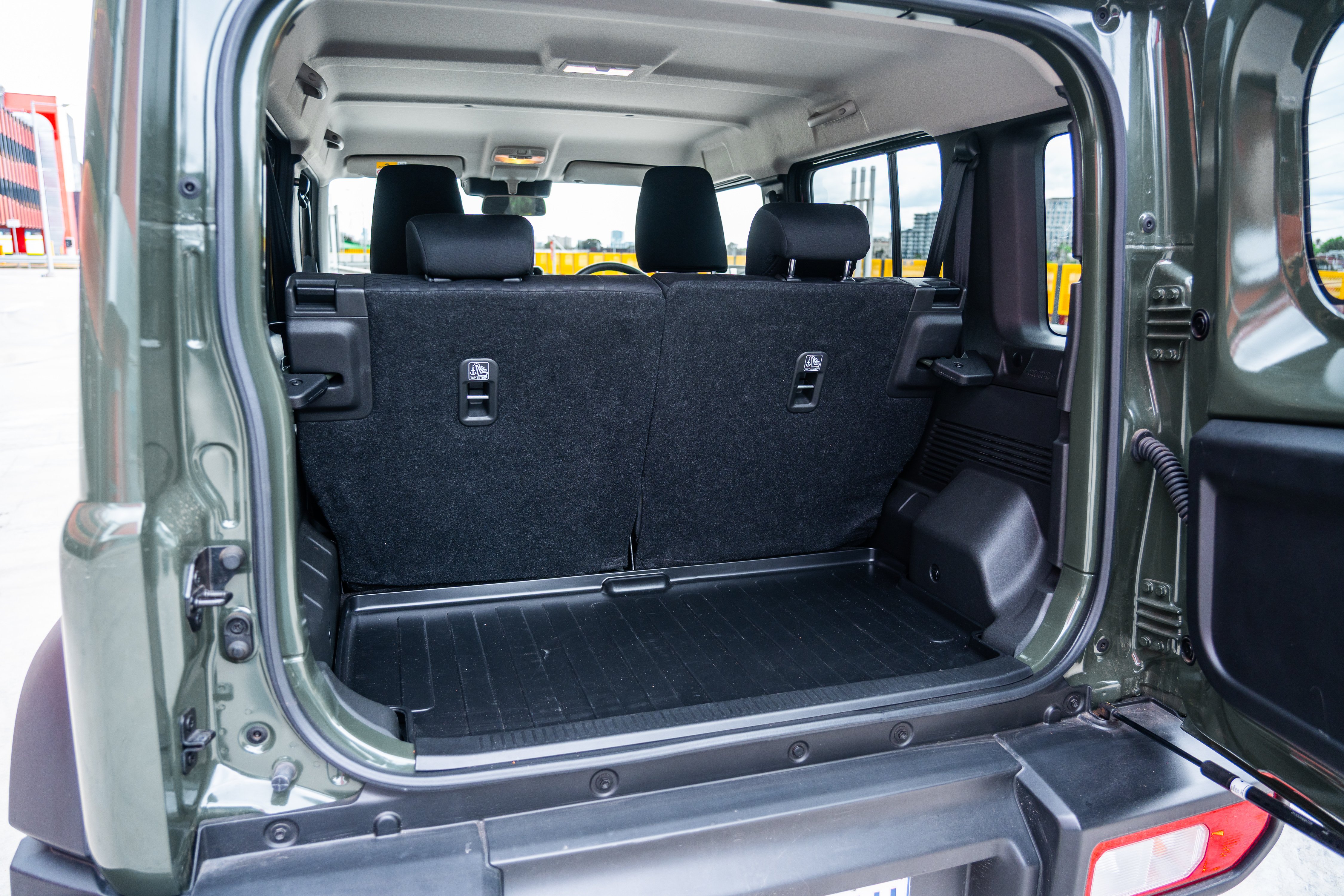
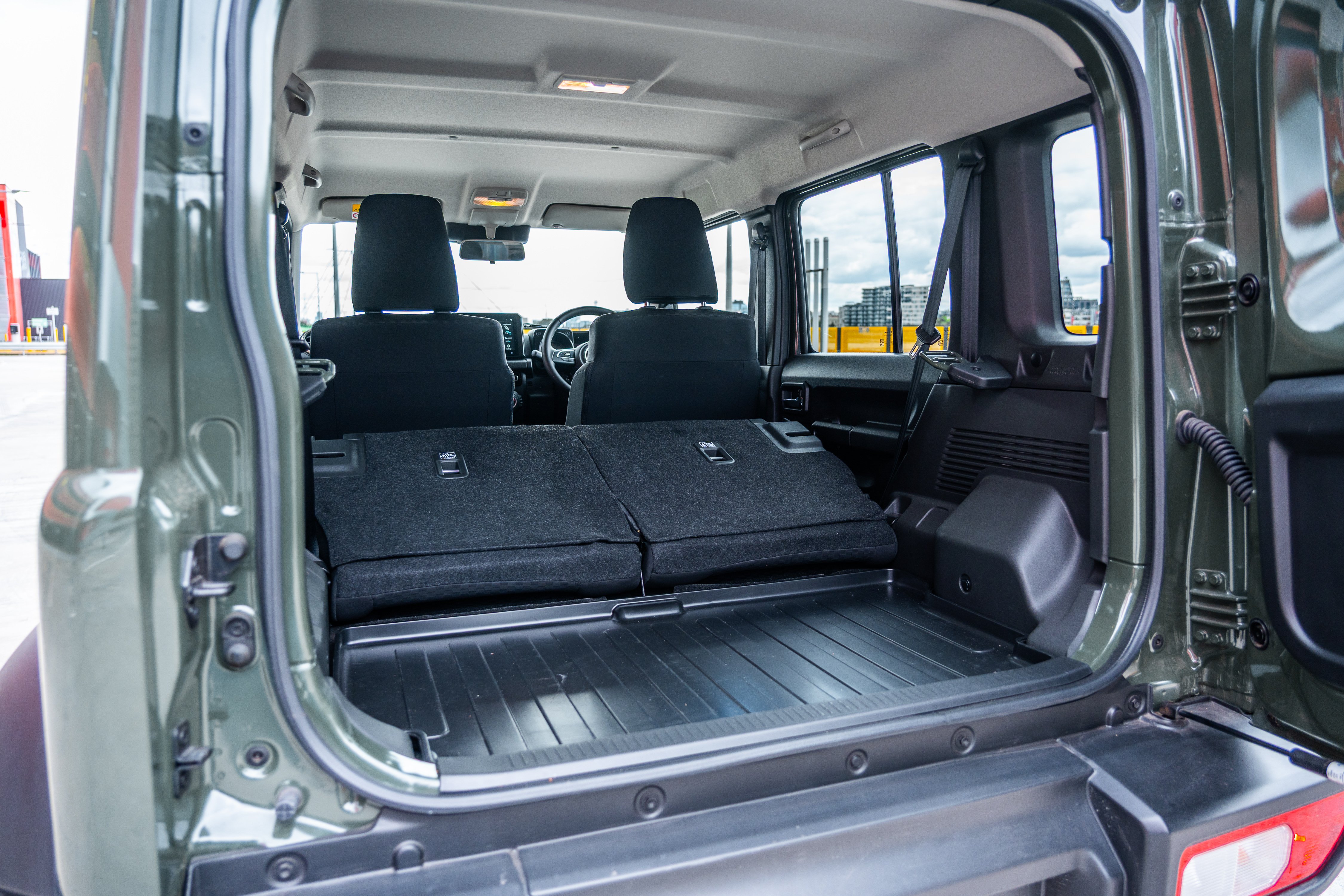
The Jimny XL’s boot isn’t expansive, but it is workable. Offering 211 litres with the rear seats in place, it’s possible to fit at least one large suitcase, or multiple smaller suitcases and other bags if your Tetris skills are up to scratch.
In fact, the packaging requirements for such a small vehicle have led to some peculiar solutions, such as exposed latches that hold the rear seats in place. It may also be why the seatbacks don’t fold flat.
Regardless, the side-hinged tailgate makes accessing the boot a breeze, and it’s nice to have a 12-volt outlet and a light on the passenger side.
Under the floor is a tiny cubby for tyre-changing tools, and you’ll find a full-size spare wheel mounted on the tailgate across the entire Jimny range.
| Dimensions | Suzuki Jimny XL |
|---|---|
| Length | 3820mm |
| Width | 1645mm |
| Height | 1720mm |
| Wheelbase | 2590mm |
| Cargo capacity | 211L (rear seats up) 1113L (rear seats folded) |
To see how the Suzuki Jimny stacks up against its rivals, use our comparison tool
What’s under the bonnet?
Powering our Jimny XL is a 1.5-litre non-turbo four-cylinder petrol engine producing a meagre 75kW of power and 130Nm of torque. Drive is sent through a four-speed automatic transmission (with low-range) to a part-time four-wheel drive system.
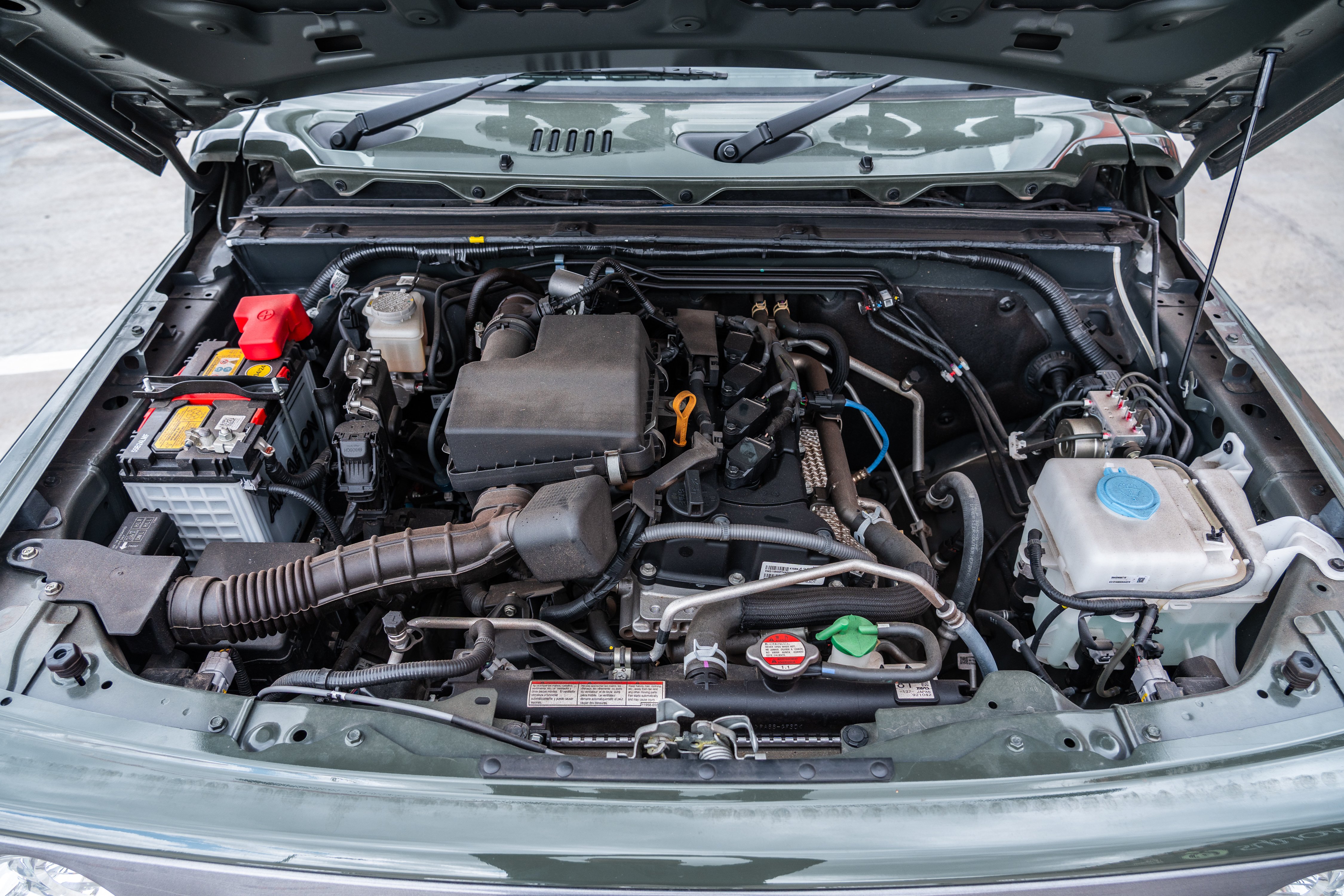
| Specifications | Suzuki Jimny XL |
|---|---|
| Engine | 1.5L non-turbo 4cyl petrol |
| Power | 75kW |
| Torque | 130Nm |
| Transmission | 4-speed auto with low range |
| Drive type | Part-time 4×4 |
| Fuel economy (claimed) | 6.9L/100km |
| Fuel economy (as tested) | 8.3L/100km |
| CO2 emissions (claimed) | 161g/km |
| Fuel tank | 40L |
| Kerb weight | 1210kg |
| Payload | 345kg |
| Braked towing capacity | 1300kg |
| Gross vehicle mass (GVM) | 1545kg |
Our week with the Jimny involved highway commuting and a fair amount of time spent off-roading in several Victorian national parks. The skew towards low-speed crawling contributed to our high fuel economy readout.
To see how the Suzuki Jimny stacks up against its rivals, use our comparison tool
How does the Suzuki Jimny drive?
The Jimny is very much a tale of two halves, and your opinion of it will change depending on how much time you spend in different scenarios.
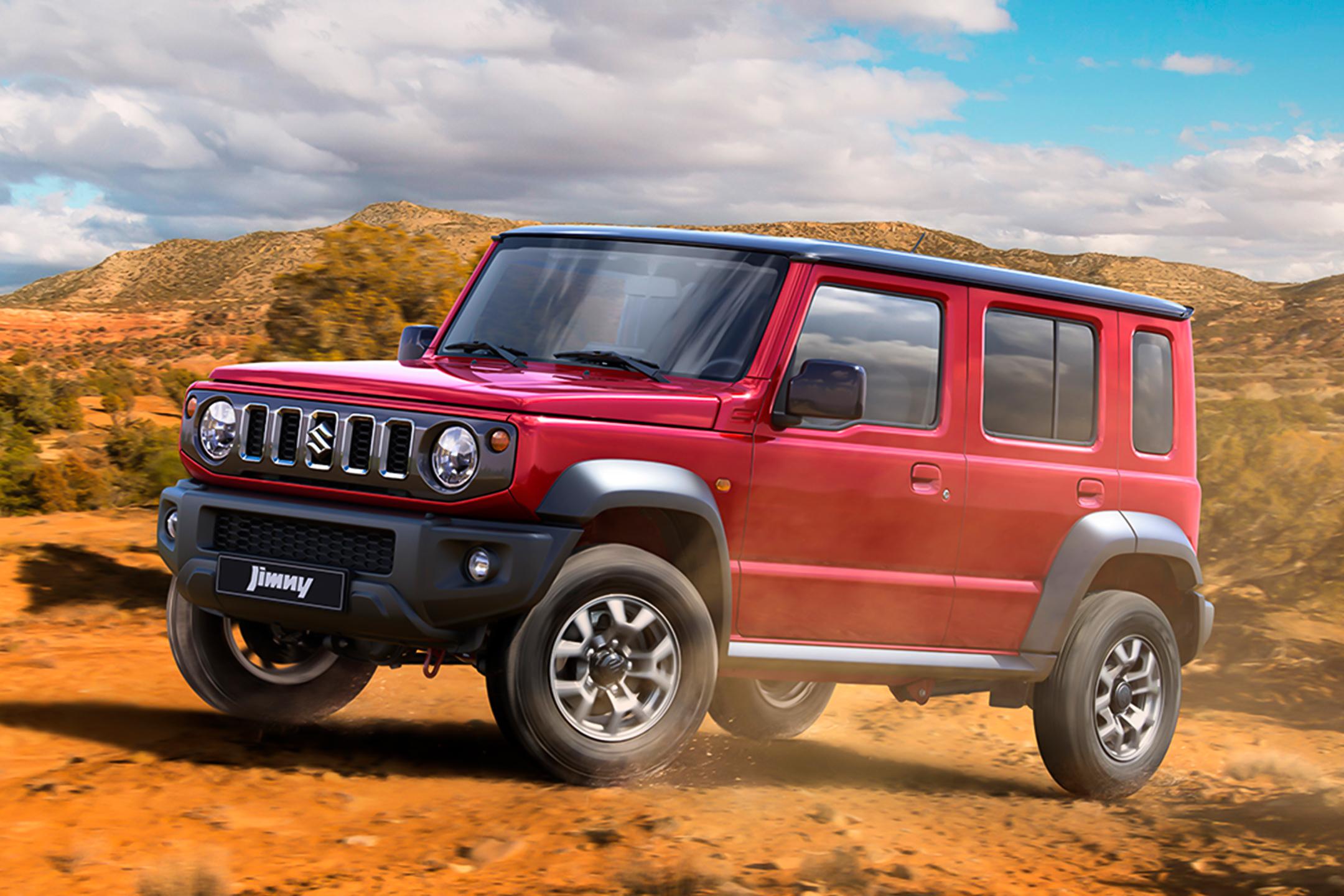
If you spend most of your time on the road, particularly on the freeway, the Jimny is frankly awful. Almost nothing about the Jimny works in its favour when travelling at speed on sealed surfaces.
It’s hideously underpowered and takes an age to get up to highway speed, making an outrageous racket in the process. Such is the lack of performance that if you could blot out the engine’s sound and vibration, passengers would think the driver was just very relaxed.
If you’re already moving, any increase in throttle input while travelling uphill will cause the gearbox to kick down to what feels like (but isn’t) first gear, making the engine revs shoot up. Performance isn’t the point here, but still.
Then comes the steering, which is indirect at best. I hopped directly out of a Suzuki Swift – something fairly darty – and almost ploughed straight-on through a turn before realising how much steering lock it really needed.
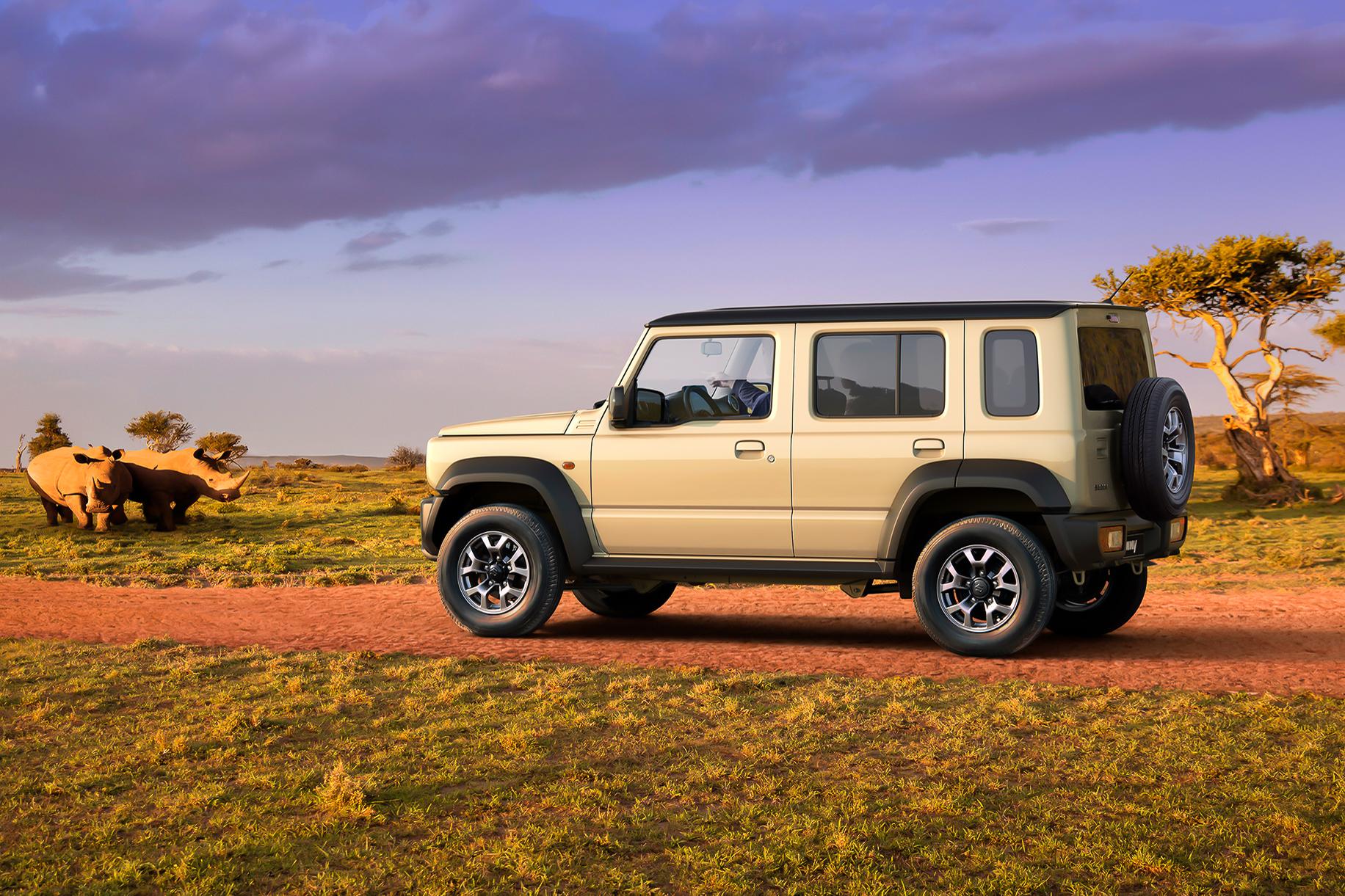
The steering also wanders and requires constant correction to keep the Jimny in a straight line on the highway. I’m yet to come across a Jimny that tracks straight, such is the steering gear and front-end geometry.
This isn’t helped by the tall body and soft, long-travel suspension, which result in significant roll when cornering at speeds above residential, and the skinny tyres lack grip – especially in the wet.
Bumps cause the Jimny to bobble about, and the XL’s elongated wheelbase creates an odd dynamic balance compared to the three-door. And driving on the freeway in strong winds is… engaging, to say the least.
BUT – and this is a very big but – those flaws make the Jimny a barrel of laughs. You’ll eventually come to grips with its odd road manners and wobbly dynamics, at which point you’ll realise just how fun it is to throw around.
Mechanical sympathy is subsequently thrown out the window – it’s like you’re not driving it properly if you’re not wringing the engine or haphazardly throwing it down side streets. It isn’t that you stop caring about the car, but you find it’s made to be driven a bit more loosely.
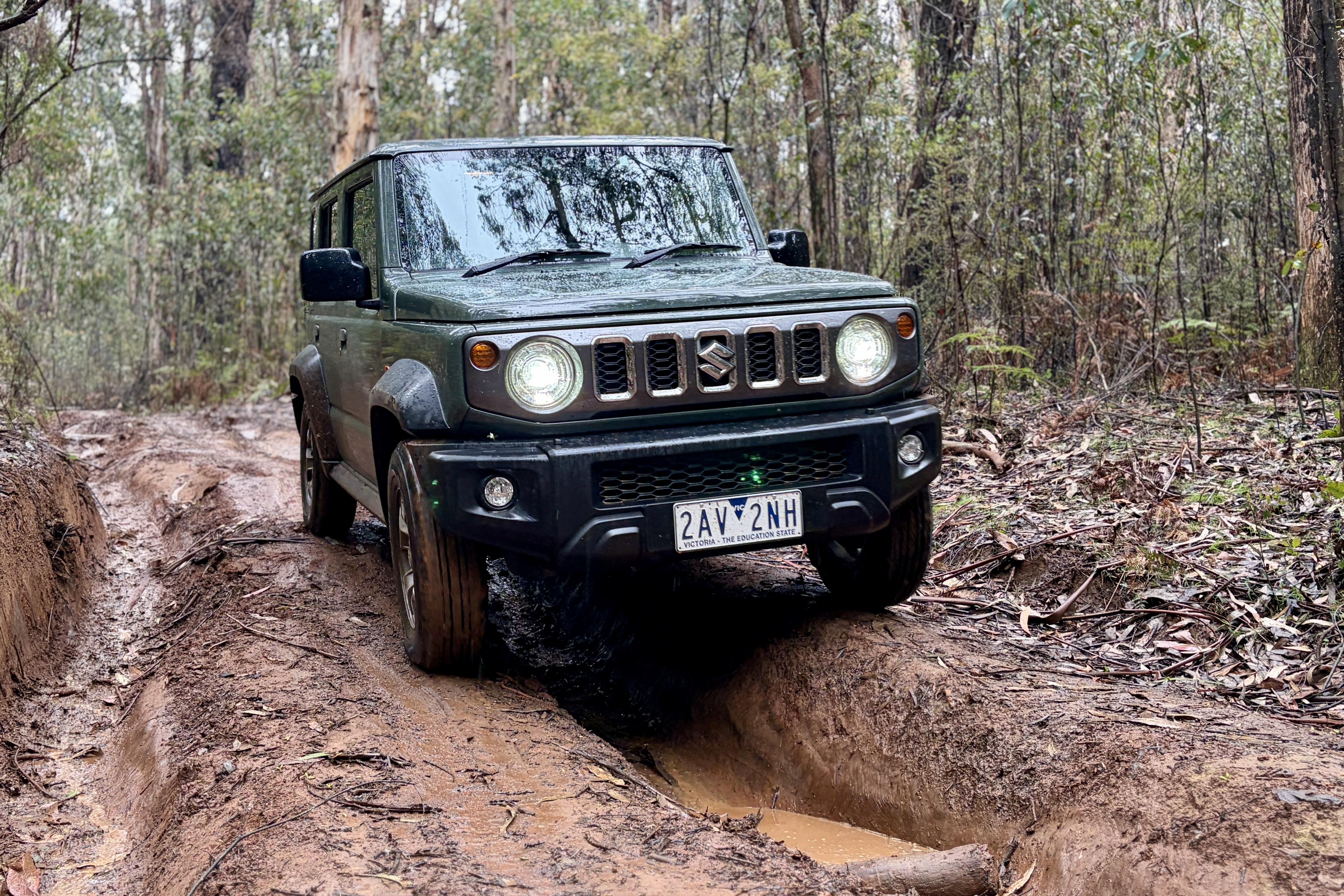
At no point does that become clearer than when you hit the trails. The body-on-frame Jimny is a thoroughbred mountain goat, happily eating up any of the muddiest, rockiest, steepest, and harshest trails you can find.
You’ll feel practically unstoppable once you engage four-wheel drive – something you can only do on unsealed surfaces. When engaged, everything starts to make sense.
The engine’s low output makes deliberate, considered throttle inputs easier, and the automatic transmission does well to hold low gears without making any unexpected shifts. So while we weren’t begging for the manual instead, it would have been even more fun.
When the going gets even tougher, you also have the option of low-range ratios. It’s worth making sure the shift lever is fully engaged, as its chunky action takes some force to engage 4L.
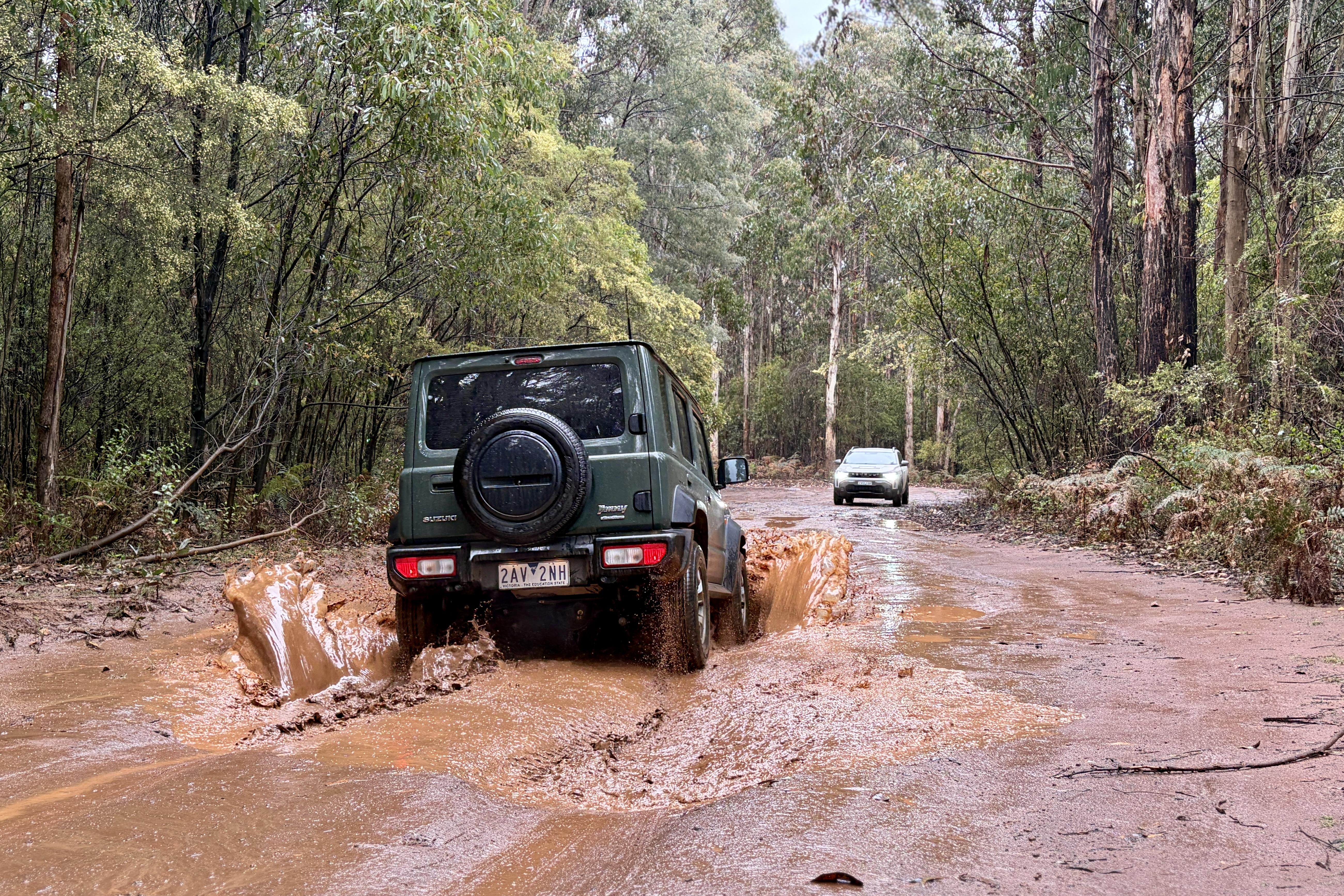
The only true mechanical limitation with a standard Jimny off-road is its tyres, as it’s fitted with highway-terrain rubber which works well on the road but can struggle for grip on loose surfaces, especially in the wet. This became obvious when sliding the wrong way down a slippery clay slope.
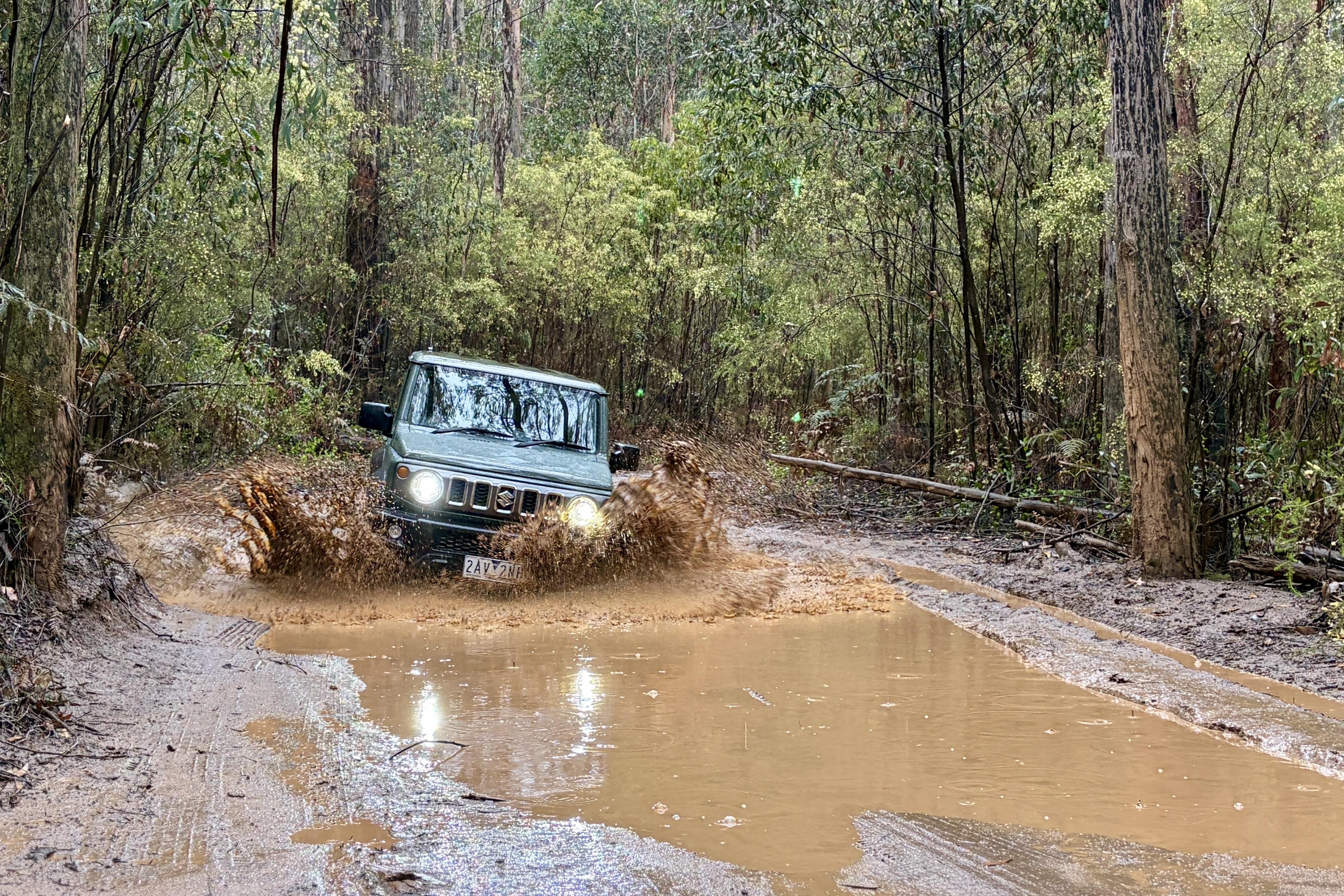
That said, the combination of the skinny tyres and the Jimny’s narrow body means it’s incredibly easy to place on tight trails. We came across several deep ruts through washouts created by larger four-wheel drives, but the Jimny easily straddled them and passed across with ease.
And what the Jimny loses in track width, it makes up for with generous ground clearance. Even when we did have to dip into a deeper rut, we very rarely noticed anything scraping the vehicle’s underside – although that changes if you’re carrying four adults.
And while both Jimny derivatives have similarly steep approach and departure angles, helping to keep its front and rear bumpers scuff-free, the extra 340mm of wheelbase that makes the XL slightly more stable at speed also reduces its ramp-over angle off-road, making it drag its belly a bit more readily over big woops and gnarly spoon drains.
The only other weakness of the Jimny XL that prevails in all environments is its piddly payload. It’s fairly telling that Suzuki doesn’t quote an official payload figure, but subtracting its puny kerb weight of 1210kg from its 1545kg GVM gives us a mere 335kg.
If loaded to capacity with four 80kg adults, you’ll have only 15kg left over for cargo. Having the rear seats occupied also lowers the Jimny’s rear ride height; we noticed more scrapes in areas that weren’t an issue with only two people on board.
Overall, though, the Jimny’s off-road prowess is impressive. It inspires confidence to take on tougher obstacles, and to take the road less travelled.
The only other thing worth mentioning is the safety gear, which we have just a few minor gripes with.
One is the autonomous emergency braking system, which displayed at least one phantom warning without taking action, and the other is the reversing camera, which we’d be generous to call decent.
| Off-road dimensions | Suzuki Jimny XL |
|---|---|
| Track front and rear | 1395mm |
| Ground clearance | 210mm |
| Approach angle | 36º |
| Departure angle | 47º |
| Ramp breakover angle | 24º |
To see how the Suzuki Jimny stacks up against its rivals, use our comparison tool
What do you get?
Three grades of the Suzuki Jimny are currently on sale.
2026 Suzuki Jimny Lite equipment highlights:
- 3-door body
- 15-inch steel wheels
- Full-size spare wheel
- Auto halogen headlights
- Front fog lights
- Power-adjustable side mirrors
- Plastic side mirror caps
- Black front grille
- Black door handles
- Cloth upholstery
- Digital information display incl. digital speedometer
- 7.0-inch touchscreen infotainment system
- Wireless Apple CarPlay and Android Auto
- DAB+ digital radio
- 1 x USB port
- 2-speaker sound system
Jimny adds:
- 15-inch alloy wheels
- Auto LED headlights
- Privacy glass
- Power-folding, heated side mirrors
- Black side mirror caps
- Body-colour door handles
- Leather-wrapped steering wheel
- 9.0-inch touchscreen infotainment system
Jimny XL adds:
- 5-door body
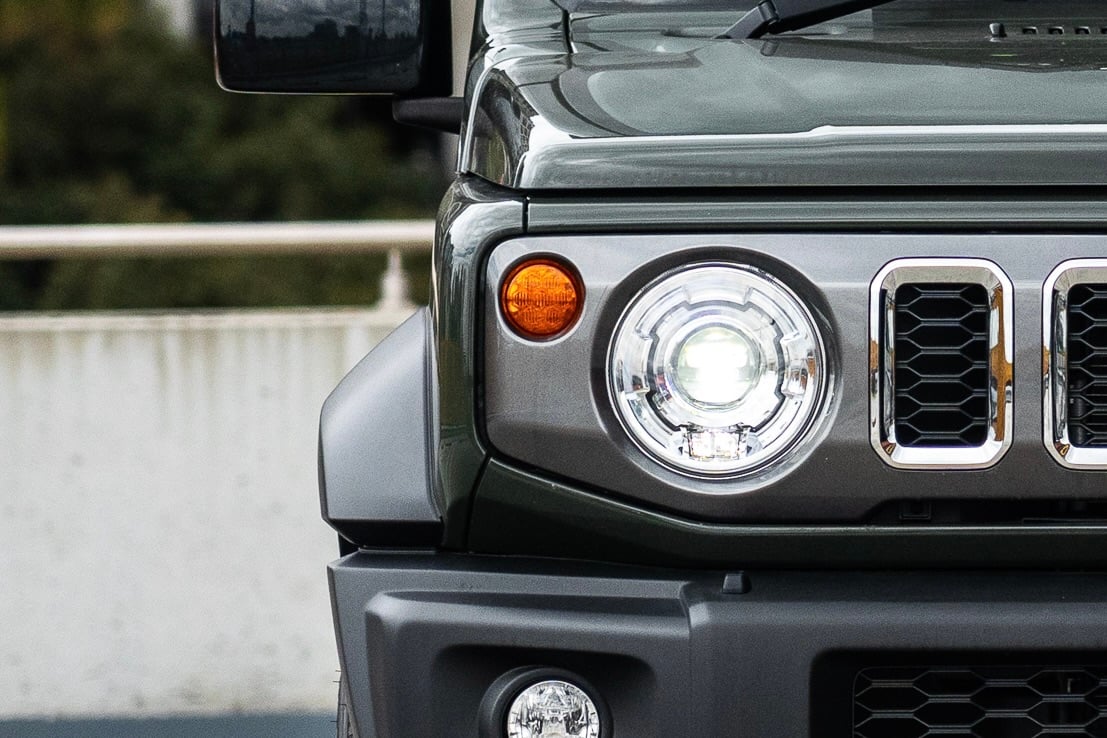
- Grey metallic front grille with chrome accents
- 4-speaker sound system
Jimny XL removes heated side mirrors and a digital speedometer.
To see how the Suzuki Jimny stacks up against its rivals, use our comparison tool
Is the Suzuki Jimny safe?
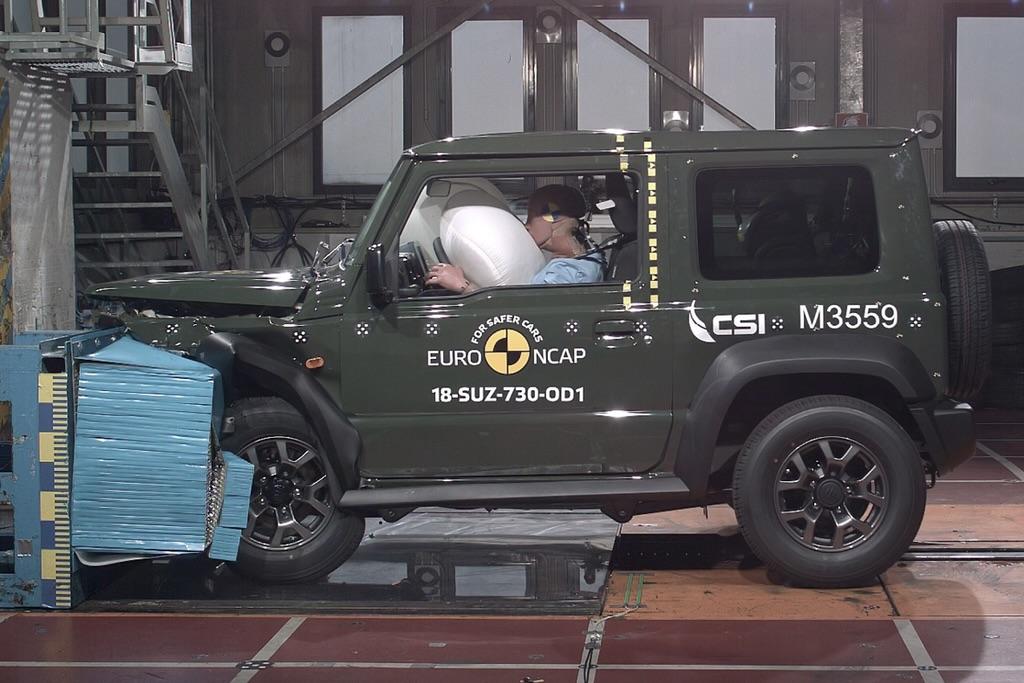
The Jimny’s three-star ANCAP safety rating from 2018 expired at the end of 2024, which means the current model is unrated.
Standard safety equipment highlights:
- 6 airbags, incl:
- Dual front
- Side
- Curtain
- Cruise control
- Autonomous emergency braking
- Front and rear parking sensors
- Hill descent control
- Lane departure warning + prevention
- Reversing camera
- Traffic sign recognition
Jimny XL removes lane departure prevention, traffic sign recognition, and front parking sensors, but it does get adaptive cruise control.
To see how the Suzuki Jimny stacks up against its rivals, use our comparison tool
How much does the Suzuki Jimny cost to run?
Suzuki Australia backs its lineup with a five-year, unlimited-kilometre warranty. Servicing for the Jimny is required every 12 months or 15,000km, whichever comes first.
| Servicing and Warranty | Suzuki Jimny |
|---|---|
| Warranty | 5 years, unlimited kilometres |
| Roadside assistance | 5 years (service-activated) |
| Service intervals | 12 months or 15,000km |
| Capped-price servicing | 5 years |
| Average annual service cost | $473 |
| Total capped-price service cost | $2365 |
Suzuki Australia’s individual service pricing is detailed below:
| Service | Price |
|---|---|
| 12 months, 15,000km | $449 |
| 24 months, 30,000km | $429 |
| 36 months, 45,000km | $589 |
| 48 months, 60,000km | $449 |
| 60 months, 75,000km | $449 |
As for rivals, Renault outlines five years of service pricing for the Duster, which totals $2475 for four-wheel drive variants. It’s worth noting that the Duster’s service intervals are also longer at 12 months or 30,000km.
Subaru, meanwhile, charges a total of $2444.04 for five years of Crosstrek maintenance. Its service intervals are the same as Suzuki’s.
To see how the Suzuki Jimny stacks up against its rivals, use our comparison tool
CarExpert’s Take on the Suzuki Jimny XL
The Jimny XL is not worth the spend for a small daily commuter and is seriously flawed on the road, but it remains a lovable off-roader if you’re keen on heading bush and can make the value equation work.
Off the beaten track is where the Jimny makes sense. Indeed, it will inspire you to spend all day, or even the weekend, finding new things to crawl through or climb up. It would also be great for traversing the Simpson, hitting the Cape or scaling the Flinders, but not so much for getting to those epic destinations or doing the Big Lap in.
Which really makes it more of a toy, and to us that means the top-spec XL probably isn’t the one to go for.
The five-door is still great at what it does best, but it’s still best to keep it primarily for bush bashing rather than trying to make it work as a typical SUV with four doors for the daily grind. Its compromises in city, suburban and open-road scenarios are simply not worth the extra cost.
Therefore, we’d point potential buyers to any of the three-door Jimny variants instead. Yes, the compromises are arguably greater given there’s much less space for people and cargo in the back, but it’s easier to justify as an off-road plaything that can also commute if need be. And it’s cuter.
In fact, I’d be putting my money down on the base Jimny Lite if I was in the market – but only as a second vehicle. It’s way cheaper than the XL (still not cheap enough though, Suzuki) and it’s realistically all the Jimny you’d ever need, particularly since its 2026 infotainment upgrade.
But the biggest drawcard is the aftermarket support. The beauty of the Jimny is that you can modify it exactly as you please, so you could turn the Lite into a proper compact off-road rig with the right components and advice. The money you save by not buying the XL would make that easier, too.
The time we spent in the bush with the XL was also far more enjoyable because we could squeeze through tighter spaces than you could in a dual-cab 4×4 ute, for which it would have been game over in the densely wooded sections and deep ruts.
The equally narrow three-door Jimny is even better in tight spots because of its smaller turning circle, and the shorter wheelbase will pay dividends almost everywhere off-road unless you’re planning to scale Beer O’Clock Hill.
So, the Jimny remains a unique proposition and unbeatable in the right setting. And despite the three-door being generally better suited to its hardcore purpose, the XL doesn’t completely ruin its off-road charm.
CarExpert can save you thousands on a new Suzuki Jimny. Click here to get a great deal.
Click the images for the full gallery
MORE: Explore the Suzuki Jimny showroom